Seakeeper Ride is a stabilization system that’s like an autopilot for trim tabs. It’s designed to eliminate up to 70 percent of pitch and 44 percent of roll underway, at a fraction of the cost of the Seakeeper gyro system.
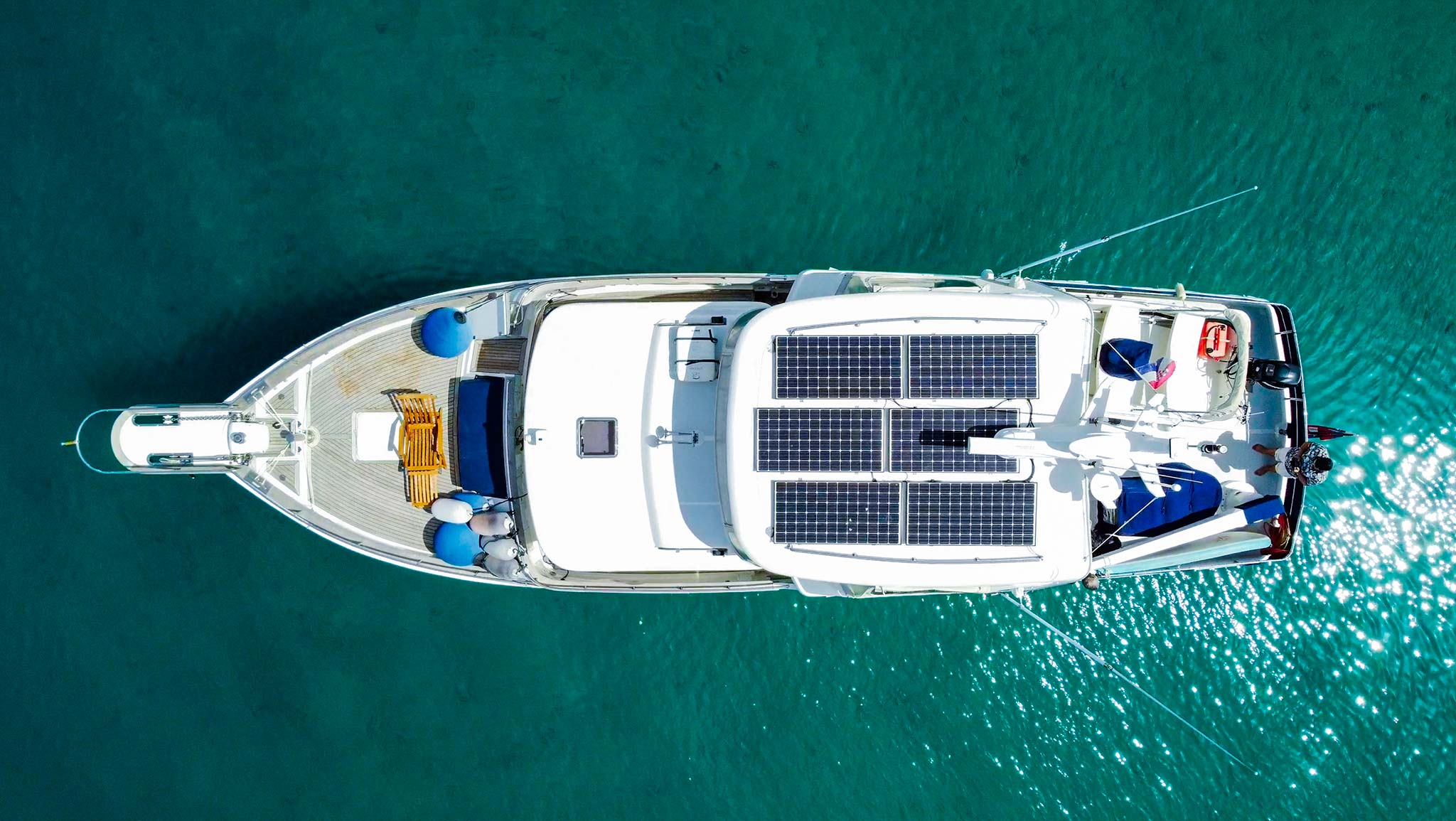
Unlike the gyro, which stabilizes a vessel primarily at rest and sub-planing speeds, Seakeeper Ride’s full stabilization effects occur around 20 knots, limiting its application to planing hulls. Seakeeper Ride comes in a range of models for boats up to 55 feet in length. Ride 450, 525 and 600 are the original models, for boats from 26 to 36 feet, with a two-blade setup. Ride 750 is for boats 37 to 42 feet, with a two- and four-controller setup. The Ride 900 to 1500 models, with a four-controller setup, are for boats in the 43- to 55-foot range.
While there are other automated trim tab systems on the market, Seakeeper Ride is the only one with a rotary actuator deployment mechanism. This means better overall reaction time to differing wave states, and better stabilization overall while underway.
Seakeeper Ride functions much like a traditional trim tab, generating lift at the transom to lower the bow. But instead of relying on linear actuators to press down large, hinged plates, the Seakeeper employs long rotary blades that produce lift with extraordinary speed and precision, capable of making up to 100 adjustments per second. The result is a system that reacts instantly to changing conditions, keeping the boat level and steady without the operator ever touching a control.
Each transom assembly is built from a series of components: transom plate, wedge pack, actuator plate, rotary actuator, seal plate and rotary blade. Unlike conventional systems secured with mechanical fasteners, these assemblies are bonded to the hull with a high-strength MMA adhesive. Epoxies often underperform with plastics and metals, but MMA excels with thermoplastics, coated and uncoated metals, and fiberglass, offering shear and tensile strengths of up to 2,500 and 2,200 psi, respectively. The result is a permanent, uniform bond that’s as durable as it is innovative.
Inside the hull, a stern-mounted power distribution module supplies energy to the actuators, which in turn send feedback on their position and performance. An electronic control module manages the computing and communication, integrating with the vessel’s NMEA 2000 network. Through this link, the control module reads GPS speed, relays commands to the actuators, and interfaces with the multifunction display for setup and control.
On larger vessels with four-actuator systems, dual power modules ensure that every actuator has the capacity it needs to respond instantly. These components create a true hands-free stabilization system, reducing the captain’s workload and delivering a consistently smoother ride for everyone aboard
Still, despite its wide appeal, Seakeeper Ride isn’t a universal fit. Hull design, transom layout and onboard electronics all play a role in determining whether Ride is the right choice for a given vessel. Following are the considerations that are important to weigh before committing to the upgrade.
Pocketed Transom Tabs: Pocketed transom tabs don’t necessarily rule out a Seakeeper Ride installation, but they do add complexity and cost. Because the system requires a flat transom for proper mounting, boats with recessed pockets traditionally needed fiberglass work to fill and fair the area, an upgrade that could add several thousand dollars to the bill. To simplify the process, Seakeeper now offers 3D-printed pocket inserts for many popular models. While these inserts may not blend as seamlessly as a custom fiberglass repair with matched gelcoat, they provide a durable, cost-effective solution that makes upgrading to Seakeeper Ride far more attainable.
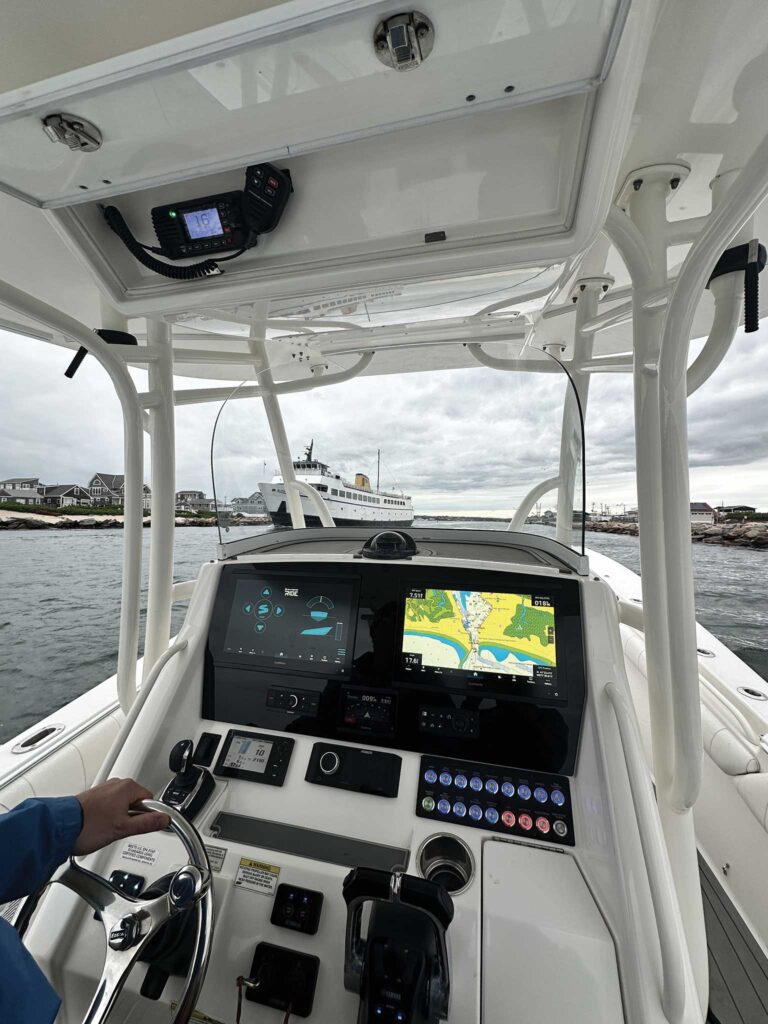
Electronics: Most Seakeeper Ride installations include a traditional keypad, but a compatible multifunction display is still required for setup, monitoring, diagnostics and operation. The list of supported chartplotters is fairly extensive, but boats with older electronics may find their existing displays incompatible. Replacing an entire electronics suite is the most straightforward solution, but not always a practical one for owners already investing in stabilization. A workaround is the addition of a Garmin TD 50 to the installation package.
Transom Design: Stepped hulls are now approved by Seakeeper for Ride installations, but there are still instances where a system may not be compatible because of height limitations that prevent the blades from completing their full range of movement. While any GRP hull could technically be modified to allow compatibility, these modifications can be expensive and may make other stabilization systems more practical.
Performance
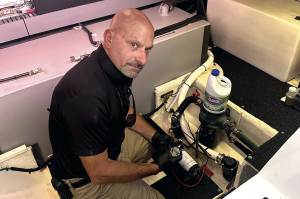
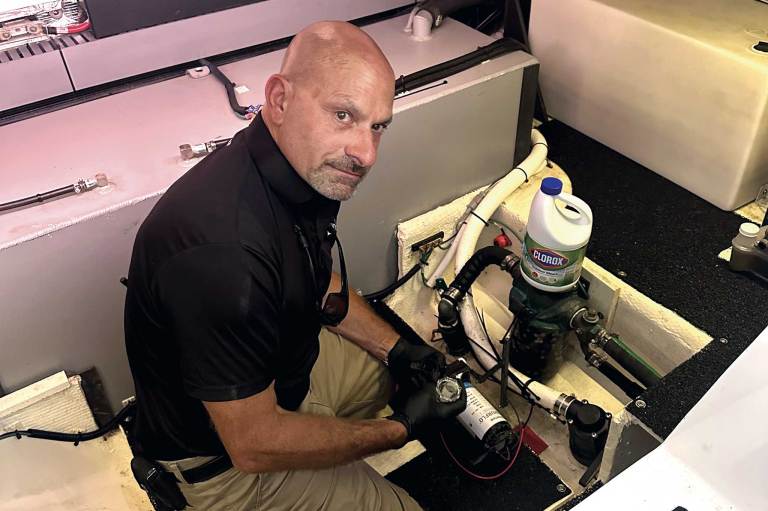
I have a Seakeeper Ride 450 installed on my own boat. On more than one occasion while out with my family, it has kept us comfortable underway, when I otherwise would have turned back.
I’m also a Seakeeper dealer who has participated in countless demo rides, and I’m continually impressed by how positively people receive the system. Time and again, passengers are struck by the difference in performance, and it’s rewarding to see such genuine reactions to a product that truly transforms the boating experience.
The real-world benefits are undeniable. Time to plane is shorter, bow pitch is nearly unnoticeable on calm days (and still manageable in rougher conditions), turning performance is sharper, roll underway is minimal, and the boat stays level when weight is unevenly distributed. The system can have a minor reduction of overall speed while in operation, typically 0.5 to 2 knots, but it remains more efficient than interceptor-style tabs. For me, the comfort gains alone far outweigh this minor trade-off.
Seakeeper Ride is an advanced trim system. And it also delivers a ride that is smooth, safe and enjoyable. For planing-boat owners whose vessels meet the compatibility requirements, it’s a worthy upgrade that can transform every outing on the water.
Seakeeper Ride
Mike Garretson is President of Sea & Land Yacht Works, a marine service company in Wakefield, Rhode island.
December 2025