
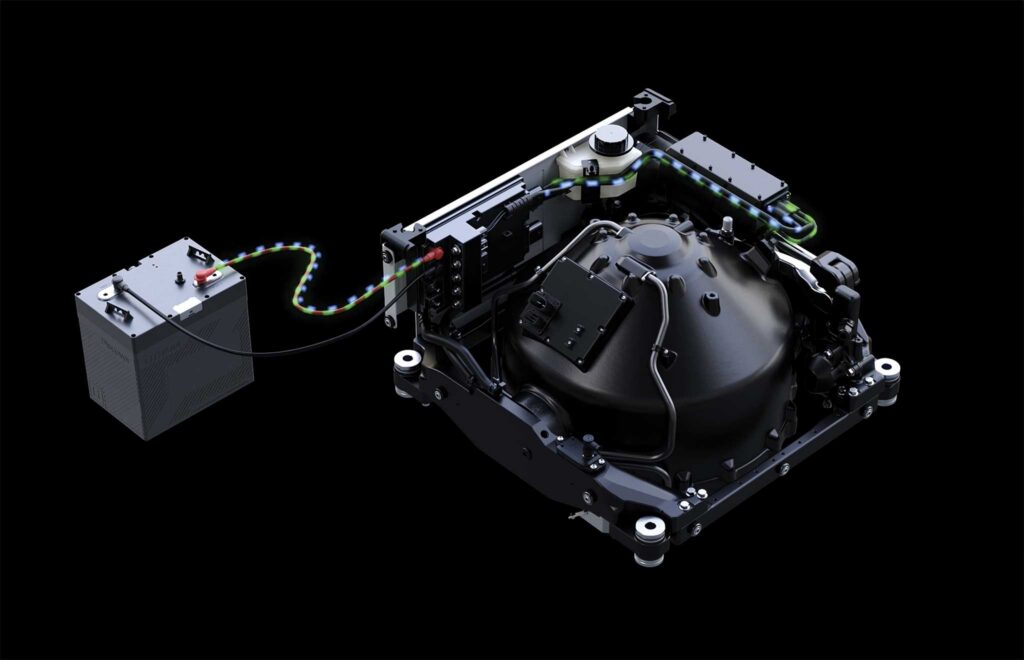
ABOVE: MG Energy Systems’ Master LV controls battery systems ranging from 12 to 48 volts, making it a good option for future 48-volt system conversions.
For much of modern boating history, 12- and 24-volt battery systems have formed the foundation of onboard DC power. Their roots in the automotive world made them practical, familiar and widely supported across the marine equipment market.
But today, electrical demands continue to increase. Boats have larger inverter loads, expanded house loads and increasingly electrified propulsion. Traditional voltage systems are being pushed to their practical limits, particularly when it comes to wire size, heat management and efficiency.
In response, the marine industry has begun to adopt 48-volt DC architectures. The systems meet today’s higher power requirements and remain below the regulatory thresholds that classify systems as high-voltage DC.
The transition to 48-volt systems is ongoing, and the momentum is clear. It’s important for boat owners to understand why 48-volt systems are emerging as a new standard, and how these systems will affect boat design and marine technology in the near future.
The 48-Volt Advantage
The benefits of 48-volt systems are rooted in a simple electrical principle: Power (watts) equals voltage times amperage. For any given power demand, increasing voltage reduces the current required to deliver it. Lower current means smaller wire sizes, less heat and reduced voltage drop across long cable runs. On boats, where voltage drop is critical and copper is expensive, this becomes a major design factor.
For example, a 2,000-watt inverter load that would require more than 160 amps at 12 volts draws only a little over 40 amps at 48 volts. The result is a system that can move more energy with lighter cabling and higher overall efficiency.
Because the current is lower throughout the system, many 48-volt components tend to be slightly less expensive per watt of output capacity, as they require less copper and smaller thermal management hardware. This scalability is what makes 48-volt systems attractive for vessels adding electric propulsion, large inverter banks, high-output alternators and expanded DC amenities.
Adoption Constraints
The primary challenge in adopting 48-volt systems lies in equipment compatibility. Much of the traditional marine electrical infrastructure—such as breakers, fuses, battery switches and charging relays—has historically been certified only to 32 volts. With 12- and 24-volt systems, installers could rely on broad brand interchangeability.
At 48 volts, every component must be verified for its voltage rating, narrowing equipment options. While more manufacturers are now releasing 48-volt-certified hardware, some product categories still have limited offerings.
However, demand is driving availability. As hybrid propulsion, lithium-based house banks and DC-powered house loads increase, manufacturers are expanding their product lines to include 48-volt options. Recent build documentation on YouTube channels, such as SV Delos and The Duracell Project, reflect that complete 48-volt systems are already viable at the refit level.
48 Goes Mainstream
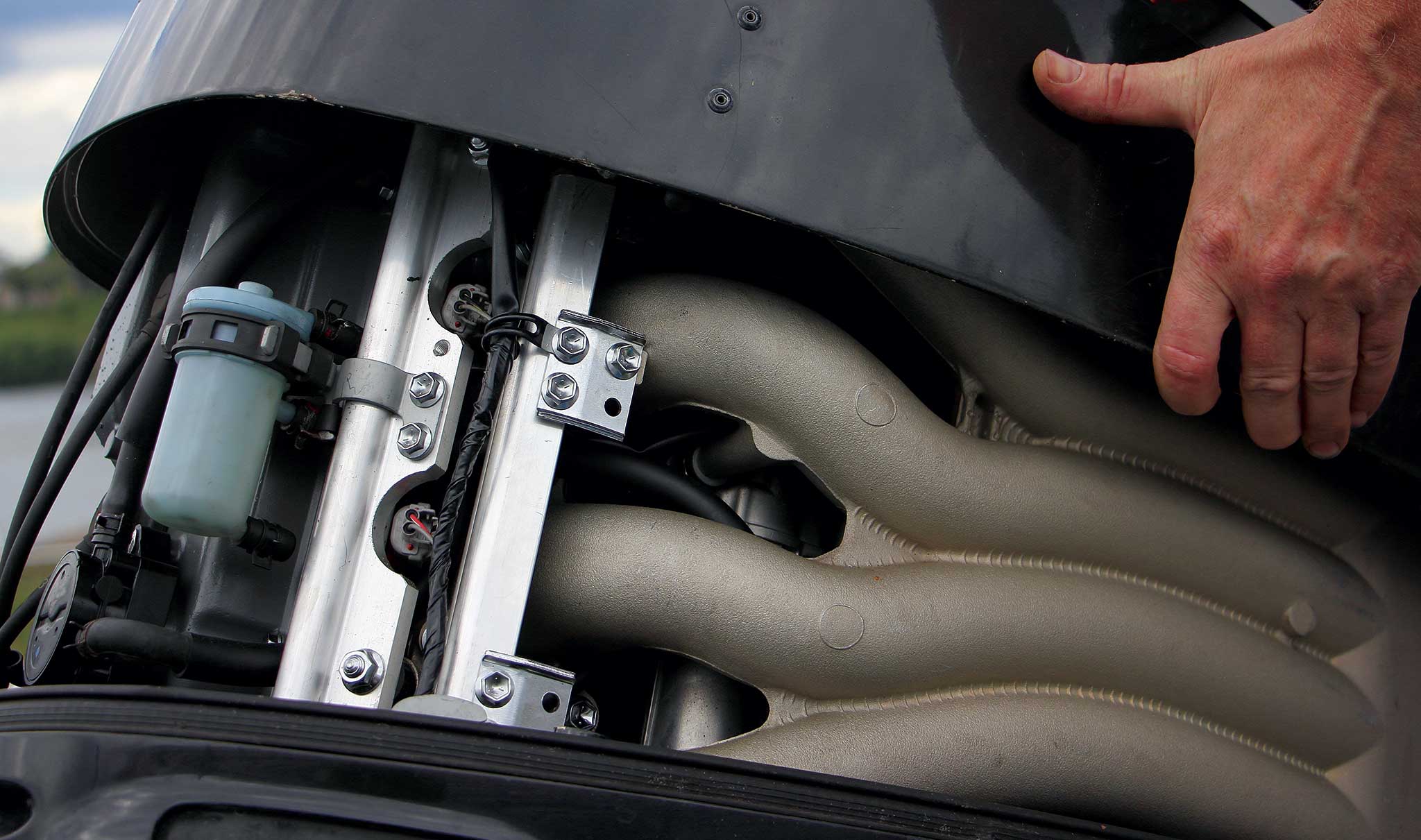
Some of the strongest momentum behind the adoption of 48-volt systems is coming from propulsion and systems manufacturers. Mercury’s V-10 outboards, for example, include a dual-voltage alternator that works with the Fathom e-Power system. In generator mode, the V-10 can boost electrical output at 48 volts nearly sevenfold over its 12-volt output, allowing the outboards to serve as the boat’s primary charging source and eliminating the need for a standalone generator.
At the systems level, Victron Energy continues to offer the most complete ecosystem of 48-volt inverters, chargers and distribution hardware, with several other manufacturers rapidly expanding their product lines. On the storage side, 48-volt lithium batteries are now standard offerings, to the point where it is becoming increasingly difficult to find a reputable battery manufacturer without a dedicated 48-volt module.
In the charging sector, Arco and Balmar produce 48-volt high-output alternators that deliver power levels not practical at 12 or 24 volts, while Integrel’s engine-mounted 48-volt generation system has proved a viable, and often more efficient, replacement for a traditional diesel genset.
On the equipment side, Dometic has introduced a 48-volt gyrostabilizer and 48-volt DC air-conditioning systems. Vetus offers a 48-volt bow thruster, and Maxwell released a 48-volt windlass.
Electric propulsion systems suitable for repower are also primarily based on 48-volt platforms. As product ecosystems continue to expand, integrating 48 volts into existing 12- or 24-volt battery banks is becoming significantly easier.
Efficiency Meets Safety
A typical 48-volt lithium battery system operates between roughly 40 and 57.6 volts, depending on state of charge. This keeps it just below the 60-volt DC high-voltage threshold defined by numerous standards, including those of the American Boat & Yacht Council. Systems above 60 volts must meet stricter standards and are only serviceable by technicians trained in high-voltage procedures.
The reasoning is physiological: Dry human skin may have a resistance of roughly 10,000 ohms, but in the marine environment where skin may be damp, resistance can drop dramatically. At higher voltages, this increases the likelihood of electrical shock. Keeping system voltage below the 60-volt threshold allows designers to increase available power while avoiding the risks and regulatory requirements associated with high-voltage DC.
Looking ahead, 48-volt systems are positioned to become commonplace in modern marine electrical architecture as manufacturer support and component availability improve. These systems will not replace 12- and 24-volt systems, which will continue to power lighting and navigation electronics. Instead, they will serve as the backbone for meeting growing power demands, particularly for boat owners who want all the comforts of shore power while at anchor.
This article was originally published in the March 2026 issue.