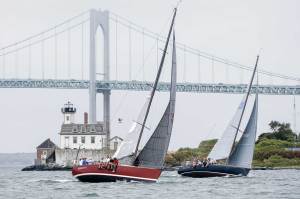
Greens Ledge Light in Rowayton, Connecticut. Venera Alexandrova
As the school year comes to an end, many families begin looking for programs that can keep their children engaged through the summer. For those who spend time on the water, opportunities for a hands-on marine education can be especially appealing. One such program is taking shape near my home in Connecticut’s Fairfield County.
Greens Ledge Lighthouse on Long Island Sound was built in 1902 and has served mariners for more than a century. It’s still an active aid to navigation that’s maintained by the Coast Guard, but recently the historic structure took on a new role as a center for environmental education.
The lighthouse’s revival began in 2016 when it was purchased by a local family that established the Greens Ledge Light Preservation Society to restore and maintain the landmark. After a $2.2 million renovation, the lighthouse opened to the public in 2022 for the first time in its history. Restoration work continues, but at the same time, educational programming at the site is expanding. The lower level of the lighthouse now houses the Tombros Research and Education Center, designed to support marine science activities and student visits.
A milestone came last year when high school students from SoundWaters—a nonprofit environmental education organization based in Stamford, Connecticut—visited the lighthouse as part of the group’s summer Research Intensive Program.
SoundWaters focuses on teaching students about the ecosystem of Long Island Sound through field-based learning. During their visits to Greens Ledge, students were in the field monitoring water quality and collecting bottom samples. But in addition, teens had a chance to really experience the lighthouse and discover what days were like for the early keepers who lived off the grid.
They also learned how the lighthouse has been rehabilitated. Today, it operates with the help of solar power and produces drinking water through a reverse-osmosis system. It’s also equipped with satellite internet service so researchers and students can stay connected while working on-site. Future plans include the installation of remote sensors in partnership with SoundWaters. The equipment will monitor things like water quality and wave height, generating real-time data that for those who study the Sound.
For families looking toward the summer months ahead, programs like this offer a reminder that meaningful maritime education continues to thrive, and that historic places can still serve new purposes.
Jeanne Craig jeanne.craig@firecrown.com
This article was originally published in the May 2026 issue.