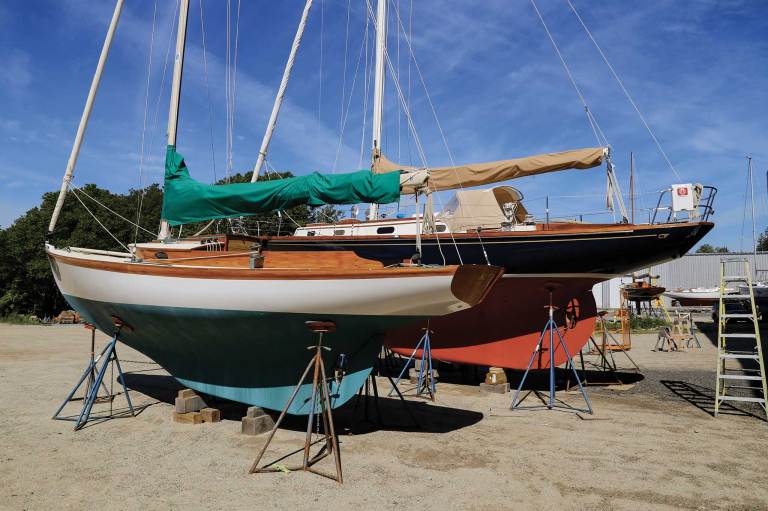
If boat work was a Hollywood production, yacht finishers would be called make-up artists and stylists. “It’s kind of a running joke, how finishers get the glory because everybody’s wild about the shine,” quips Joni Blanchard. As a veteran of the trade, she knows the importance of plumbing and electrical installations, but that work is not on public display like a coat of paint or varnish.
Hailing from Upstate New York, Blanchard came to Port Townsend, Washington, in the late 1980s via Bisbee, Arizona, and after sailing in Mexico. She never meant to become a yacht finisher, she says, but that’s how the dice rolled. She lived at a boatyard at first, then settled in a cozy Airstream that’s parked on her property next to her workshop, where she also does leather and rope work. “I’m not fit for a 9-to-5 job,” she says with a laugh. “This work suits me, and I can mind my own business.”
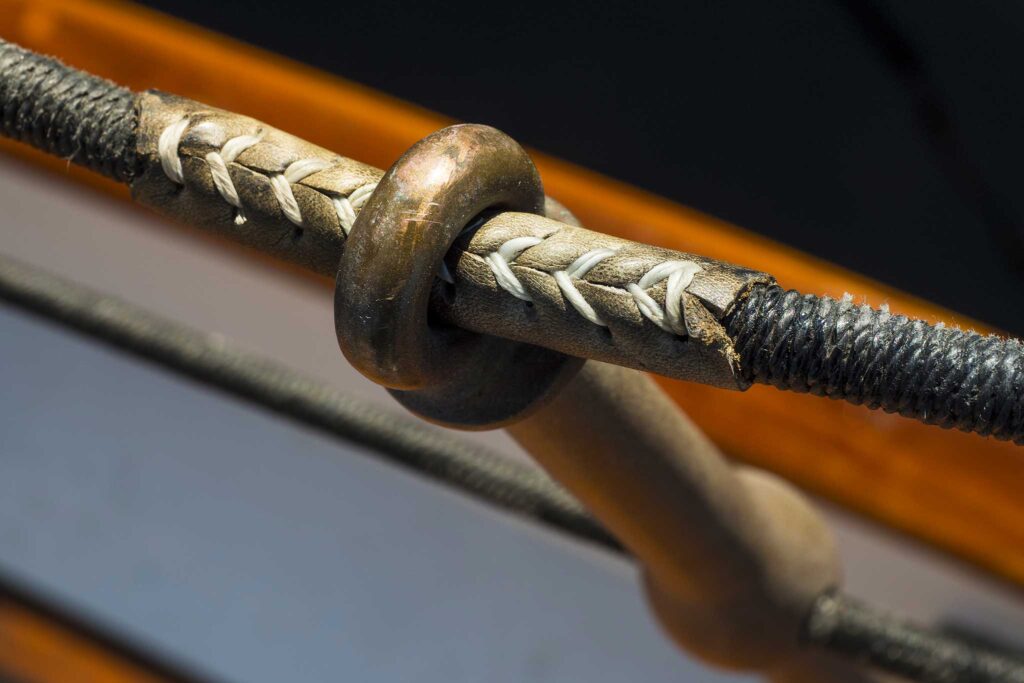
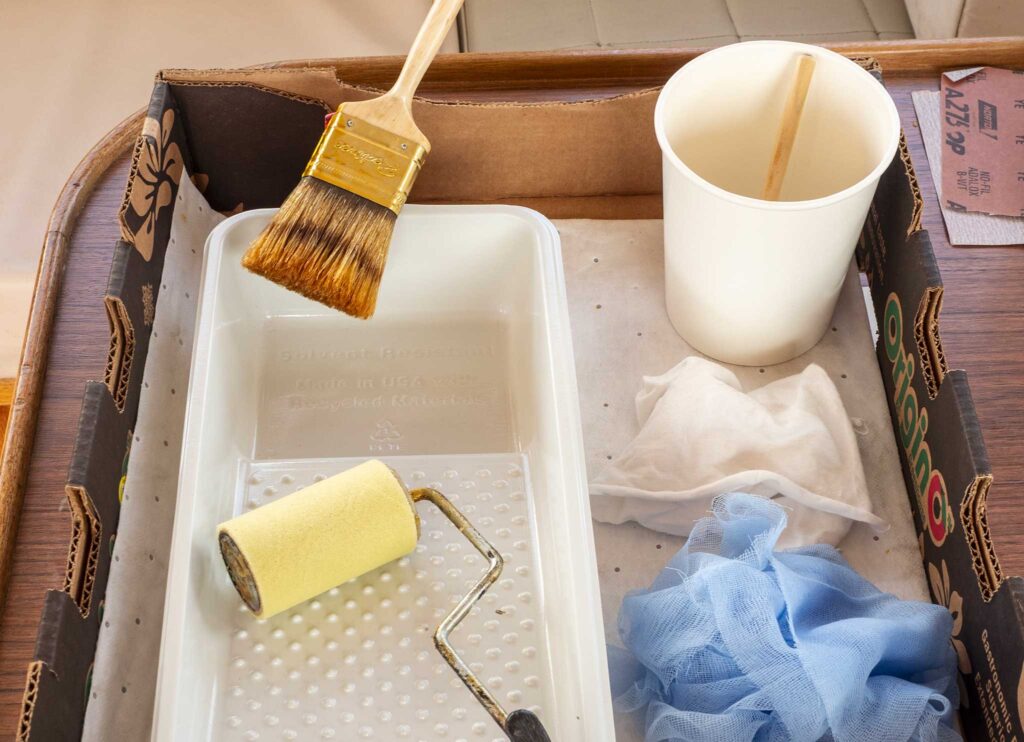
After many years in the profession, Blanchard understands the nuances of yacht finishing. “Shine makes a boat look pretty, but it’s so much more,” she says. This job requires craftsmen to protect a boat against the elements, but also scout for problems like rot and mold caused by water intrusion. The process of sanding, scraping, wiping and vacuuming can be tedious, which requires mental focus and stamina.
“You’re buzzing like a hummingbird—up, down and around, eight hours a day, day after day,” she says. “Your body’s working all the time, bending, twisting, reaching and keeping balance on a boat in the water.”
Now 66, Blanchard says she’s never needed yoga or aerobics to stay in shape. She has dealt with cancer, though, and as a result got smart about protecting herself from fumes, dirt and dust.
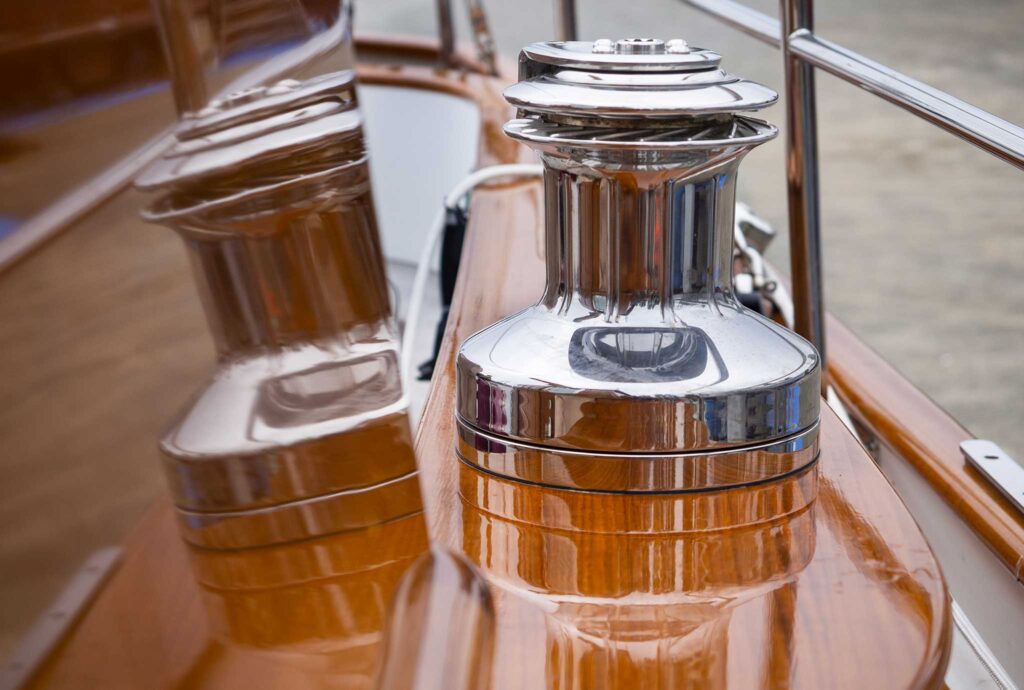
Blanchard loves to work on boats, but she’s not a passionate boater. She gets seasick and can’t swim. “I don’t own one. Never have, other than a gravy boat,” she jokes. Regardless, in her younger years she racked up some ocean miles, ending up on a sailboat in Belize for a few weeks and sailing across the Pacific from Port Townsend to Japan. She’s also taken a few runs to Alaska on a couple of the bigger boats she’s worked aboard.
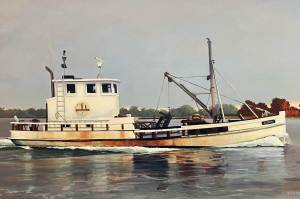
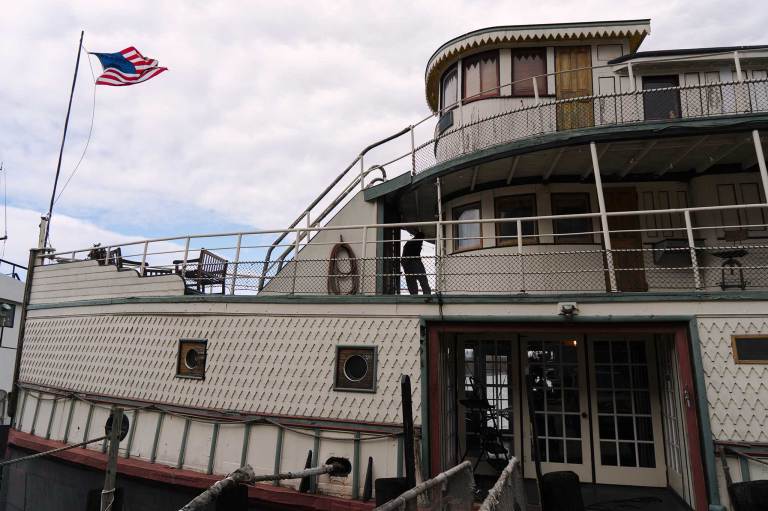
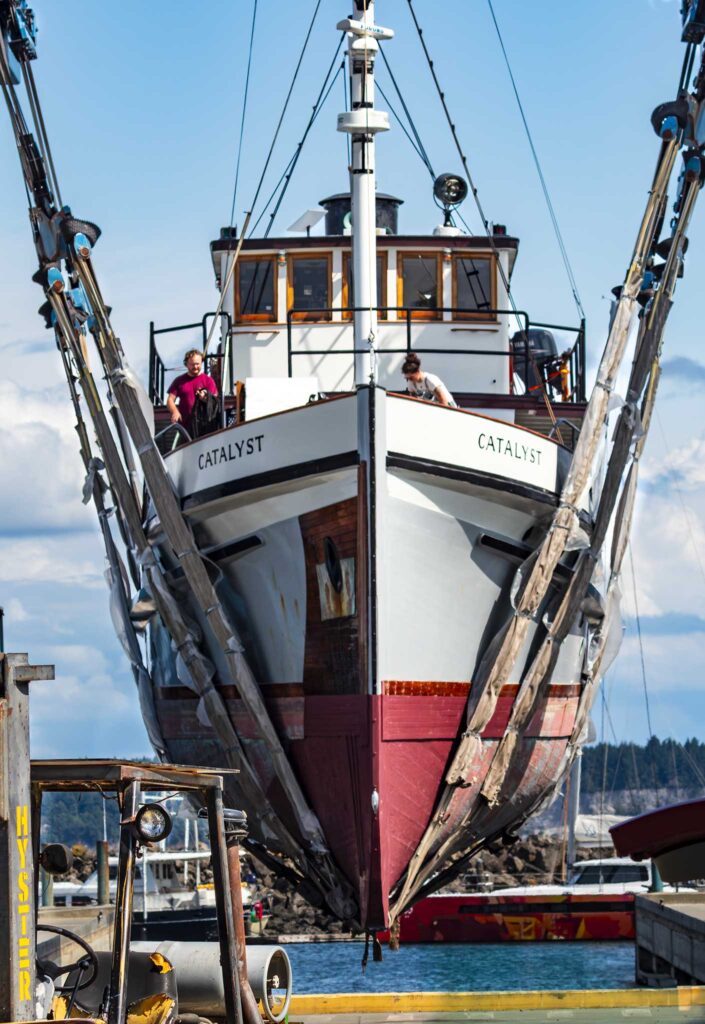
One of those boats is the 86-foot Westward designed by L.E. “Ted” Geary and built in 1924 at the J.A. Martinolich Shipyard on Vashon Island. As the flagship of the Alaska Coast Hunting and Cruising Co., it was inspired by the salmon cannery tenders of the day and is still powered by her original 4-cylinder Atlas engine. She also worked on Catalyst, a 75-foot, 110-ton expedition ship with six staterooms that runs on the original power plant—a six-cylinder Washington Estep diesel. Catalyst was launched in 1932 by Seattle’s Lake Union Dry Dock Company as the University of Washington’s first oceanographic research vessel.
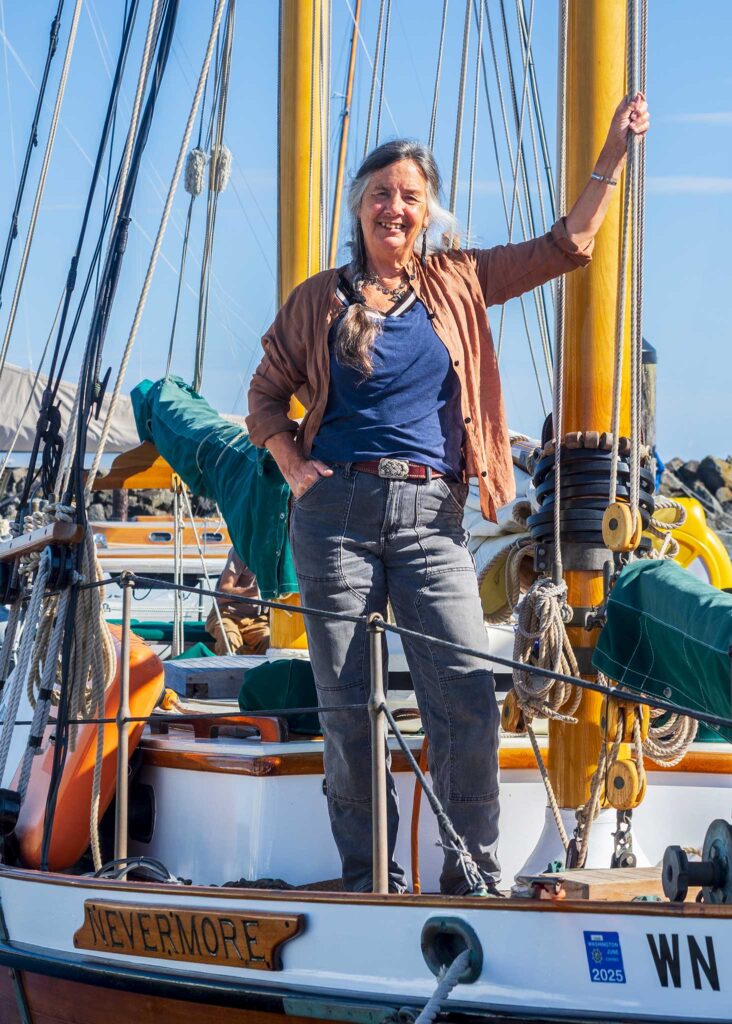
Blanchard was orchestrating the finish work on both boats simultaneously, within tight timelines and budgets, and the experience taught her valuable lessons. One was the fine art of coordinating and supervising skilled and unskilled workers to obtain their best efforts. Then there was the 18-month restoration for a German client of Arequipa, a 65-foot Madden & Lewis motoryacht built in 1927. Smaller projects have included the Cape George 45 Robert Lewis, a high-tech fiberglass cutter with a teak-and-mahogany exterior; and Nevermore, the Howard Chapelle-designed 51-foot schooner built from cedar on an island in British Columbia in 1981. Blanchard stripped the entire hull, longboarded and revarnished it with 12 coats in 2006 and again in 2024.
She has a reputation for serving her clients with genuine concern for their assets. “Some are more like my boats,” she quips. “I notice things all the time, call the owner and recommend people to look at it. Sometimes I’m like a mother to those boats.”
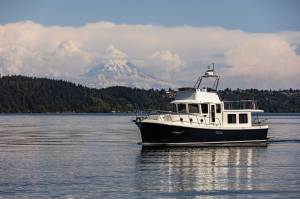
One of her clients is Scott Wilson, who has owned his 1974 Grand Banks 42 Scout since 2017. He has worked on the boat “as a gopher and apprentice” alongside Blanchard. “Joni is a master craftsperson who literally wrote the book on refinishing wood on vessels,” he says. “She knows all the techniques, the varnish options, the sequence of steps, the high standards.”
Wilson worries about the future for wood refinishers like Blanchard, in part because of the dwindling number of wooden boats. “But it’s also hard work, and the ones I know, like Joni, may not be doing it in a few years.”
Blanchard also wants to see a healthy cycle of generational change in her trade. Like many others, she thinks apprenticeships are the foundation for the industry’s future. She considers herself lucky to have worked alongside excellent shipwrights and finishers. “I’ve learned tidbits from just about all of them,” she says.
Bryan Hayes, she says, hired her when she was new in town. He instilled in her patience and attention to detail, which are indispensable for good finish work. Tom George started the company that operates Catalyst and Westward. He instructed her about caulking and fillers, how to deal with rot and stains, how to stop rust and paint metalwork, and how to do deck seams and deck finishes. “He also taught me efficiency, strategy and how to keep a project running smoothly, yet with quality,” she says.
These days, Blanchard is teacher and mentor. She conducts varnish workshops for amateurs at the Port Townsend Wooden Boat Festival. She also hires and teaches inexperienced practitioners who are looking to fatten up meager funds, including the children of friends, recent boat school graduates and prison work release candidates. Some of the people she taught now run their own finishing businesses.
Together with a few colleagues, she recently proposed the Heritage Vessel Program to the Port of Port Townsend. It was enacted to keep wooden boats or locally built fiberglass craft in town when they change ownership. So far, four classic vessels remained in port because of that program, which allows new owners to retain the boat’s previous slip without having to go on a wait list.
That’s a win-win, according to Blanchard. “We can continue to work on these boats as we have done for decades, for the benefit of the boats, the new owners, the local tradespeople and the economic vitality of our community.”
November 225