Greenmars, CC BY-SA 3.0, via Wikimedia Commons
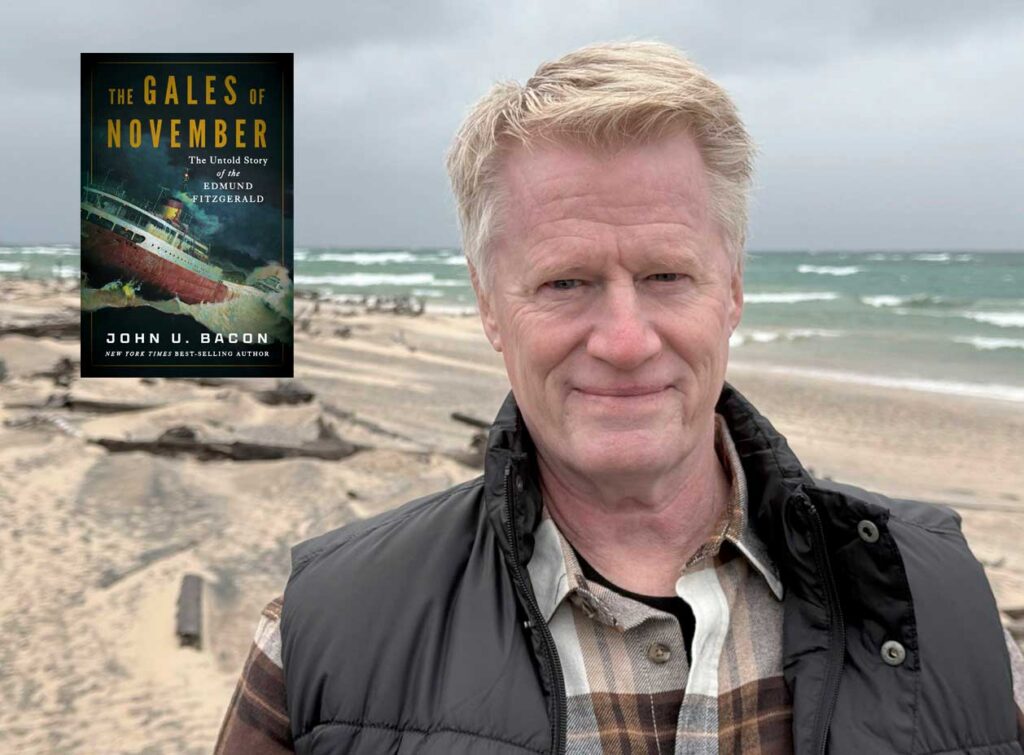
An odd thing has been happening to author John U. Bacon when he attends book signings for his bestseller The Gales of November: The Untold Story of the Edmund Fitzgerald.
“People tell me they think the song is fictional, or that it’s about some schooner from the 1860s,” he says, adding that readers younger than 40 sometimes admit they’ve never even heard of Gordon Lightfoot’s folk ballad that memorialized the freighter’s Great Lakes sinking in November 1975.
Then again, Bacon says, readers of all ages who think they know the story of the Edmund Fitzgerald find themselves surprised, too, after reading his book, which came out last October and has spent many of the weeks since on The New York Times bestseller list.
Bacon grew up on the Great Lakes and was in sixth grade when the ship sank. It was a subject his grandfather often discussed with him.
His original reporting included speaking with six crewmen who had been on the ship prior to its fateful sailing that killed all 29 men aboard. Bacon also interviewed members of 14 of those 29 men’s families, allowing him to humanize the tragedy in ways that no historian or author had previously achieved.
The original reporting is what makes The Gales of November different. There are other books about the famous wreck, of course, but most are about the whodunit of what happened and why people believe the ship ultimately sank.
“I wanted to go beyond that,” Bacon says. “I think there’s a fascination. It hasn’t really been solved. We’re getting closer to the answer, but we don’t even try to close that loop. And there’s something elemental about humans in a ship fighting for their lives. It’s about existence. Bad things happen. How do you handle them? That basic idea of a story draws us every time.”
The original interviews took Bacon about three and a half years to complete, he says, following introductions to some of the family members that he received through the director of the Great Lakes Shipwreck Museum. Sometimes, the people had been approached for interviews in the past but declined. In one case, it took Bacon an entire year to persuade a single person to talk.
And that was after he had thought about doing these interviews for decades. Bacon says he first pitched the idea for the book to his literary agent in 2005. The concept had been in his brain for what felt like forever, with his grandfather telling him about the wreck of the Edmund Fitzgerald his whole life. It had happened when Bacon was in sixth grade. During all the years he’d spent growing up on the Great Lakes, sailing to places like Mackinac Island and beyond, and listening to his grandfather talk, he’d routinely return to wondering about the sinking.
“I always had the song in my head,” he says. “I was thinking about what these 29 people were like. I’d see these ships, and I didn’t know anything about them. I love when people say, ‘Oh, I know all about that.’ Trust me—I didn’t know most of what’s in this book four years ago.”
The sinking of the Edmund Fitzgerald changed the very idea of when it was safe to be out on the water, for commercial and recreational vessels alike. From 1875 to 1975, Bacon says, there were at least 6,000 shipwrecks on the Great Lakes, with about 30,000 crew lost. “These are the low estimates,” he says. “But since the Edmund Fitzgerald, it’s zero. Not one commercial shipwreck on the Great Lakes.”
The reason for the change was a new respect for weather and the damage it can do, even to a 729-foot vessel. Nobody knows exactly what ultimately took down the largest-ever ship to have sunk on the Great Lakes, but everyone agrees that weather played a big role in its demise.
Bacon says the captain knew about an Alberta clipper storm out of the northwest that was common at that time of year, but there was also what Bacon describes as a “panhandle hooker,” a storm that hooks around the panhandles of Oklahoma and Texas, then swirls up to the Great Lakes.
“NOAA knew about it but didn’t tell him,” Bacon says, adding that the maritime industry was far more complacent about weather forecasting back then than it is today. A few alerts went out, but forecasters grossly underestimated what the vessels would encounter out on the water.
“If the captain had really known what he was up against that day, he wouldn’t have gone out,” Bacon says. “Hundred-mile-an-hour, hurricane-force winds and up to 60-foot waves. It’s beyond crazy.”
The clipper and the hooker systems collided in front of Whitefish Bay, which Bacon describes as “basically the bathtub drain for Lake Superior.” The ship could not have been at a worse place at a worse time.
“It was like 9/11,” he says. “It was such a shocking event that the complacency ended immediately. It was like with the Titanic—all of a sudden, you had enough lifeboats. With this, communication improved. They figured out that you wait a day.”
Bacon says writing The Gales of November gave him new respect for the importance of waiting for weather to clear before heading out on the water, too.“It’s true on any boat that you’re on,” he says. “It’s friendly. It’s fun. It’s wonderful. But it can change very fast.”
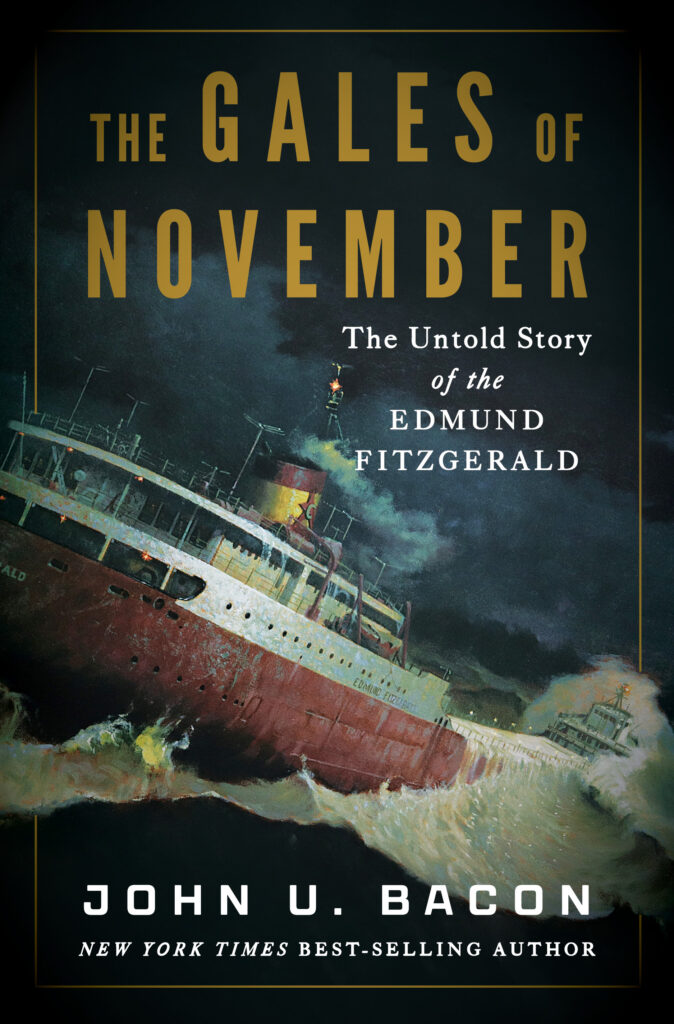
Bacon’s original reporting differentiates his book from others. His sources include six crewmen who had been on the ship prior to the fateful sailing that killed all 29 men aboard.
This article was originally published in the April 2026 issue.