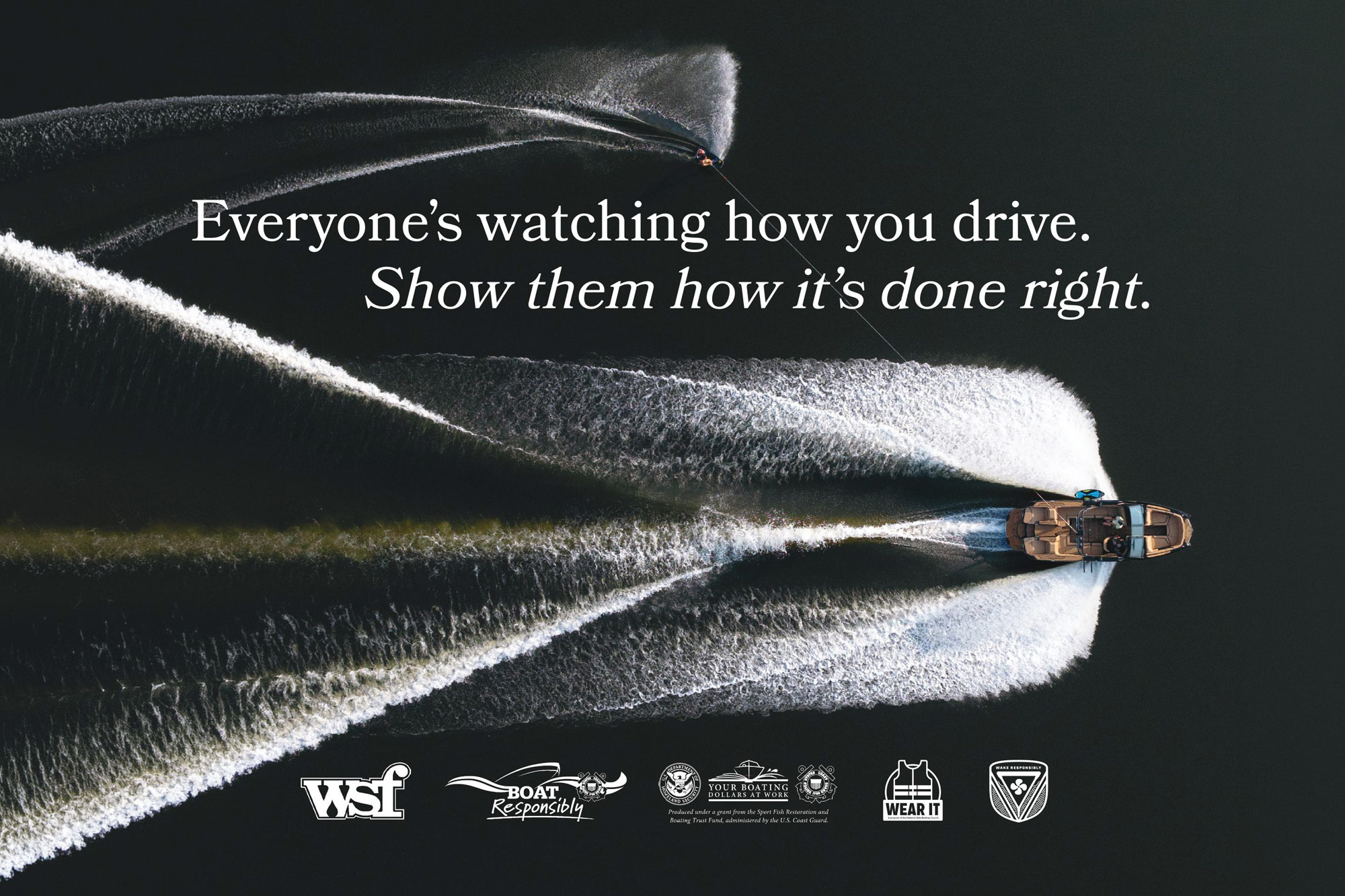
In an era of increasing scrutiny on wake boats and towed watersports, the Water Sports Industry Association (WSIA) has positioned its Wake Responsibly initiative as a proactive defense of critical waterway access and a unifying standard for the industry. The program provides a strategic framework for dealers and manufacturers whose business depends on protecting waterway access, strengthening community relations, and sustaining long-term market growth.
The nationwide campaign was created in 2015 to minimize conflicts on waterways by promoting courteous boating practices and shared-use awareness. The campaign emphasizes three foundational behaviors.
- Stay at least 200 feet from shore, docks, and other boats.
- Keep onboard music at a reasonable level.
- Minimize repetitive passes in the same area.
These principles are intentionally simple, but their impact is significant. They directly address the most common complaints tied to wake boating, including shoreline erosion, dock damage, and noise. By engaging brands, dealers, and instructors in the importance of promoting these core principles, the industry speaks with one voice. That reinforces the messaging to boaters and local communities alike.
For manufacturers, this alignment also supports product positioning. Technologies like surf systems, ballast controls, and onboard mapping can be framed not just as performance enhancers, but as tools that enable responsible operation.
Education as a Market Safeguard
The WSIA and its partners in the industry have developed a full-scale educational platform around the Wake Responsibly principles. The initiative includes videos, digital content, downloadable dealer materials, signage, and in
person seminars. WSIA has delivered dozens of training sessions nationwide, equipping both new and experienced boaters with the best practices for safe and courteous operation.
“When we decided to evolve this initiative from simple signage into a comprehensive, proactive education program, it marked a pivotal moment for the industry,” said Lee Gatts, WSIA’s executive director. “It was a collective step forward – demonstrating our commitment to instilling good boating habits before bad ones take hold. By focusing on education early, we can reduce conflicts on the water and ensure we all serve as responsible stewards of our precious waterways.”
This education-first approach reflects a broader industry strategy of self-regulation as a means of preserving access. As wake surfing faces legislative pressure in certain markets, demonstrating a commitment to responsible use becomes critical. Programs like Wake Responsibly show policymakers that the industry is actively addressing concerns. This is a critical element of the WSIA’s wider effort to combat restrictive regulations.
These efforts have been broadly successful. In the last decade alone, homeowners have attempted to shut down water sports across dozens of waterways in the United States, complaining of shoreline erosion, dock damage and loud music. As the towed water sports industry’s leading advocate for preserving the vitality of these activities, the WSIA has played a leading role in defending access to waterways under threat.
The campaign also fosters a culture of safety and proficiency among participants. Through its nonprofit educational arm, The Water Sports Foundation, the WSIA has partnered with the U.S. Coast Guard to include safety education as part of the broader Wake Responsibly goals of promoting courteous operation and protecting access.
Stewards of the Waterways
For dealers and OEMs, Wake Responsibly represents a powerful touchpoint in the customer journey. From the showroom floor to on-water delivery, every interaction is an opportunity to reinforce responsible boating habits and strengthen brand trust.
Consumers increasingly expect brands to stand for something beyond performance. By integrating the Wake Responsibly tenets into their sales and service activities, marine businesses can position themselves as stewards of the waterways, not just sellers of boats.
Here’s how:
- Integrate Wake Responsibly into every boat sale. Make the campaign part of your standard delivery protocol. Include a brief education session during handoff, provide printed materials (available at www.wakeresponsibly.com), and reinforce the three core principles in conversations with boat buyers. Remember, when a family purchases a new boat, they are joining the towed watersports community (or if they’re upgrading, reinforcing their commitment to it). Remind them that being part of the tribe means representing it well to the wider community.
- Activate your marketing channels. Leverage your existing platforms – email, social, in-store displays – to amplify the campaign. WSIA provides ready to-use creative assets, making it easy to maintain consistent branding and messaging across the industry.
- Host or partner with local education events. Consider working with marinas, law enforcement, and community groups to host or participate in Wake Responsibly seminars or demo days in your area. These events build goodwill with local stakeholders while reinforcing your role as a responsible industry leader. They’re also excellent sales opportunities.
The Wake Responsibly initiative gives dealers, manufacturers and instructors the framework to defend critical waterway access. It shifts the narrative from reactive defense to proactive leadership, demonstrating that the industry can grow responsibly while preserving the environments and communities it depends on.
For boating professionals, Wake Responsibly is more than good ethics. It’s good business.
Please visit wakeresponsibly.com or wsia.net for more information.