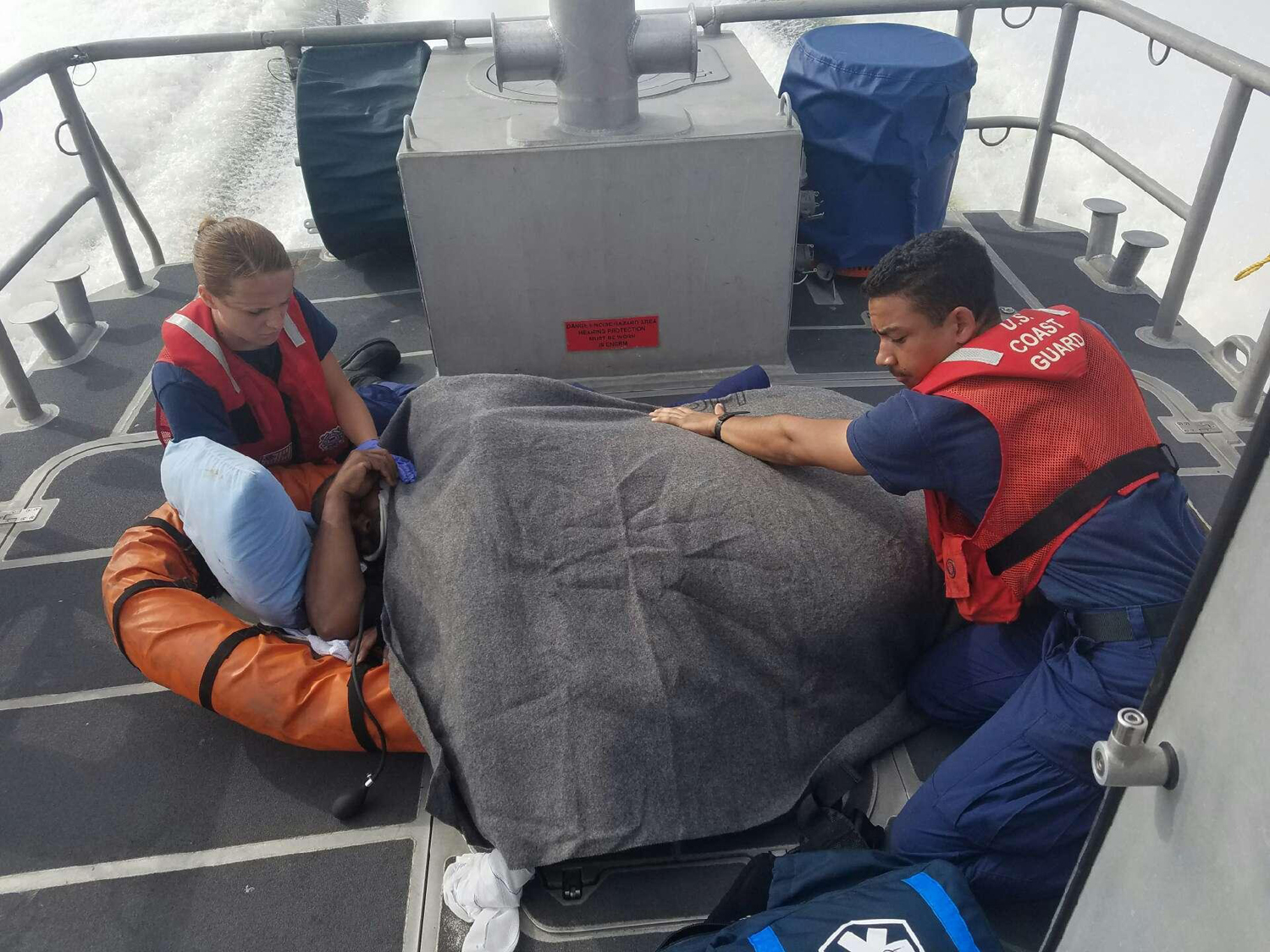

The USCG was quick to respond. USCG
It took just minutes for our mayday beacon to ping off a NOAA satellite and reach the Coast Guard’s Southeast Command Center near Miami. When it was received, the emergency alert was simultaneously routed to a watchstander for verification and relayed to the crew of a Coast Guard helicopter for immediate response.
While the watchstander followed up on our personal locator beacon’s registered contact information, the flight crew got ready to execute a rescue. A pilot, co-pilot, rescue swimmer and flight mechanic were redirected from their day’s training, the helicopter’s rotors cutting through the sky as they turned east off the Florida coast.
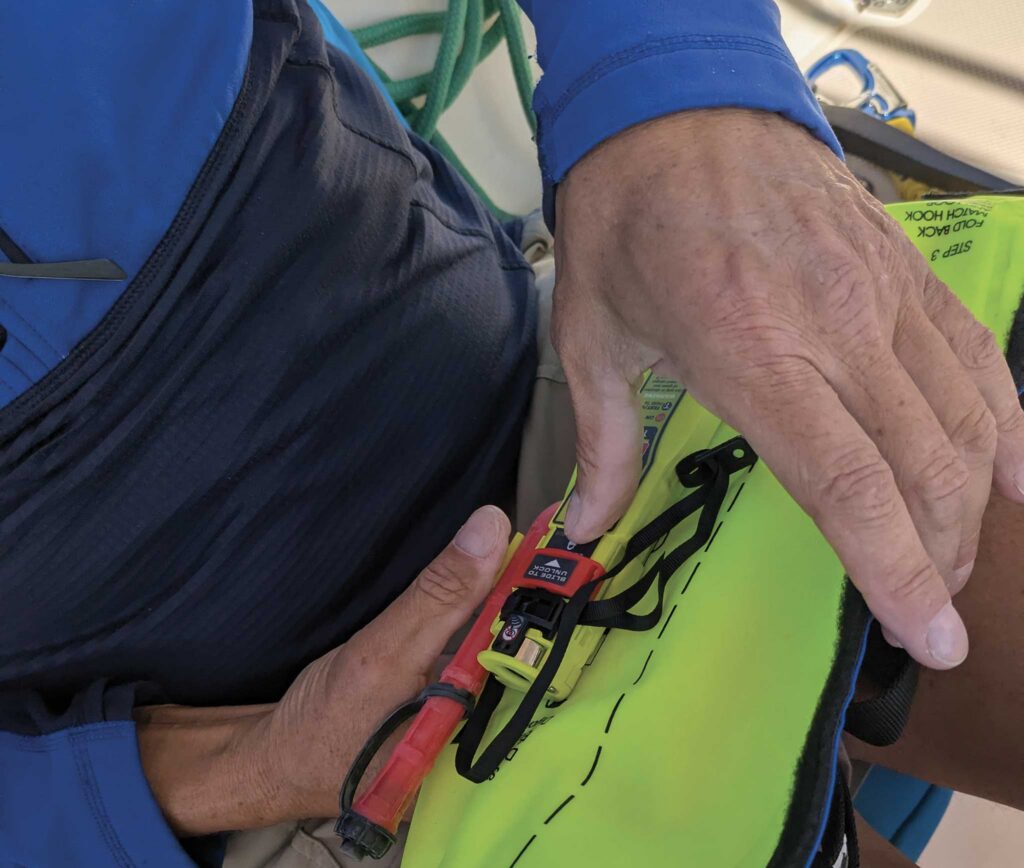
Time is of the essence in a rescue at sea. The PLB was activated at midday, but in late January, daylight is limited, and they had at least 60 miles to cover to reach us. Without any immediate information on the emergency, the helicopter crew had to be prepared for anything, including an extensive search or a crewmember who fell overboard. They simply flew toward the coordinates provided by the PLB, not knowing what they’d find.
Except, there was no emergency.
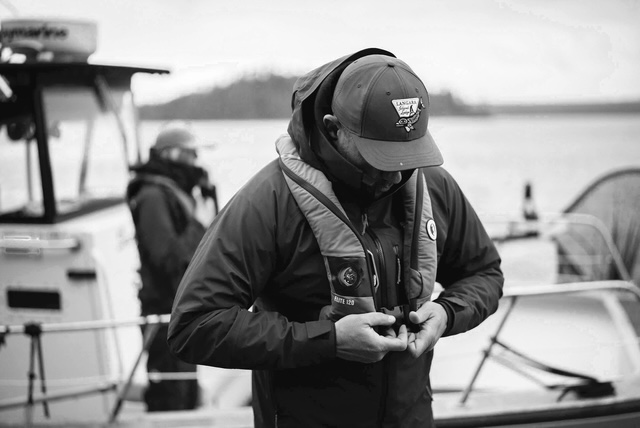
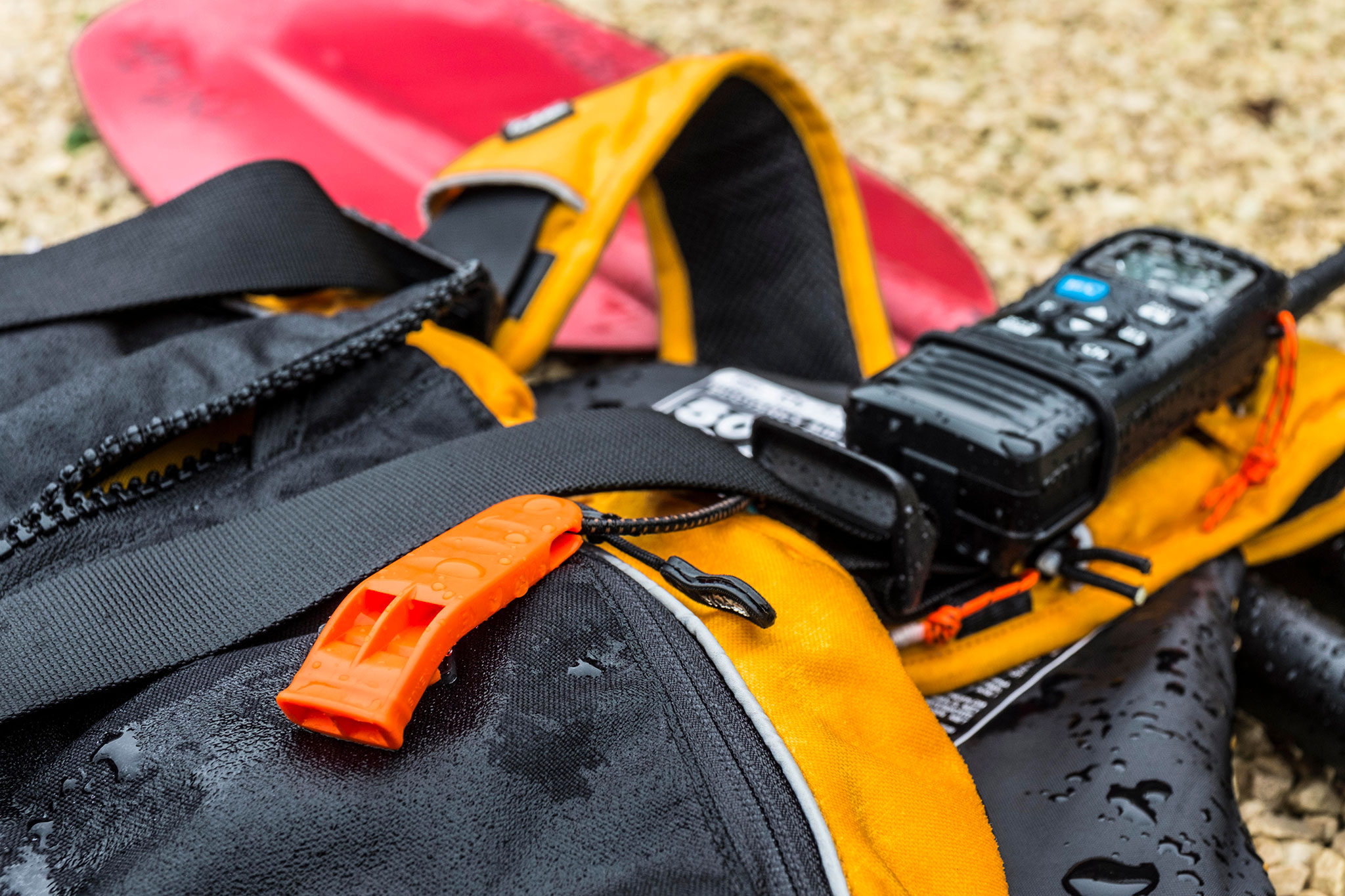
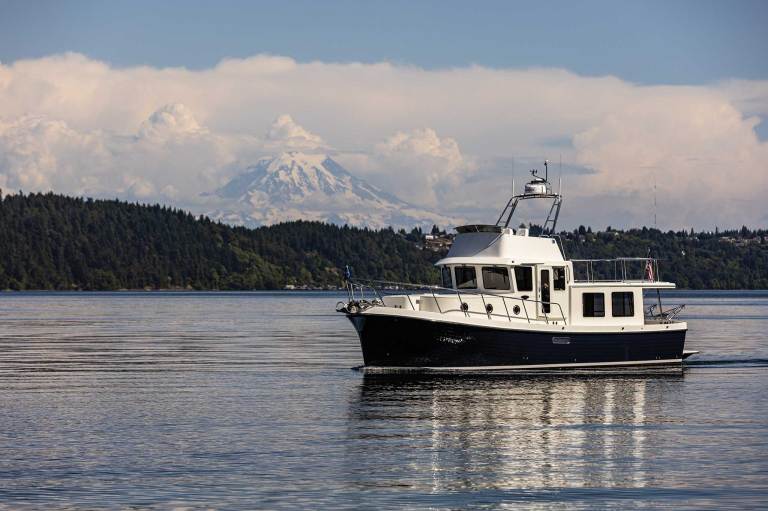
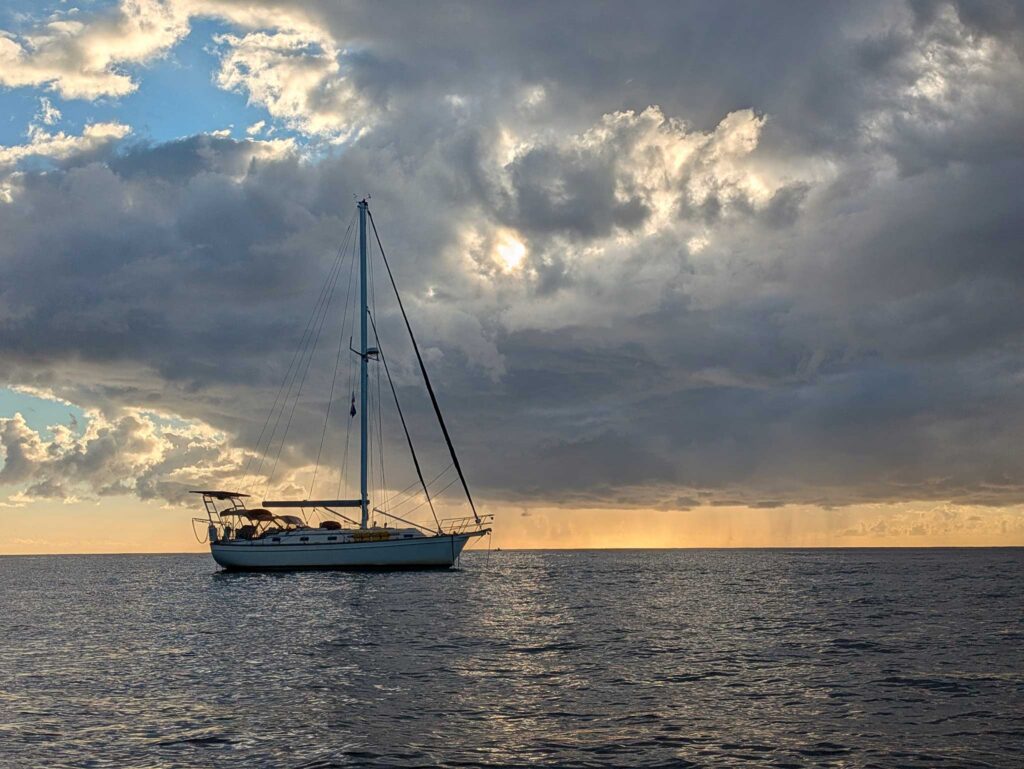
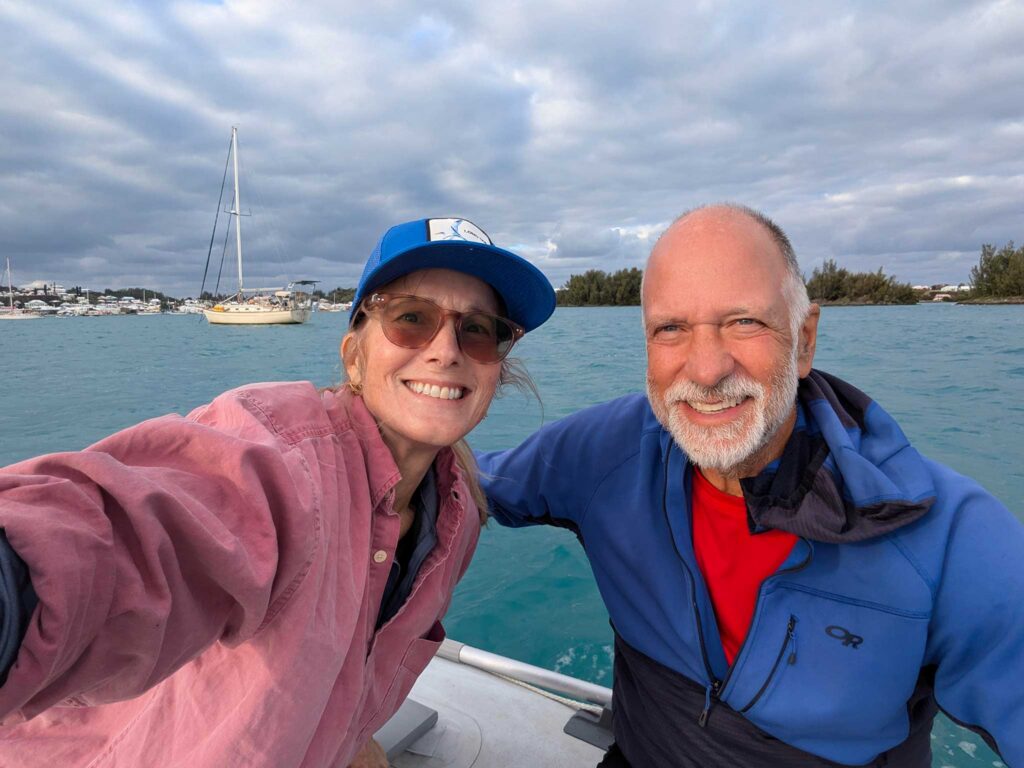
My partner John Pike and I had accidentally and unknowingly activated our new PLB while fitting it to a life vest. While the helicopter that was activated for the rescue, an MH-65 Dolphin, was skimming off the Florida coast, we were safe and secure in our boat, a 1998 Island Packet 40 named Fujiko, anchored on the Bahama Bank a few miles from Bimini.
The Coast Guard watchstander ran through the standard emergency
response. They found the device’s registration information (which I’d just completed an hour before) and contacted John’s daughter in New Hampshire. Working in conjunction with a search-and-rescue mission coordinator, the watchstander sought information to relay to the flight crew, including details of the boat and who was on board.
The helicopter was halfway to Bimini when I received a text. In a 3,000-mile game of “telephone,” John’s daughter reached my daughter in Boston, who messaged me that the Coast Guard was on the way. It was a bad time to find out that my cellphone couldn’t make calls over our Starlink Wi-Fi connection, nor could John’s. As I frantically tried to contact the Coast Guard to tell them we didn’t need a rescue, the telltale orange and white helicopter came into view.
While they circled our boat, we had a friendly conversation over the VHF with the aircrew, confirming that we were not in distress and that the PLB had been activated by accident. The helicopter turned back toward Florida and disappeared.
When we tell this somewhat embarrassing story to friends, their first question is always, “Did they send you a bill for the rescue?” My research shows an hour of a Coast Guard aircrew’s time, with a helicopter, can run to tens of thousands of dollars. Yikes, was my response.
The Coast Guard receives about 16,000 maritime emergency alerts a year—by phone, EPIRB, PLB and VHF radio. That’s between 40 and 50 a day. Just a few are emergencies that include sinkings, medical issues and crew-overboard situations. I was surprised to learn that about 98 percent of the mayday messages received by the Coast Guard are erroneous. Many people, like us, mishandle PLBs and EPIRBs. They accidentally activate them, triggering the same high-level reaction from the Coast Guard that a true emergency demands.
The Coast Guard assumes the boater is in distress until it receives information that contradicts the mayday signal. The protocol includes evaluating and classifying calls according to the level of danger and responding accordingly.
The highest priority call is an emergency/distress situation. This is an alert from an emergency beacon or VHF call on Channel 16 that triggers a search-and-rescue response.
The next level is categorized as “alert” status. After the Coast Guard receives responses to a series of questions about the situation, the people aboard and their location, a distress call can be downgraded to alert. In this situation, the Coast Guard may put out a mutual aid request to other boaters or direct a commercial towing company to aid the boaters if there are no Coast Guard assets nearby.
The lowest-priority situation that the Coast Guard monitors is “uncertainty.” This includes a missing buoy or an obstruction in the water. In 2025, the Coast Guard executed 6,705 rescues, saving more than 2,200 lives and $40 million in property.
As for the answer to our friends’ question, no, we weren’t billed for mishandling the emergency beacon. The Coast Guard is prohibited by law from billing boaters for rescues, even when it was a dumb mistake. But we’ve paid in humility.
“The Coast Guard is dedicated to ensuring the safety of the maritime community, and all rescue operations are supported by federal funding,” says Chief Petty Officer Nicole Groll, Coast Guard public affairs specialist. However, intentionally misusing Coast Guard resources by transmitting a hoax emergency is a different story. It’s a felony that can potentially include steep fines and jail time.
Righting human error is a big part of the Coast Guard’s work. Personnel mount searches and seek help from the public every time an unoccupied kayak or paddleboard is found adrift, just to be sure no lives are in danger. The tally for those missions can be high, with the cost of aircraft, staff and search-and-rescue coordinators on the ground running into tens of thousands of dollars.
How can boaters help the hardworking Coasties? We can start by securing kayaks and paddleboards that might float away from docks, and learn to safely test EPIRBs and PLBs using the manufacturer’s instructions. Those are just a few ways to reduce false alerts. Unregistering old EPIRBs or PLBs when they’re transferred in a boat sale or thrown away is important, too. That reduces emergency responses when an old EPIRB activates in a landfill.
My takeaway from our unfortunate mayday transmission was to immediately find a solution for Wi-Fi calling from the boat so I can responsibly stand down the cavalry if our PLB or EPIRB is accidentally triggered again. In addition, I added the USCG Office of Search and Rescue to my phone contacts: (855) 406-8724. —Alison Oleary
This article was originally published in the May 2026 issue.