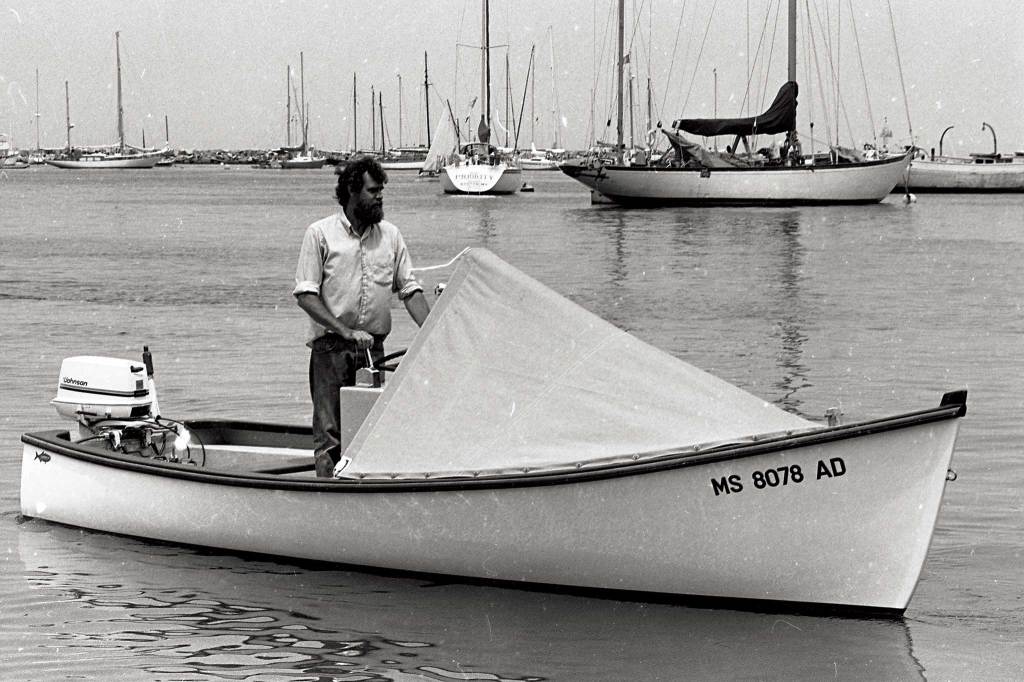
I sold my 18-foot Tashmoo more than 20 years ago to the town of Vineyard Haven, on Martha’s Vineyard, where then harbormaster Jay Wilbur met me in Woods Hole, looked the boat over, handed me a check and told his assistant, “Take her home.” I called Wilbur every few years for a time to check on the boat, and he couldn’t have sounded happier to have it in the town fleet.
Admirers of traditional Downeast skiffs will be pleased to learn that the venerable Tashmoo line of small boats has found a second life.
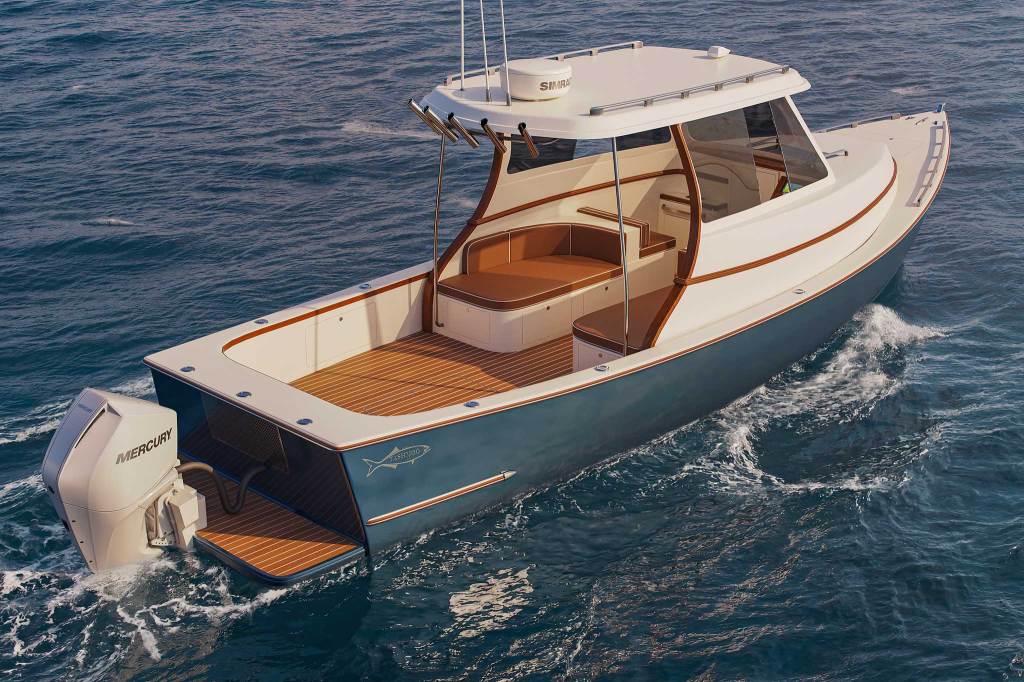
The handsome, seakindly outboard boats were built for more than a decade on Martha’s Vineyard. Now Floridian David Reiter has acquired the molds. Three 18-footers (and drawings of a 24-foot model) will be displayed at the Newport International Boat Show in Rhode Island, which opens Sept. 17. The 40-hp outboard that power the 18s will give the skiffs a top speed in the low-to mid-30-mph range.
Small-boat guru Mark Castlow is building the new Tashmoo line at his Dragonfly Boatworks facility in Vero Beach, Florida. Castlow has a reputation for building quality, shallow-water fishing skiffs, flats boats and yacht tenders. He says the company is also building a 24-foot Tashmoo, which was being tested in early July.
Castlow is a good choice for the skiff project. A Florida native and former surfboard builder, he has a seasoned eye for handsome lines and has long built quality small craft. During the 40 years he has turned out small boats, he has gained a wealth of experience building strong, lightweight outboard skiffs.
“I’m a sucker for the classic stuff,” says Castlow, who is 74. “We’re building them from the original tooling. We’re trying to capture the real bones of them.”
He enjoys customizing small boats to fit the needs and whims of individual owners. “I like building boats for people, not dealerships,” says Castlow, who for 13 years ran the Shallow Water Fishing Expo, a series of shows that introduced anglers to light-tackle, saltwater fishing. “The conversations you have with someone you’re building a boat for become real personal. They’re buying the boat, and they’re buying you, too. Not everything is vanilla ice cream.”
The Tashmoo line of 15-, 18- and 24-footers was originally built by Dan West, who started the Machine & Marine business on Martha’s Vineyard in the 1980s to build boats and operate a marina. He sold the company 14 years later, although he continued to build Tashmoos for several more years.
West—a smart, salty boatbuilder and sculptor—later moved with his wife, Kyra, to Friendship, Maine, where he worked as an artist. West died in 2021 at age 79.
“The lines were right. Everything about it was right,” says Kyra West of the Tashmoo 18. “It’s a superb little boat.”
West brought one of his 18s to Maine when he and Kyra relocated there, and they used it regularly. “He loved the boat,” Kyra says. “We used it until he passed.”
I bought an 18-foot Tashmoo from West about 38 years ago and visited him on the Vineyard, where he shared the boat’s origin story. West had found the old wooden skiff moldering in a salt marsh in Lobsterville on the Vineyard. The small boat had last been used to tow a small bay-scallop dredge in the island’s salt ponds. Where others might have seen only a ramshackle workboat and loose planks, West recognized the lines of an authentic Jonesport, Maine, lobster skiff. He rescued the derelict from the marsh and worked it into acceptable-enough shape to pull a plug from it and build a mold.
New Tashmoo owner Reiter has a 65-foot Vicem powerboat, but he is a happy convert to the world of compact craft. The hours he and his sons spent knocking about in a small boat in Florida made him and his family believers. “These are the memories I want to create for my children,” says Reiter, 42, who lives in Miami with his wife and two sons, who are 6 and 8 years old.
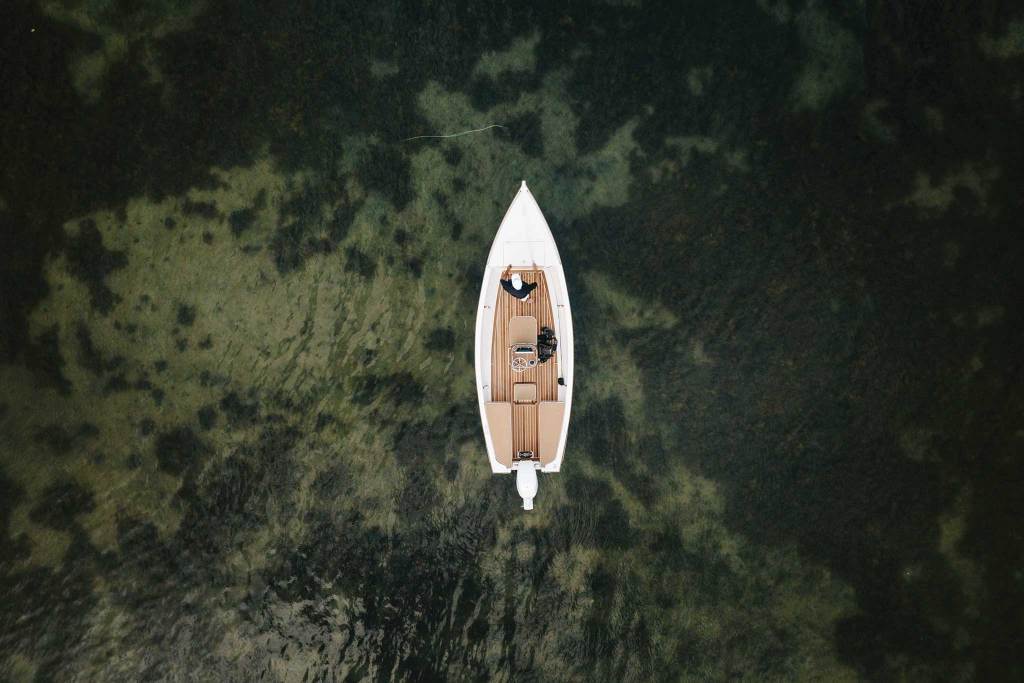
A partner in a company that leases commercial aircraft, Reiter was immediately attracted to the look of the Tashmoo, whose proud bow, sweeping sheer and tumblehome transom has turned heads from day one. “The lines of the boat combined with the simplicity of it,” Reiter says. “I have a passion for the look. The Tashmoo is a simple boat with no distractions. Something just drew me to those lines.”
Early this July I spoke with deputy Tisbury harbormaster Morgan Reitzas, who said my old Tashmoo with the green foredeck is still going strong. “I love the boat,” Reitzas says, adding that the town has two Tashmoos. “It’s our harbor skiff. We use it to check moorings. I’ve even saved a few sinking boats with it.”
The Tashmoo story seems both inevitable and improbable—even perhaps ordained given West’s early exposure to working with his hands and his love of boats, the sea and art. And farfetched given how long the molds sat dormant and their unlikely origin story.
A longtime Vineyard resident, Nathaniel (Dan) Eldridge West, came from a family with a rich nautical background. He credited his grandfather, Wilfrid O. White, with starting him on a path that led him to boatbuilding and, later, sculpture, according to his obituary in Maine Boats, Homes & Harbors magazine.
White let his grandchildren loose in a huge barn full of woodworking tools with minimal instruction, according to the obituary. By the time West was 8, he knew how to use a chisel, a drawknife, a spoke shave and other tools.
This same grandfather was a master compass adjuster who started a nautical instruments company in Boston. West’s middle name was Eldridge, which linked him to the Eldridge Tide and Pilot Book, first published in 1875 and still printed annually.
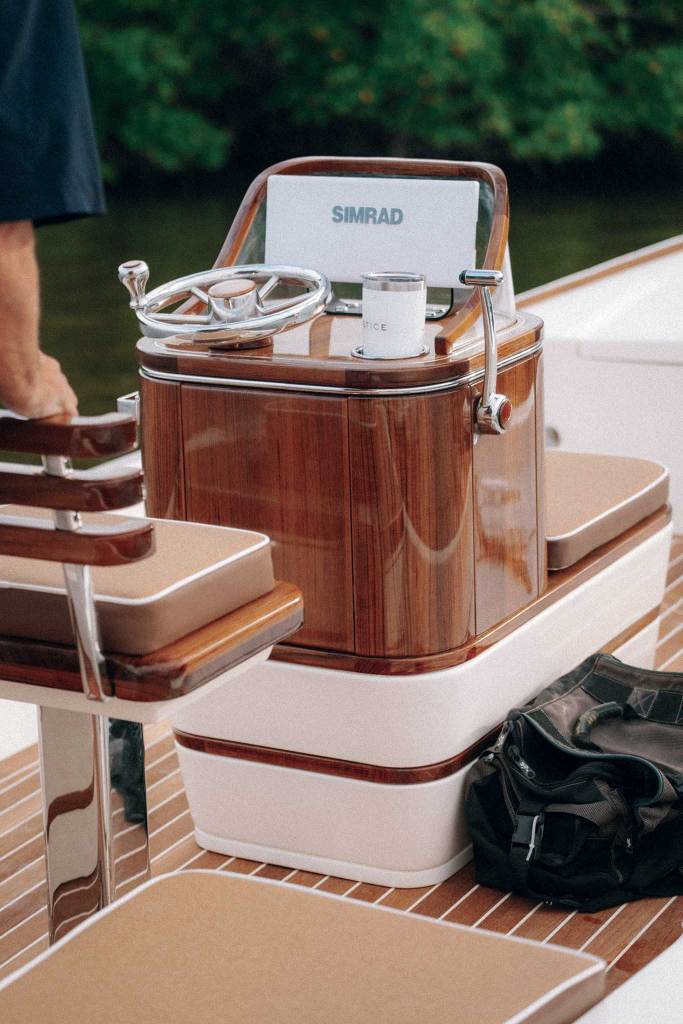
A dolled-up version of the Tashmoo 18 was shown at the Palm Beach Boat Show last winter. It had a teak console and pilot seat and a fabricated-wood transom. On the new boats, varnished teak will be replaced with a realistic hydrographic film, providing owners with the look of real wood without the cost and maintenance.
Reiter and Castlow say they received strong feedback at Palm Beach from Northeast residents who winter in South Florida. “Everyone was commenting on the lines,” Castlow says. “We really want to lean in on its heritage at the Newport show.”
Reiter says enthusiasm has continued to grow, with hundreds of inquiries arriving at the company website (tashmooboatworks.com). “The interest we’re getting is more than expected,” he says. Pricing for the boat was still being worked out when this story was written.
Launching a new boat company is exciting, demanding and not without its worries. I’m betting there will long be a place for handsome, seakindly small boats whose workboat heritage speaks to their utility and whose size and simplicity enhances the joy of simply being on the water.
This article was originally published in the September 2026 issue.