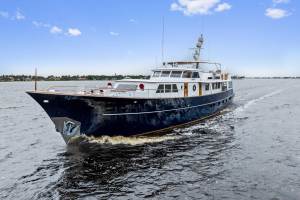
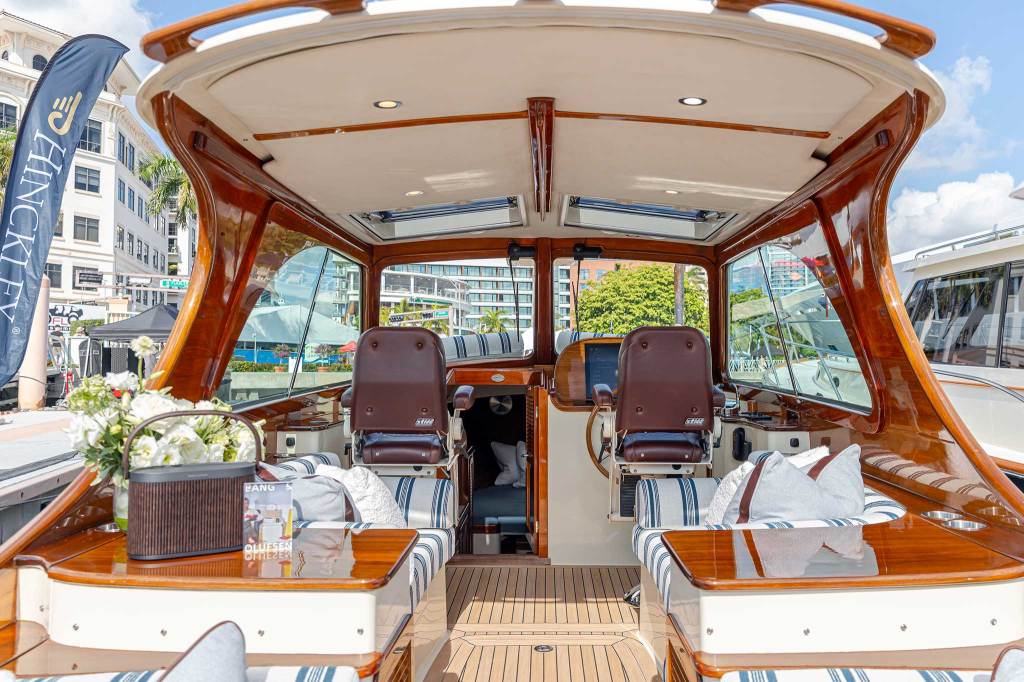
Most classic Hinkley yachts are maintained meticulously, but the sixth Picnic Boat 37, produced in 2010, was an exception. Hull No. 006 suffered from a lack of care, and its decline was further exacerbated by storm damage. So the company decided to step up. Hinckley bought the boat back from the owner, renamed it Bellerophon for the divine hero of Greek mythology, and proceeded to undertake a total overhaul to showcase the refit expertise of the company’s service yards.
After replacing most parts on the boat with state-of-the-art equipment and materials, Hinckley toured the finished 37 around the boat show circuit last spring. With a price tag of $1.2 million, it drew the attention and interest of potential buyers,
When Henry R. Hinckley founded the Hinckley Company in Southwest Harbor, Maine, in 1928, he emphasized service even before he got into boatbuilding. He focused on servicing local lobster boats as well as the yachts of summer residents on Mount Desert Island before he built his first boat, Ruthyeolyn, a 36-foot fisherman, in 1933. Not satisfied with many off-the-shelf parts available, Hinckley—who studied aeronautical and mechanical engineering at Cornell—began fabricating his own designs for hardware, such as stanchions, chocks, pulpits and masts.
Over time, the boatyard became best known for its sailboats. “He built a variety of private and commercial powerboats, but it was mostly custom and semicustom sailboats,” says Scott Bryant, Hinckley’s vice president of marketing. The situation changed dramatically in 1994, when Hinckley developed the first Picnic Boat 36, and began focusing on powerboats with waterjet propulsion.
“We haven’t built a sailboat in a couple years,” says Bryant. “But when Henry Hinckley started building his initial boats, he was doing service on them as well because he had this appreciation for the whole life cycle of the product. He was always in that frame of mind that you must have good service to have a successful business.”
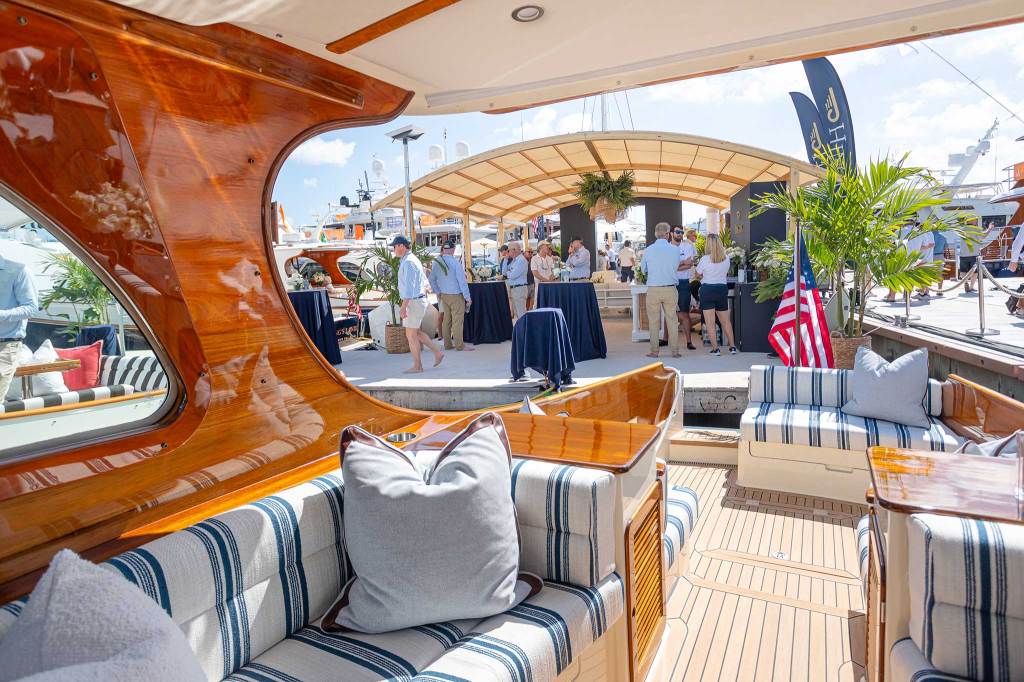
Today, the company embraces that mindset. “We started to develop a network of service yards beyond Southwest Harbor in the late 1990s,” Bryant says. “And now that reputation reaches beyond building Hinckleys in Maine—it’s in the craftsmanship we bring to service across our network. We have 11 yards up and down the East Coast that are equipped to service all premium boats, including Hinckleys.”
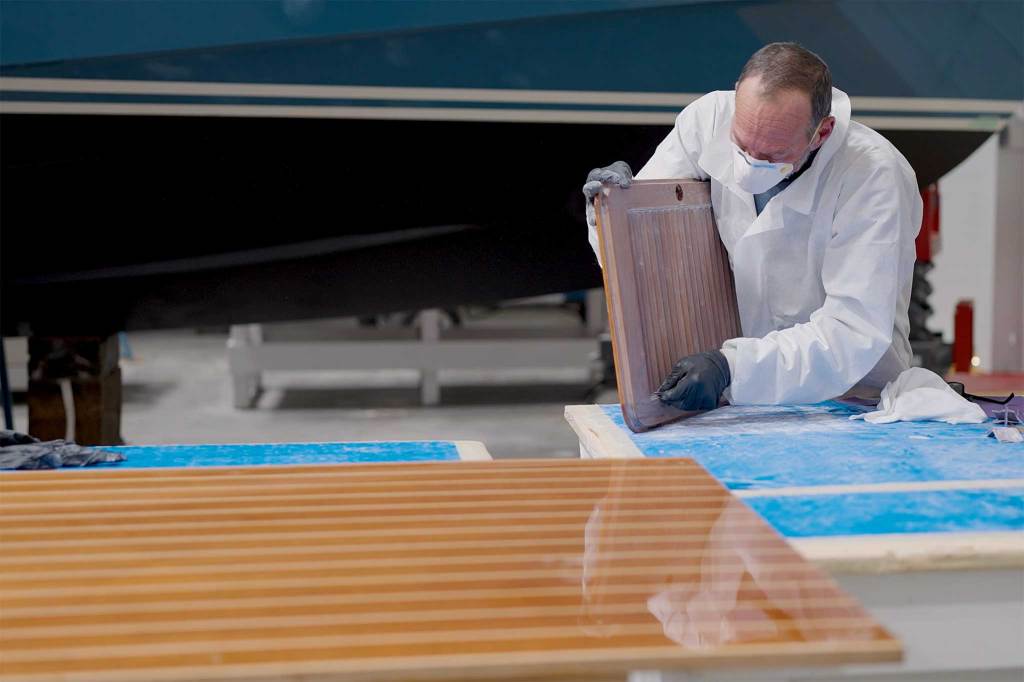
To illustrate the refitting capabilities of those yards from Maine to Florida—including the recently acquired Port of Egypt Marina on the North Fork of Long Island—a plan was made to give Picnic Boat 006 a second life. “Bellerophon is that rare Hinckley that fell out of care,” Bryant says. “We boast about the fact that our owners are stewards of their boats. I’d say 99 percent of the fiberglass models built since the 1950s are still in service today. Owners know these boats hold their value, but they maintain them because they are family heirlooms. So when we saw that 006 had fallen out of service, we bought it from the customer, who was unable to care for it anymore. We brought it up to the Portsmouth, Rhode Island, yard. We took it down to the nubs, rebuilt it, repowered it, and put really interesting technology on board.”
The overhaul began in fall 2025 and finished in spring 2026. It was executed by as many as 15 employees who put in 2,500 hours of work.
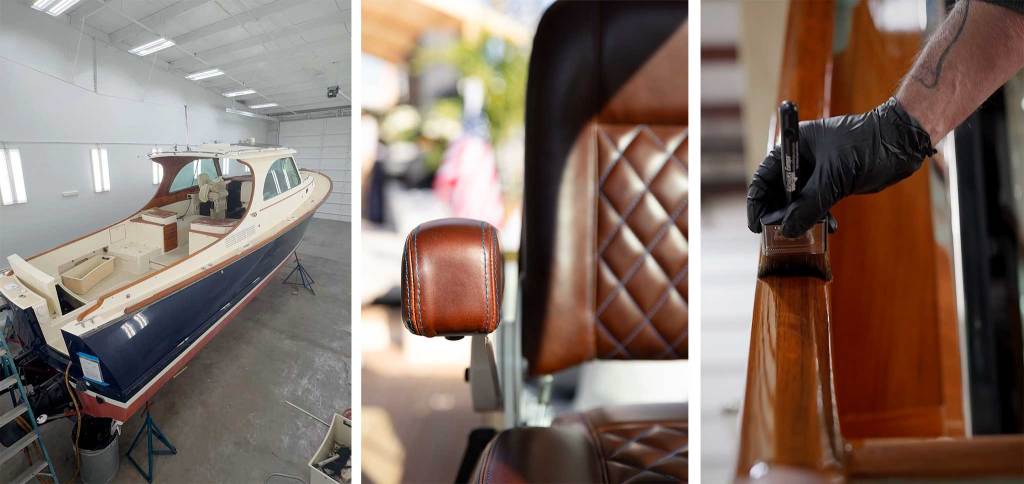
The original Flag Blue hull was repainted with Awlgrip Steel Blue Metallic and a Whisper Grey boot stripe that creates a sharper, more contemporary profile. The deck is now covered with durable, synthetic Permateek, which looks like traditional teak but doesn’t require the same maintenance. Brightwork was also restored, with fresh varnish applied at the wheelhouse veneer, capping rails and coaming. In addition, a sunpad was added to the bow area, so there’s more space for guests to relax.
As for propulsion, the original Volvo Penta D4 300-hp diesels were replaced with twin Volvo Penta D6 480-hp diesels. That required a complete re-engineering of the engine room. The original Hamilton waterjet drives were kept. With updated propulsion, the boat’s top speed went from the low-30-knot range to 40 knots.
The interior was remade in collaboration with Tack Studios, a Maine-based interior design firm that specializes in yachts and homes. Designers removed the outdated pedestal seating and replaced it with electric Stidd helm seats that were reupholstered in-house with leather hides.
There’s plenty of modern technology at the helm. A Raymarine Axiom2 XL with 24-inch display is mounted in a custom helm pod, and a pair of Axiom2 Pro 12-inch displays are mounted below for navigation support. On the port side, a matching pod houses a 16-inch Raymarine display. All on-board systems—including the Bang & Olufsen sound system and climate control—are integrated through Raymarine’s YachtSense digital switching and control system.
The refit has advanced control technologies, including Hinckley’s proprietary JetStick 4, which features Dockhold (to keep the boat against a dock so the skipper can leave the helm to tend lines) and Heading Hold (to keep the boat on its intended course). The Avikus system provides a 360-degree view of the surroundings for docking and object avoidance. A FLIR M364C thermal camera is integrated with Raymarine’s Cyclone radar, augmented reality navigation, experimental hidden lidar and RMV-400 sounding module paired with an RMV-1600 processor. This provides advanced depth capability and 3D live seabed mapping.
Support systems include a lithium battery bank that provides on-board AC power without the need for a generator. There’s also Starlink connectivity and low-profile solar integration from Solbian.
Hinckley believes the work done on Bellerophon would please Henry Hinckley and fit with his philosophy of boatbuilding and maintenance. His early designs reflected the need for boats to take on the conditions along the Maine coast. He eschewed frivolous elements while building strong hulls to shed heavy seas and provide stability.
“The bottom line for Hinckley has always been that the only way to do something is the right way,” Bryant says, “even though it may not be the easier or most economical way, whether it’s building a new boat or refitting one.”
This article was originally published in the September 2026 issue.