Thanks to the ever-present YouTube paparazzi at Haulover Inlet, this narrow cut in South Florida gets a lot of attention. Stuffed bows generate millions of views, and when the inlet stacks up with standing waves in wind-against-tide conditions, some unlucky soul will inadvertently take a wave over the foredeck if they don’t know what they’re doing, or they’re running a boat that’s not built for these waters.
As we headed toward Haulover in the first Formula 387 CCF equipped with an upper station, we were greeted with those exact conditions: east/northeast winds smacking into an outgoing tide creating stacked sets of 4- to 6-foot waves.
“Mind if I head up top?” I asked Abe Haines, Formula’s product specialist who played a big role in the development of this center console.
“Not at all,” he said. “In fact, I’ll join you.”
To access the upper station, you push a button on the leaning post, which slides a large cooler out of the mezzanine. You step on the cooler, then the top of the leaning post as you make your way up the ladder on center, open a hatch and slip through. I watched Haines go first, then followed. I banged my head on the hard top, but I doubt that was the boat’s fault.
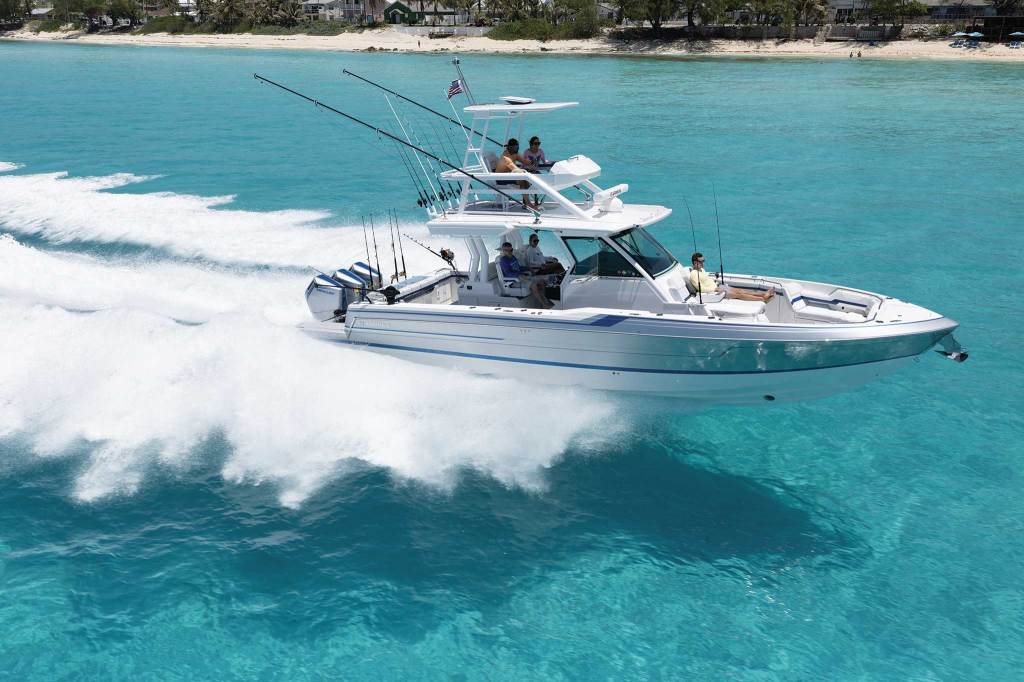
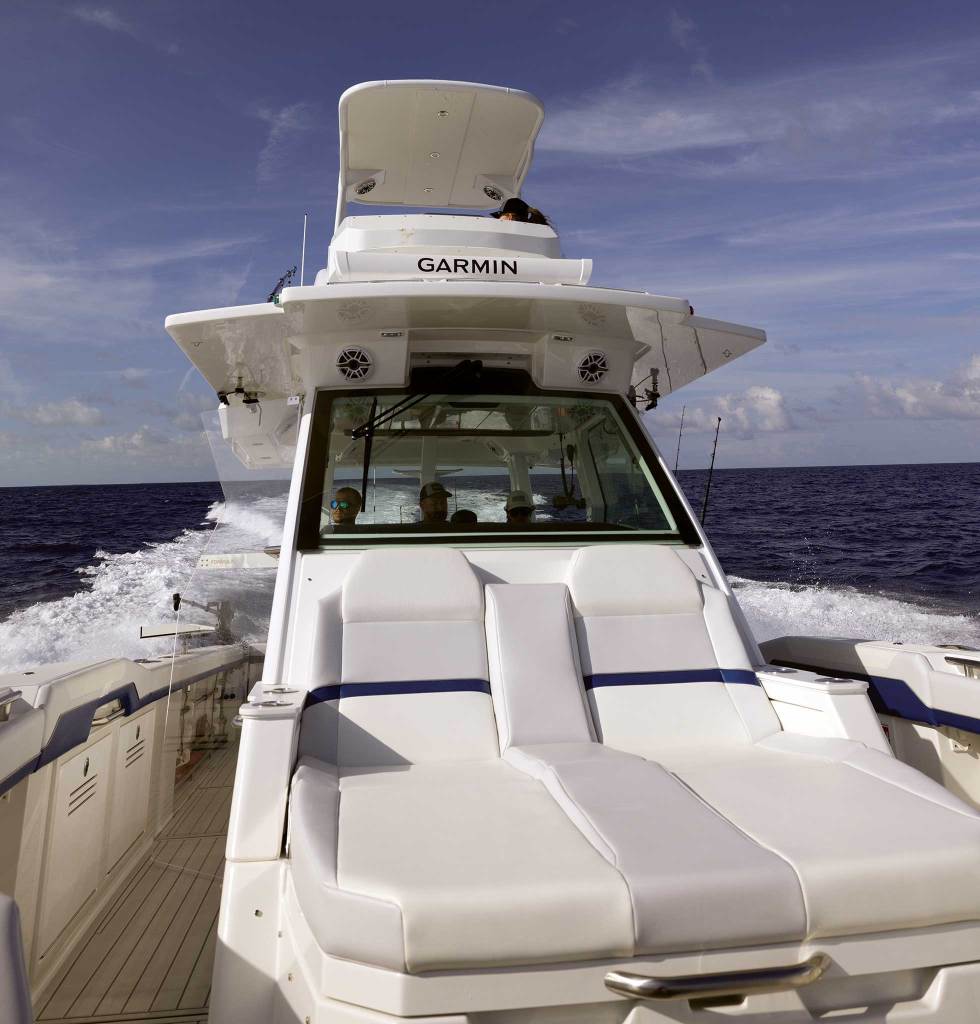
Away from the protection of the lower helm, I felt the full brunt of the 15-plus-mph winds. I sat on the lounge to port, and Haines took the seat to starboard, where the upper helm was equipped with a joystick and Garmin electronics. The upper station is an expensive option, costing $111,000, but it’s much larger than the ones I’m accustomed to on a center console of this size. Typically, these second stations have the controls on centerline and mounted a bit higher up, so you spend more time standing as you run the boat, usually by your lonesome. That’s not the case here. You could easily fit three passengers up on the Formula’s second station, making it a great perch for anglers who need to spot birds, bait frenzies and weedlines. But this area also is a cool spot to hang out and enjoy the unabated views in all directions.
Built for Big Water
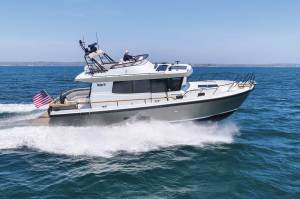
Formula builds a strong, heavy boat, and the 387CCF made quick work of the waves in the inlet, plowing right through without a drop of spray hitting my sunglasses. Haines told me they made some structural changes to accommodate the 1,500-pound upper station and prevent any unforeseen flexing. I felt no shudders or vibrations whatsoever as the bow sliced through the swells.
The upper station is built entirely of aluminum, including the buggy top that has vinyl padding underneath, like what you see in a salon. The powder-coated aluminum legs and angles match up with the hardtop legs below to give it a smart profile and continuous look.
The Porter family, which has owned and operated Formula since the 1970s, likes to build mock-ups out of plywood when conceiving new designs. Computer drawings can only tell you so much. Standing in a mock-up and reaching for a handhold can shed a lot of light on functionality. They went through this process with the upper station, and you can tell. A few design elements that impressed me were the footrests at the bottom of the helm chair, the lower bar along the edge of the deck that acts like a toe rail, and the storage built into the console so you can stash cushions there instead of schlepping them up and down the ladder.
The additional windage and weight of the upper station does not affect performance much, or the running angle of the boat. You lose about 2 mph of speed, according to Haines. The 387CCF weighs in at approximately 22,500 pounds, and we had just topped off the 500-gallon fuel tank. With 6-footers stacked closely together as they were on our test day, that weight is a good thing. The boat ran through the seas softly and didn’t pound. Lighter boats may run quicker but tend to slap as they skip across the waves.
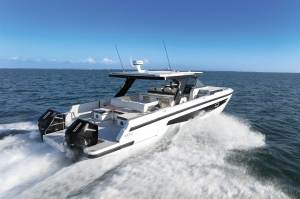
This Formula comes with multiple engine options. Our test boat ran strong with triple 425-hp Mercury Verados. You can opt for twin 600s or triple 500s, as well. Despite the lumpy conditions, we comfortably ran into the head sea at 28 knots. Running down the Intracoastal Waterway at the end of the day, we hit 44 knots at wide-open. The 425s are fuel efficient and quiet with no superchargers. Formula custom-painted the engine covers in a silver-and-blue combo that gave the outboards a racing stripe look. It perfectly matched the hull. Formula Flex offers limitless color options.
The boat was equipped with Seakeeper Ride, so I didn’t have to worry about adjusting the trim as I made course changes, and I applaud the Wind Armor weather doors on both sides of the house. These clear, fold-out doors cut down the wind and spray, making it easy to talk comfortably at the helm and stay dry. When you fold them back against the house, you don’t even notice them.
I felt confident at the helm, where there was unfettered visibility through a massive windshield that lifts open with the push of a button. Twin 22-inch Garmin displays are flush-mounted, large, and easy to see and reach. This boat did not have the teak helm accents I’ve seen on prior 387s. Instead, the builder opted for a sleek, black-on-black appearance using Corian. Mounted cellphone chargers are convenient, as is the adjustable helm chair. The boat was a pleasure to drive, even in snotty conditions.
A Fine Fisherman
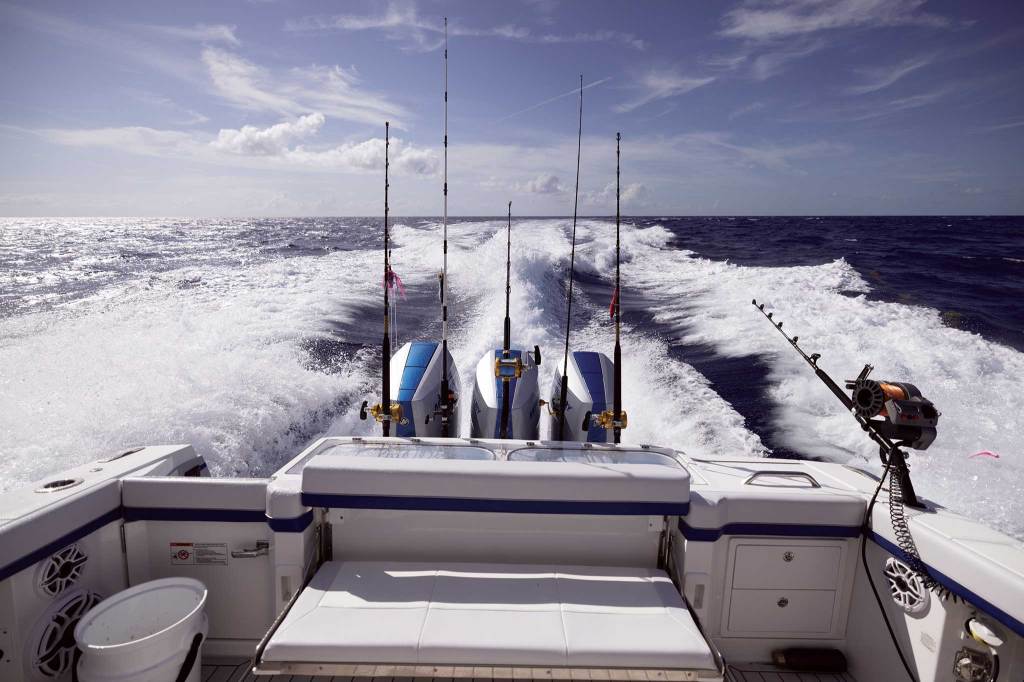
You can drop rod holders into any vessel and call it a “fishing boat” but that’s not how Formula operates. The cockpit is roomy and easy to move from corner to corner, bait well to tackle center and transom door to fishbox. The mezzanine cushion slides forward to reveal a big work station with tackle drawers beneath.
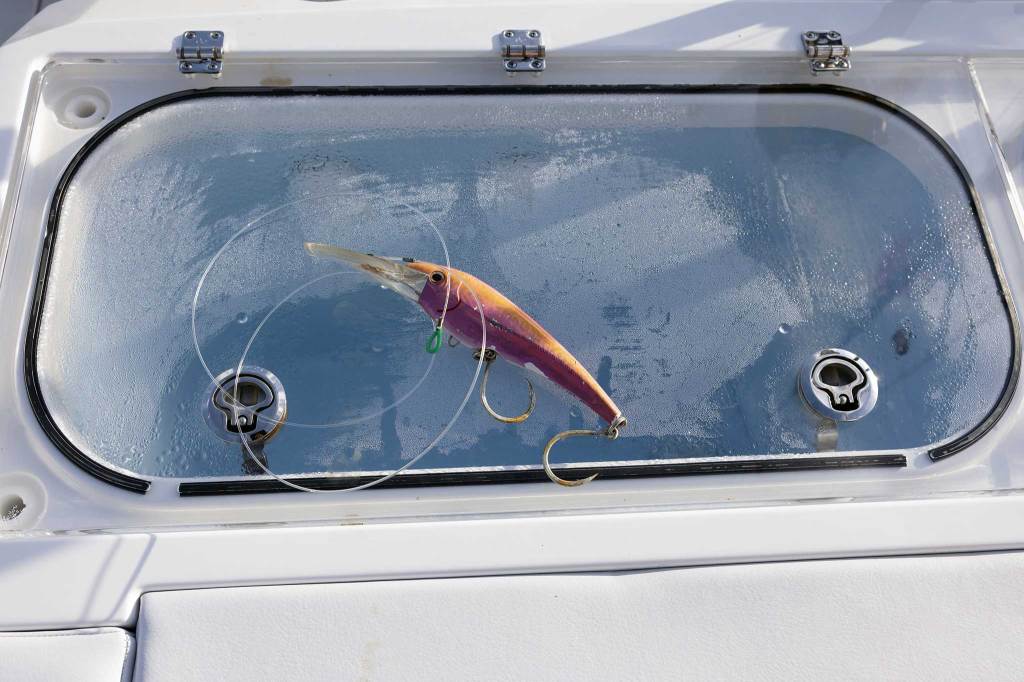
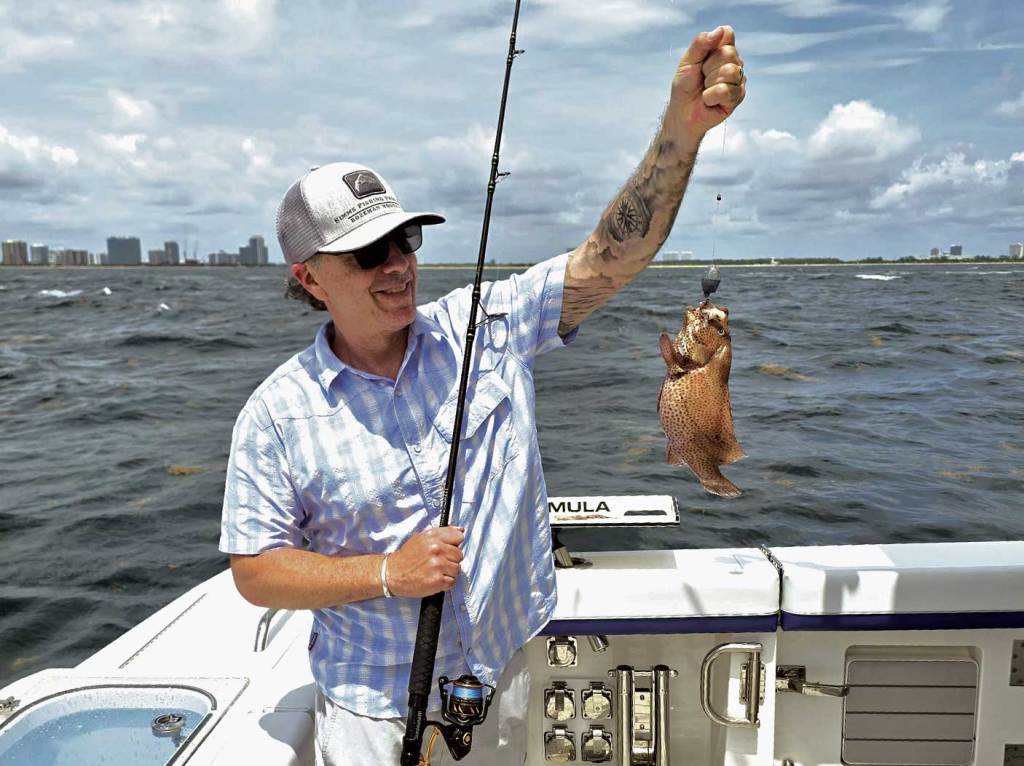
We had planned to troll some weedlines and look for mahi-mahi, but the wind and seas squashed that plan. Scattered weeds made it impossible to troll without getting covered up in sargassum, and we didn’t spot any birds working or other signs of life. We opted for Plan B and drifted over the reef, dropping bits of squid down in 80- to 120-foot depths. I greatly appreciated the Seakeeper 4 gyro, which kept boat roll to a minimum as we drifted in the swells. We didn’t catch anything remotely big enough to fill the two 90-gallon fishboxes, kept cold with freezer plates, but we didn’t get skunked, either.
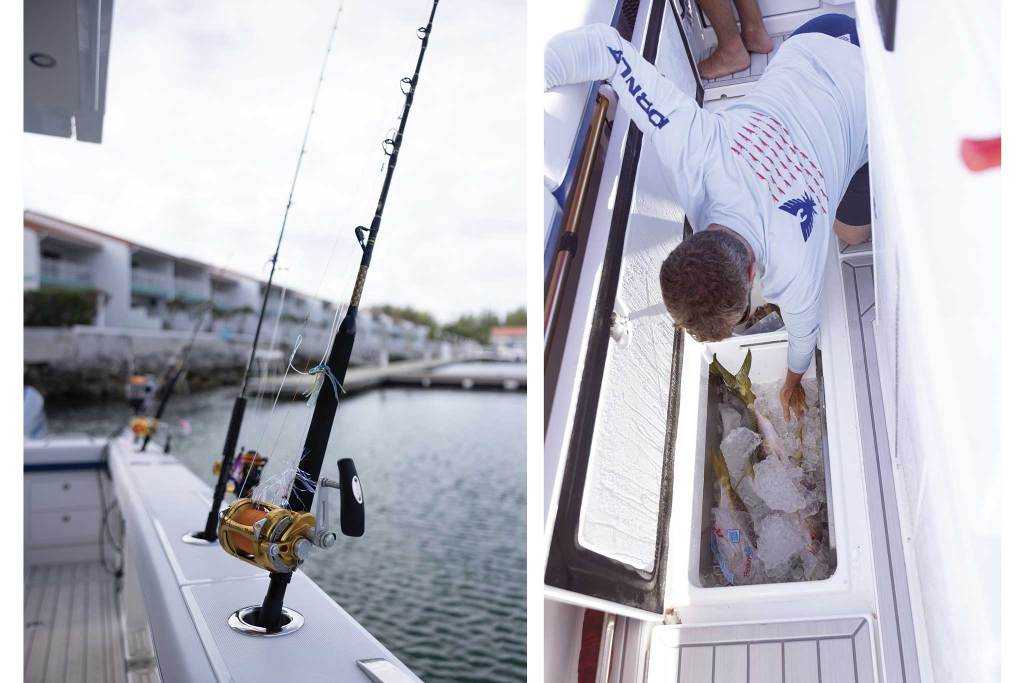
When fishing in South Florida, you need a range of rods for different scenarios: trolling rods, spinning rods, kite rods with electric reels. The Formula 387CCF offers enough rod holders and rocket launchers to bring the full armada.
Two 40-gallon live wells in the transom are easy to access. Electric reel plugs under the gunwales are great for kite reels or deep-dropping. I also like the swim step configuration with wings that extend aft beside the outboards. If you need to run up to the bow to fight a fish, there are no trip hazards; it’s a clear passage. Bottom line: You can do some serious fishing damage on the 387CCF.
Cruising Comforts
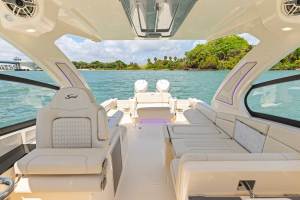
The Formula 387CCF blurs the lines between a fishing center console, a dayboat and a true overnighter and weekender. There are tons of seating accommodations in the bow, with a massive lounge forward of the console. An adjustable table can sit flush with the deck or raise to create a picnic spot. You can remove a filler cushion to easily access the anchor locker. The air-conditioned cabin includes a dinette that converts to a berth, and full head with shower. Formula uses yacht-like materials and incorporates windows for natural light, so this space feels comfortable and expansive, never tight, stuffy and claustrophobic.
Once you clean off the fishing grime, that big cockpit is an ideal spot to enjoy happy hour with the crew or just hang out, relax and take in the scenery. An extendable awning opens from the hardtop to provide shade, and you can opt for an electric grill in the transom to make fish sandwiches.
Formula has always built strong, capable boats and the 387CCF is the latest proof of that. If you want a center console with a large upper station, every fishing feature imaginable and plenty of creature comforts, take this boat for a sea trial on a blustery day. The ride sells it.
- LOA: 41’2”
- BEAM: 12’
- DRAFT: 3’10”
- DISPL.: 22,500 lbs.
- FUEL: 500 gals.
- WATER: 55 gals.
This article was originally published in the September 2026 issue.