Dieter Loibner
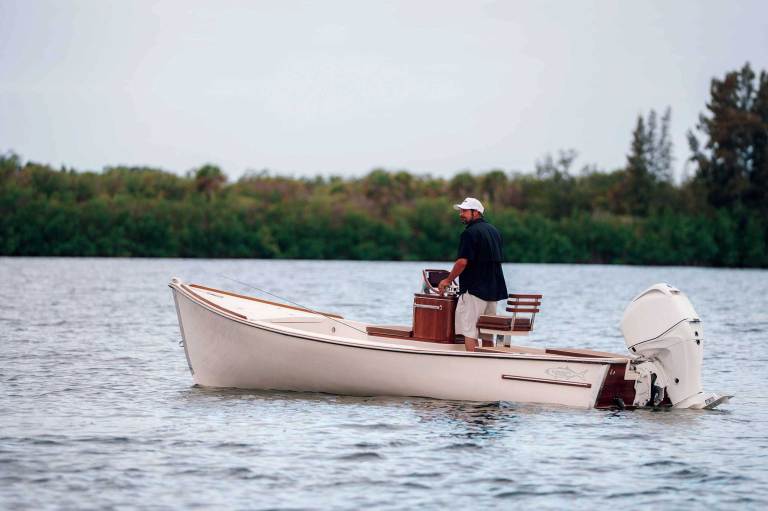
The skipper put his ship in neutral, then shut her down. There was just blissful silence. Lunch was served on the engine box cover: chile relleno burritos with Mexican Coke. For Tim Nolan, 78, “hobnobbing” from his 20-foot open double-ender Canvasback while puttering along the Port Townsend, Washington, waterfront is a cherished ritual. It’s like a modern-day variant of Nathanael Herreshoff’s daysailing regimen. Preparation time: zero. Commute from the former Tim Nolan Marine Design office: one long minute, including the grub pickup from the restaurant next door.
Developed and refined over time, this diversion from the daily grind combines three attributes: simplicity, utility and elegance. As for the boat, its design echoes seaworthy craft by Colin Archer, William Atkin and Manuel Campos, who have Nolan’s respect. The aesthetic of traditional double-enders has stood the test of time, but Canvasback also represents an evolution.
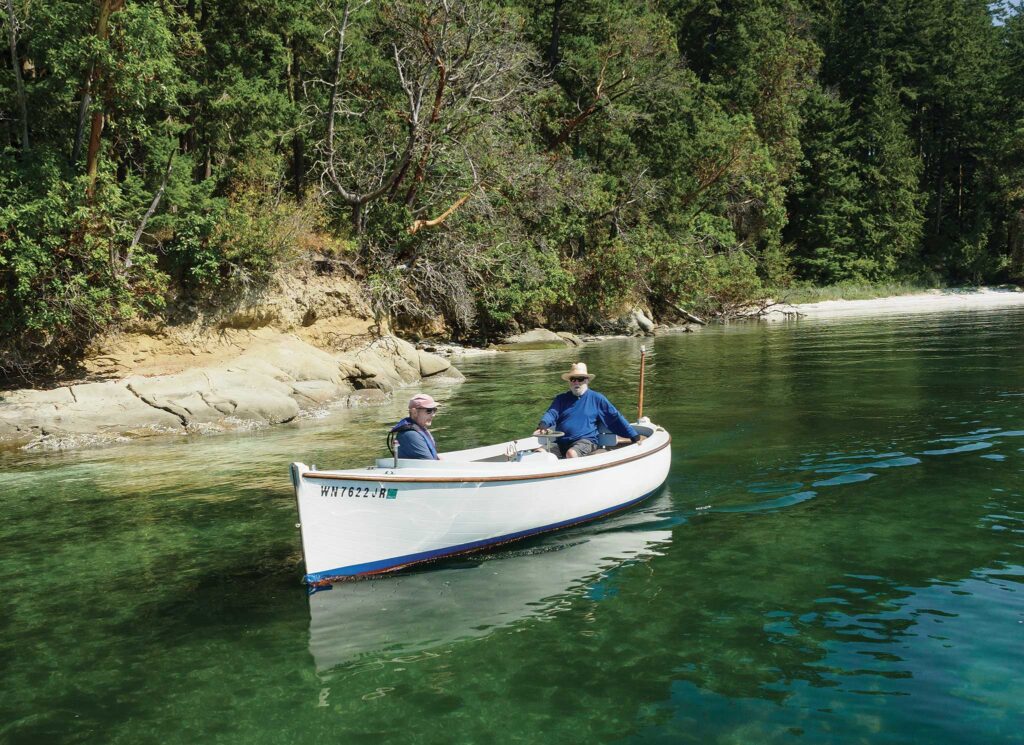
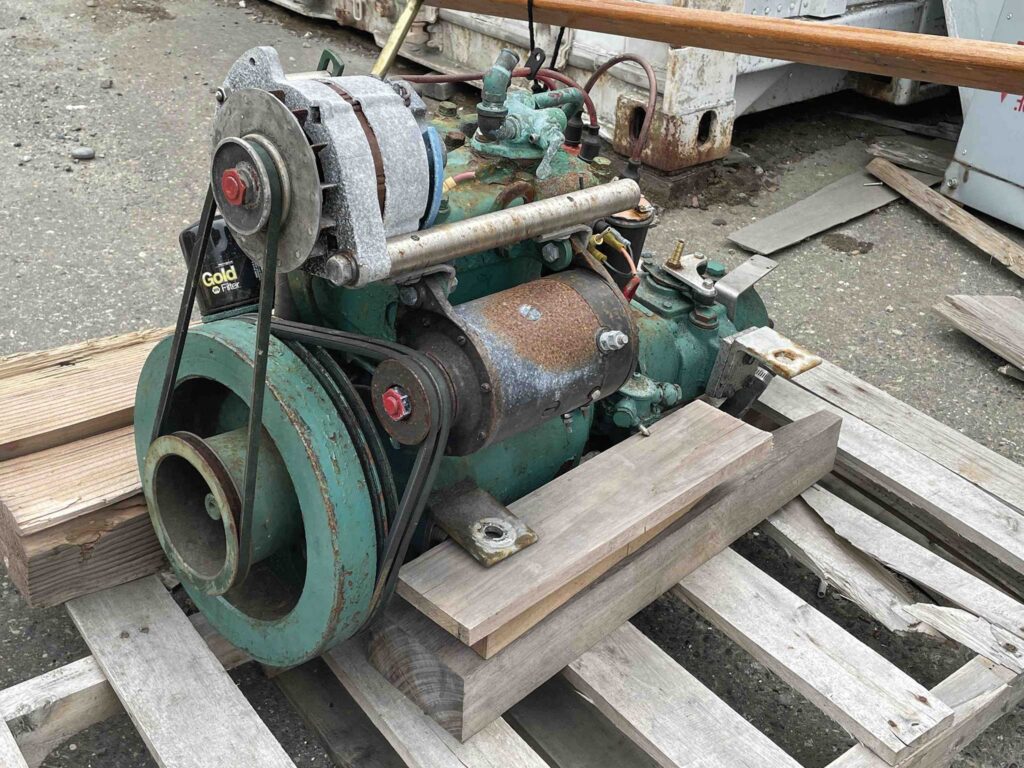
Recently she was put on a strict diet to drop around 600 pounds—meaning the old 14-hp Volvo engine, with its rusted-out exhaust manifold, a pile of now-useless metal parts, 50 years of oily gunk in the bilge, the exhaust fumes and her old signature soundtrack (whump, whump). Now, Canvasback is all electrical silence with just a gentle whir. And it’s all powered by a portable lithium battery.
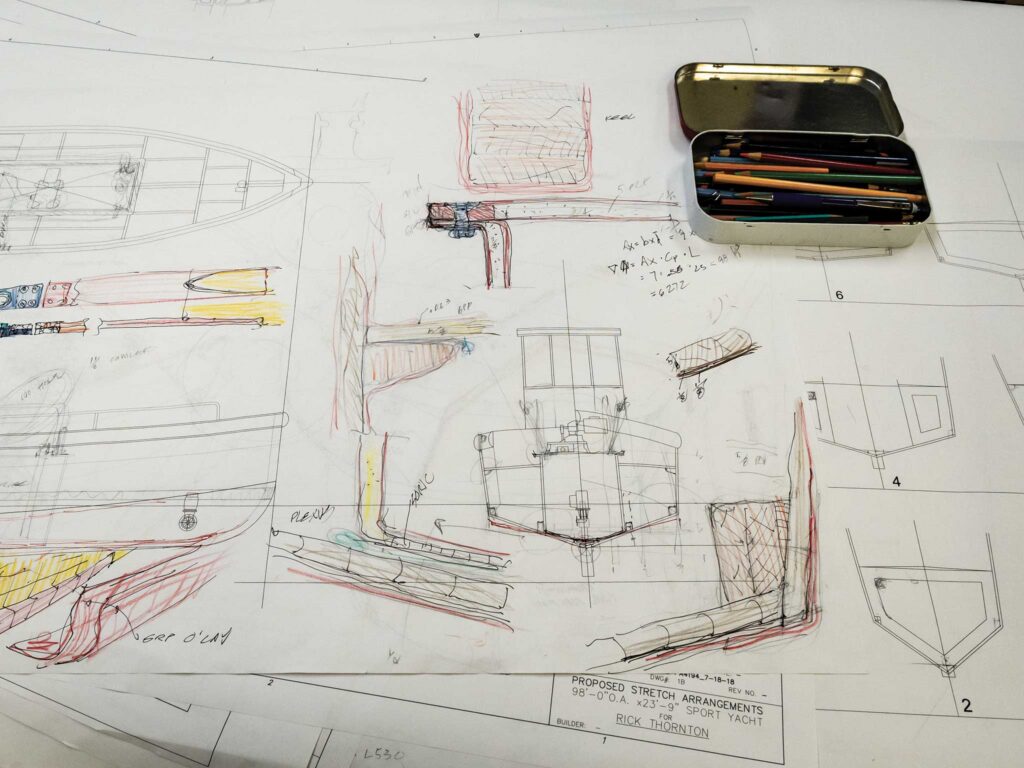
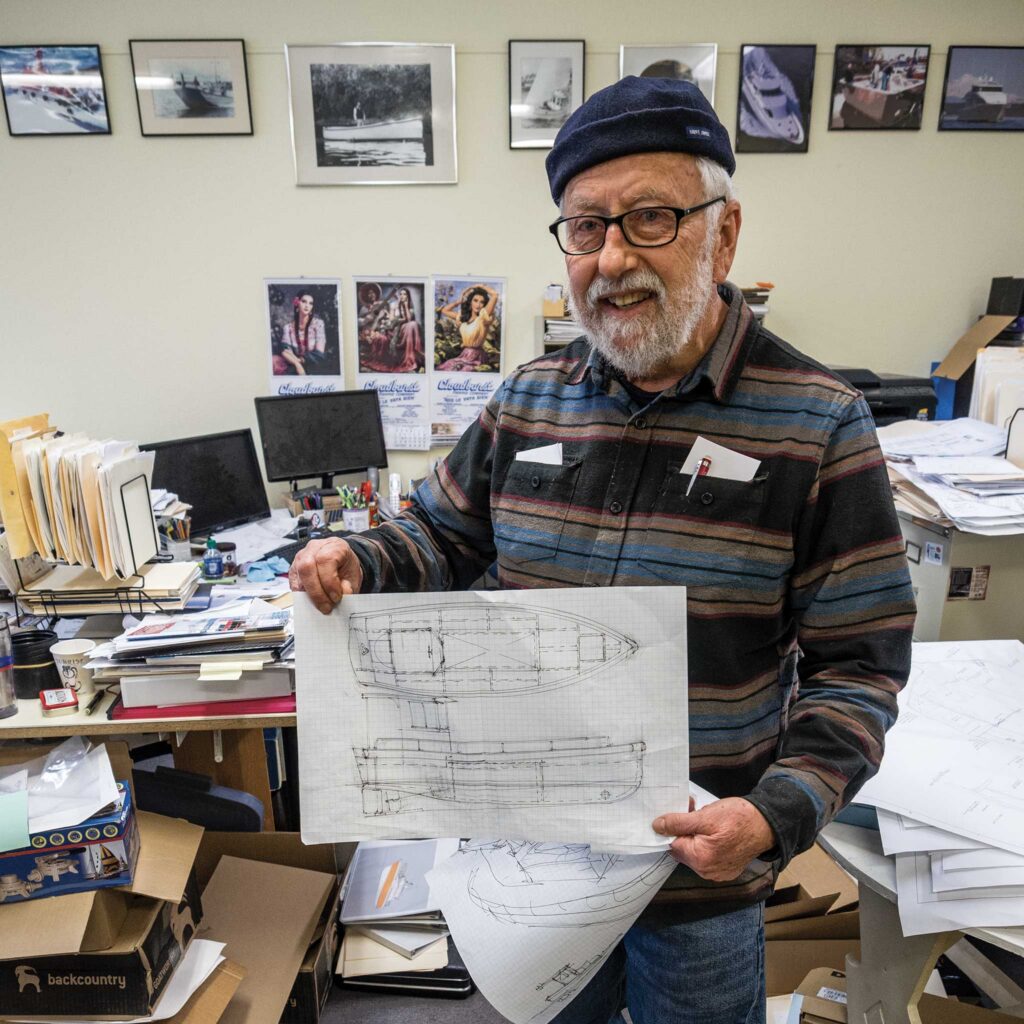
Canvasback is a lure for this scribe, who enjoys Nolan’s inexhaustible anecdotes. His memories include messing around with boats and boards and working as a deckhand while growing up in Rancho Palos Verdes, California. Or noodling with the sitar and meeting the instrument’s master, Ravi Shankar. Or following his father’s path as an engineer and then developing artful freehand drawings to complement his computer work. On any given day, Nolan will explain the use of Frahm tanks on pilot boats, the acoustics of playing fiddle in a tow tank, and why he raced his trimaran paddleboard at age 70 in a 70-mile marathon.
“I like boats. They have always been my focus. I never wanted to do anything else,” Nolan says. “When I found out that boat design was a profession, I went to college to study it.”
He graduated in 1970 with a degree in naval architecture from the University of Michigan. As a student, he held summer jobs at Maryland Shipbuilding & Drydock Company and with the merchant marine. In that capacity he sailed for Bombay, India, with a load of grain aboard Rambam, a bastard freighter (the bow and stern were from two other ships) that was in danger of foundering after losing power in a hefty storm off the Cape of Good Hope.
“That trip to India and back is a story I am still processing,” Nolan later wrote. “This was an unfiltered real world with all its joy and sadness, kindness and cruelty, wealth and poverty, discipline and debauchery.”
On the yacht side, he sailed on Ondine, one of the premier offshore raceboats at the time, and taught naval architecture on a Peace Corps assignment in the early 1970s in Guayaquil, Ecuador. Around that time, he visited the Galapagos twice and survived a shipwreck with a native fishing sloop off Puerto Rico.
In the early 1980s, Nolan dropped anchor in Port Townsend to work for area builders and a raft of other West Coast clients. In 1990, he hung out his own shingle and joined “the Eds” (Ed Monk Jr. and Ed Hagemann), with whom he designed and engineered dozens of large power yachts for Nordlund Boat and Ocean Alexander.
But before that, in 1974, Nolan moved to Seattle to start his career designing recrational craft like the Cape George 31 cutter and commercial craft like the 150-foot tug Lauren Foss for Marine Power & Equipment, one of the area’s top shipbuilders at the time. While living on a houseboat on Lake Union, he also worked as a shipwright and built Heather, a petite wooden pilothouse motorsailer, as his cruising boat, which decades later inspired his design of Clean Bay. It was an elegant electric “pumpout yacht,” a project for students at the Northwest School of Wooden Boatbuilding during the Covid years.
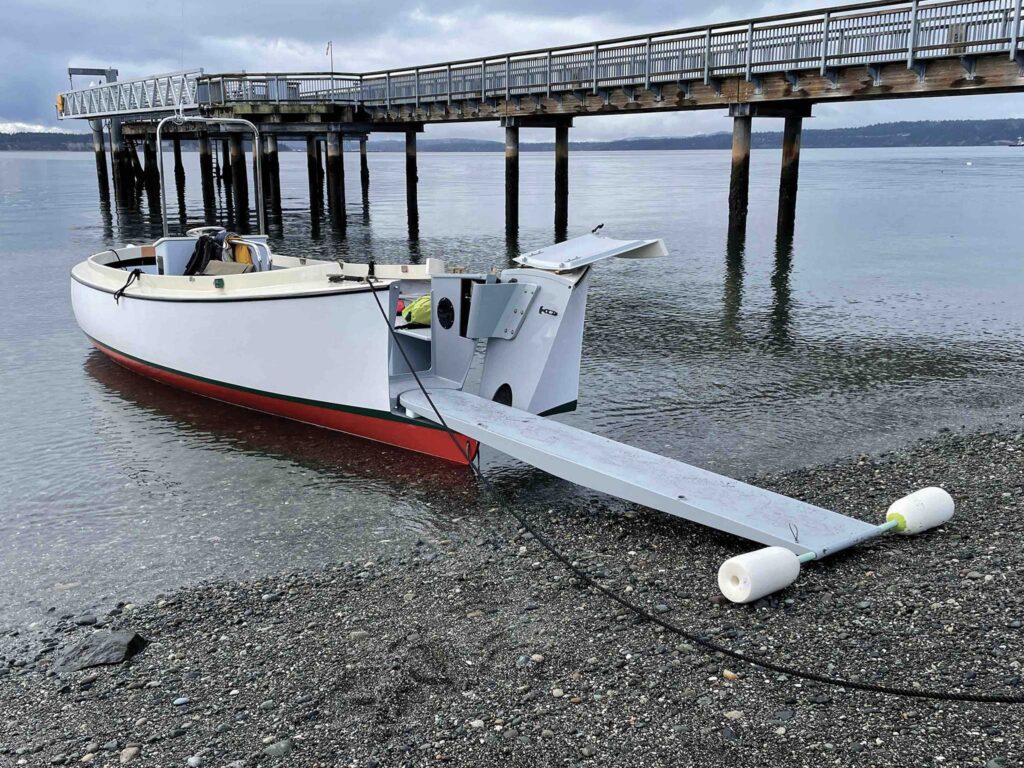
He also worked at Ajax Boat Shop and drew an elegant 20-foot double-ended launch with a 5-foot, 7-inch beam and a small inboard engine. Planked in red cedar on steam-bent oak frames, it debuted in 1978 and was used for fishing and small tow jobs. Ajax also built fiberglass versions, among them Canvasback, for a canvas shop owner. Years later, when the boat became available, Nolan acquired the vessel he helped create, which distilled his idea of leisure afloat.
Repowered with small gas and diesel engines, Canvasback inevitably received an electric drive train, because Nolan had long recognized its potential for low-speed applications and limited range requirements. The primer for the Canvasback refit was a project in the 1990s, construction of a long, light and narrow boat (24 feet by 24 inches) from epoxy and tortured plywood. It had a tiny motor and heavy lead acid batteries. It finished a close second in an electric boat race and subsequently served as a development platform.
For Canvasback’s switch to electrons, Nolan called Revision Marine, an electric propulsion shop in Port Townsend, to source the smallest Elco inboard motor that the manufacturer rates at 3 kW continuous power and an “inboard weight” of 68 pounds. It is powered by a Solid State Marine Li-Ion 24-volt 150 Ah battery that tips the scale at 38 pounds.
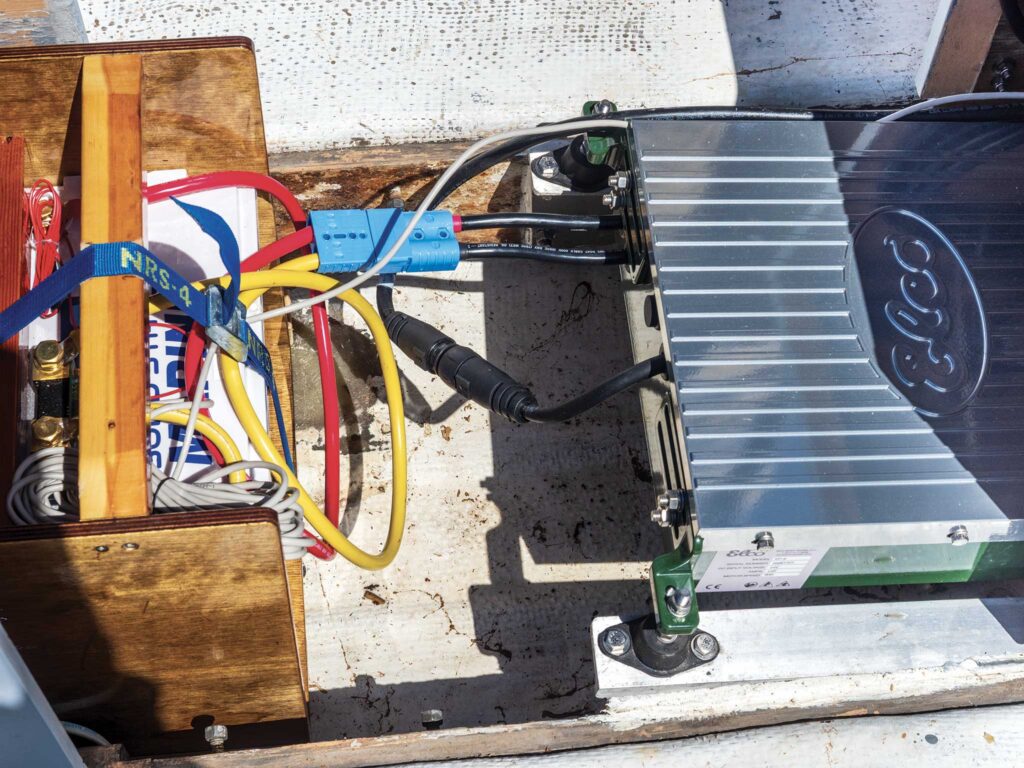
“He could put two batteries in and wouldn’t even notice it, but the single battery makes you step back and say, well, we’re there,” says Revision’s Matt Mortenson.
Nolan tallied the material cost of the whole system, plus paint and epoxy, at approximately $13,000 and spent about “eight hours of a retiree’s work” with the installation.
He loves running at 1 knot, which consumes the energy of a decent, 100-watt lightbulb. Canvasback has some hustle too, but that’s not the boat’s calling. “It’s the steamship formula: 1kWh per ton,” Nolan explains. “It’s a hull for doing 6 knots max.” He uses the boat nearly every day in the summer for an hour or less. He charges the battery at home every three to four weeks.
Canvasback inspired another Nolan design, a sleek, electric launch with a bow gate and a roll-out passerelle for guests of the power yacht Thea Foss. “He has the eye for classic style,” explains Brandon Davis, who operates Turn Point Design and built the launch.
Nolan, who shuttered his office in 2022, calls himself “informally retired.” As an éminence grise of naval architecture, he’s one of Davis’ paddling buddies and a sounding board for design and engineering questions. The two men have collaborated on paddleboards, kit boats, the Foss launch and other designs, including most recently the hull of a 34-foot solar-electric cruising yacht.
“He comes by the shop to see what I’m working on and tells me if a certain line needs to be tweaked. He’s very open with his comments,” Davis notes.
Back on board Canvasback, our nautical confab over a tasty Mexican lunch continues. Nolan says the boat, now appreciably lighter and nimbler with its electric drivetrain, may soon get energized by solar panels. Like her master, the boat is always ready for a spin. Except with its new power, it’s no longer necessary for Nolan to stop for moments of blissful silence.
This article was originally published in the May 2026 issue.