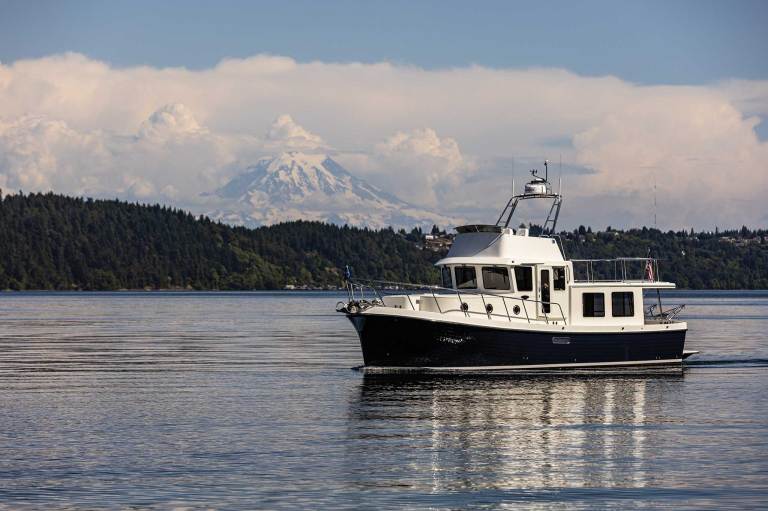
Bruce Jones, the soft-spoken cofounder and former CEO of Triton Submarines, spent over three decades involved in the civilian submersible business spearheading some of the most exciting projects in the sea. In his spare time Bruce enjoyed a collection of toys, many of which spilled over into aviation. He had a hot-air balloon, a Robinson R44 Raven II helicopter, and a Diamond DA62 twin-engine plane. His wife, Liz, had her own Vans RV-12 plane. But eventually, the couple focused their attention on bluewater adventures aboard their 65-foot Vripack-designed
Elling E6, Gecko. They used the boat to navigate 5,300 nautical miles along the Viking Route.
Named after the Norse explorers who voyaged as far as Nova Scotia about 1,000 years ago, the Viking Route remains the ultimate high-latitude adventure. The journey took the couple from the Netherlands to England, Scotland and the Faroe Islands, then up to Iceland and Greenland before they crossed the North Atlantic into Canada and the U.S. The experience stands as one of the couple’s most daring trips yet.
Finding GECKO
They describe themselves as boat people. “Liz had sailed around the world before I met her,” Bruce says. He grew up in Southeast Asia aboard a 69-foot steel-hulled DeFever that his parents built in the 1970s. “We cruised that boat all over the world. My father was a master mariner for many years and a fleet captain for American President Lines before he moved into the heavy construction business.”
Over the years, Bruce and Liz have owned several vessels, including sailboats and a 58-foot Diesel Duck trawler. Gecko is their third powerboat, which they bought in July 2022. When searching for the boat, Bruce had “definite ideas” about the kind of vessel he wanted. That is, until he spotted an Elling E6 at the 2019 Ft. Lauderdale boat show. The boat’s beautiful workmanship blew him away. Unlike their steel-hulled passagemaker, the E6, built in the Netherlands by Neptune Marine, is a lightweight semi-displacement boat with a 22-knot top speed and a huge, inviting pilothouse.
“Vripack is one of my favorite design companies and I loved everything about the boat, but at that point we couldn’t afford it,” he says.
After retiring as CEO from Triton in 2022, finding their dream vessel became a priority. The couple tracked down a 2018 E6 model. “It’s got a 3,000-nautical-mile range, is Class-A rated [meaning it can handle winds over 40 knots] and is self-righting,” he enthuses. “We saw Gecko and just fell in love.”
They spent the first two summers aboard Gecko leisurely cruising the Netherlands, including navigating the Rhine and the Danube to the Black Sea, through Istanbul and into the Mediterranean. Soon, however, putting the E6 to the test became their objective. Even for Jones, who has visited 124 countries and lived in 20, he had yet to sail to Greenland. They set off from Rotterdam in July 2024, along with a 24-year-old deckhand they’d met and hired at TrawlerFest in Anacortes, Washington. Bruce and Liz took turns at the helm and had only a rough idea of their itinerary.
“I started sailing way back in the 1970s when there was no GPS and we did everything with a chronometer, sight, reduction tables and a sextant,” says Jones. “Now, a vessel’s bridge is so advanced, and weather forecasting makes it easy as far as I’m concerned, so I don’t pre-plan like I used to back in the old days.”
Gecko’s previous owner had double insulated the boat with heated glass, which eradicated the threat of condensation. Bruce further prepared by retrofitting rotary Magnus Masters stabilizers on the boat. “They are just incredible, with low energy consumption,” he says. He also installed a FLIR thermal camera, a low light camera, Starlink, a forward-looking sonar, water maker, and “enough spare parts to practically build a new boat.”
The Real Adventure Begins
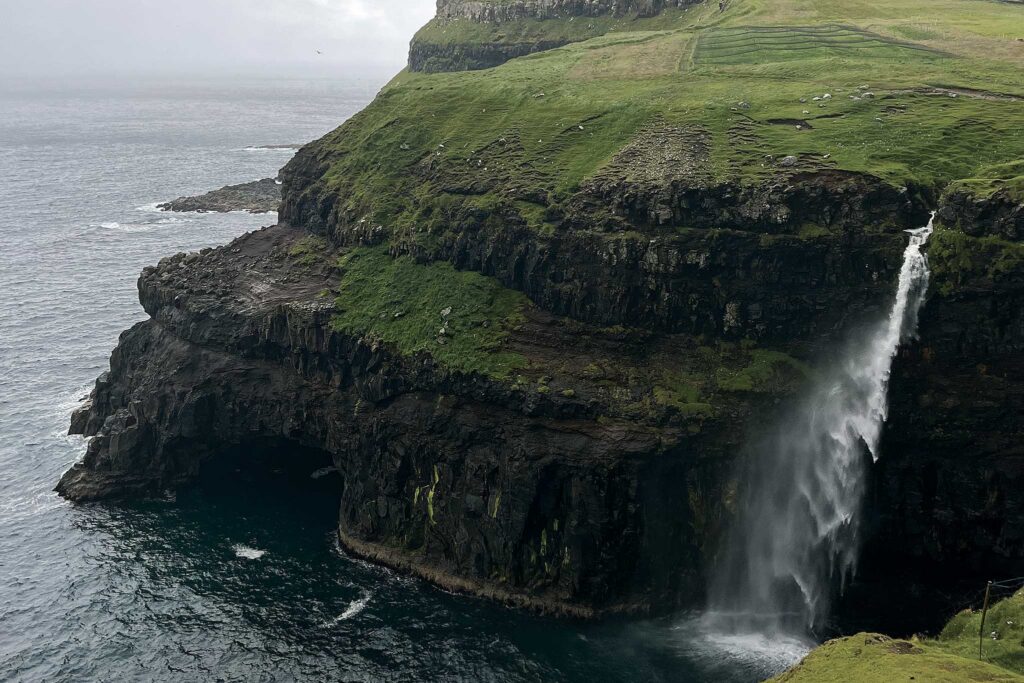
In the early weeks of the Viking Route adventure, they cruised Rotterdam, then to Newcastle, and spent a few hours in the wind-shaped archipelago of the Orkney Islands off Scotland before a weather window opened, allowing them to head to the Faroe Islands.
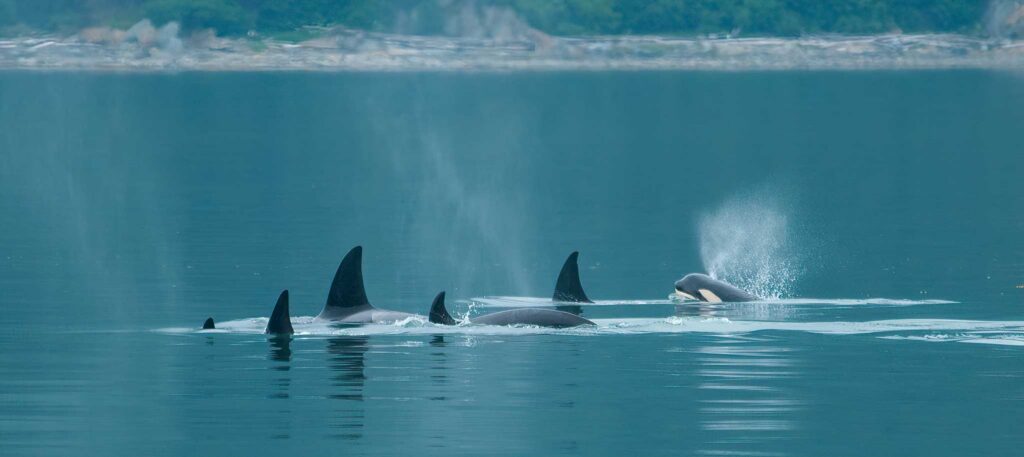
“We took off and just beat a storm to get across,” Bruce recounts with enthusiasm. They made slow progress due to the elements, waiting up to 10 days in the remote Faroes, where a pod of friendly orcas came right up to the boat as they left Streymoy Island. They spent another 10 days in Húsavík on the north coast of Iceland.
It was in Húsavik, a small town renowned for its whale watching, where they experienced the warmest of Icelandic hospitality. When Bruce mistakenly left the yacht’s ignition switch on, both engine start batteries on the main motor died. Yet with the help of a friendly local he successfully replaced them after only a few days.
Other inhabitants pointed them toward a few must-visit anchorages in Iceland, such as Skjálfandi Bay, home to around 24 whale species. There, they explored the land by foot, hiking the town’s craggy outskirts and driving into rugged mountains by rental car to catch glimpses of the wild Westfjords and thundering waterfalls.
Few yachts venture to these higher latitudes, so Gecko only passed the occasional local vessel or fishing boat as it cruised into the frigid waters of southern Greenland. Waiting out the weather proved to be a sensible idea, and Gecko’s 700-nautical-mile crossing to Greenland was both relaxing and comfortable. Not so for a 38-foot boat they had met in Iceland, which tied up alongside them early one morning in Prince Christian Sound.
“They had left Husavik days before us and had a really rough passage,” says Bruce. “They were doing it in a primitive fashion, and were cold and hungry, so we had them on board for breakfast and warmth. They were so grateful. I can remember stuff like that from my younger days, but I have no interest in being that miserable again.”
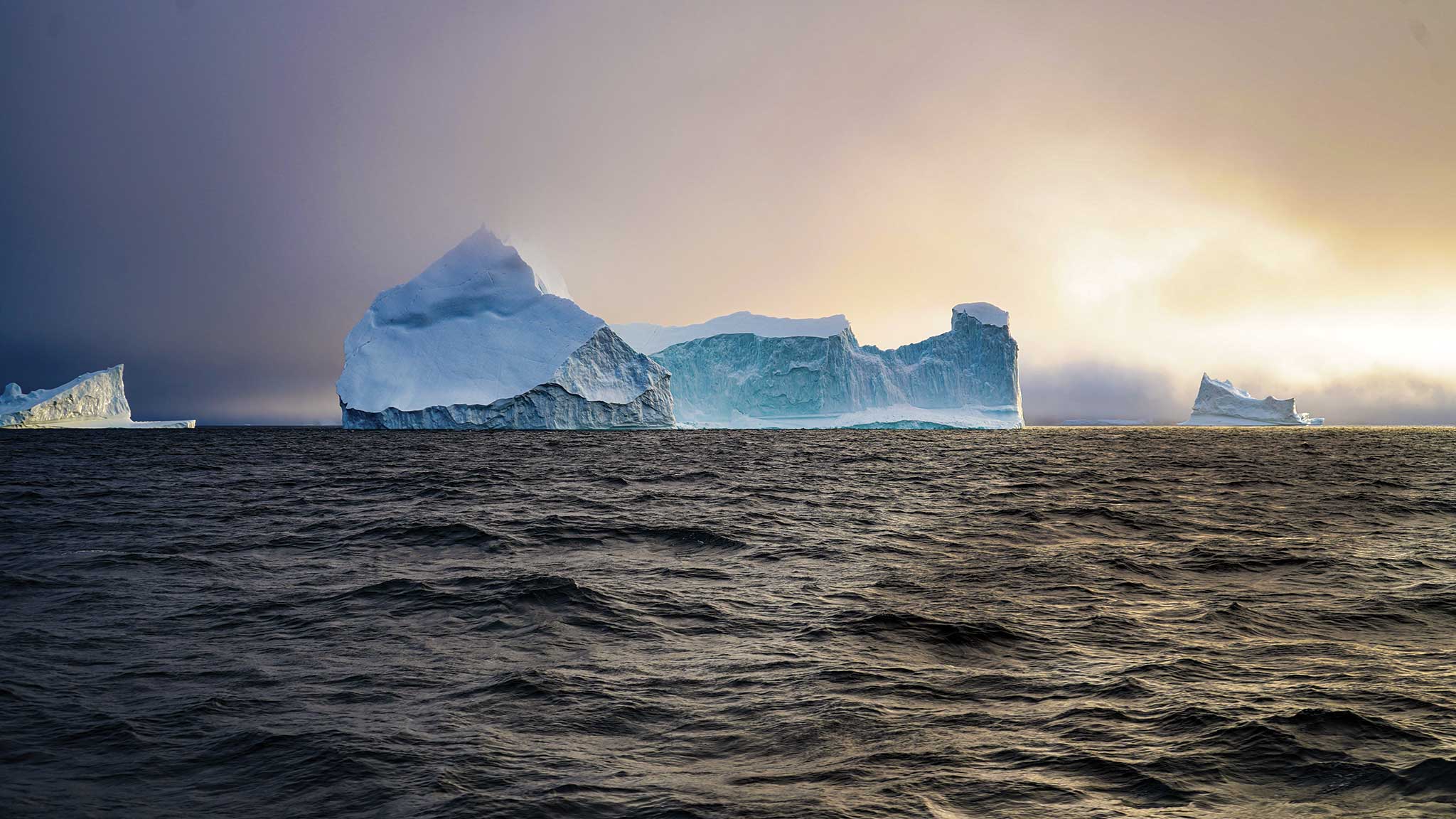
The couple’s adventure-first approach meant wholly embracing all aspects of the experience. That included departing Qaqortoq at night just as it began to get dark, maneuvering for the first 150 nautical miles south of Greenland through a soup of icebergs and bergy bits, their newly installed radars allowing them to scout from the warmth of their pilothouse.
On their first night in Prince Christian Sound, they tied up at the old concrete jetty of an abandoned weather station. “There’s ice floating around, and once or twice a little piece would come up and smack into the hull when we were at anchor,” he recounts. “But it’s an interesting place, and the owner of a boat that had gone the year before had given us advice on how best to make the approach. He told us, ‘Whatever you do, don’t get off the boat because there are polar bears all over the place!’”
The Viking Route Advantage
Aside from the wild and little-visited isles, the
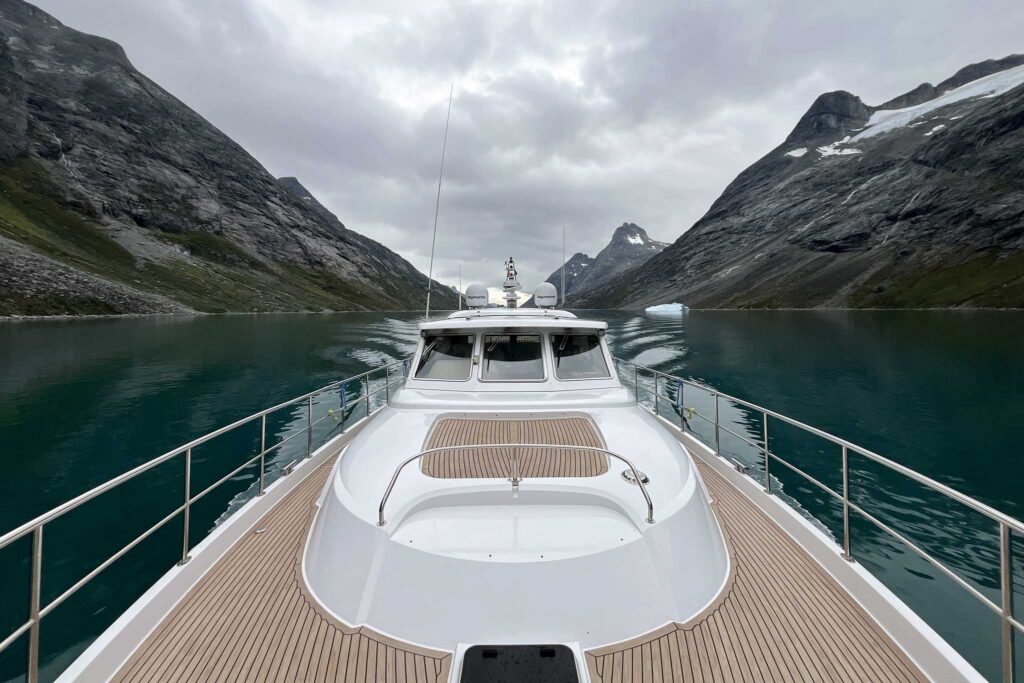
Viking route’s big draw is how it breaks the transatlantic ocean passage down into smaller, bite-sized chunks. For Bruce, who has extensive experience cruising Alaska, it was also the sweeping landscapes, such as those at Prince Christian Fjord, that proved most memorable. “The geology is young and topographic with high peaks and sheer faces, most of which is volcanic, and the cliffs plunge right down into the water,” he says with excitement. “We had to dodge our way through in a few places, but the icebergs painted themselves brightly on our radar, which helped with navigation.”
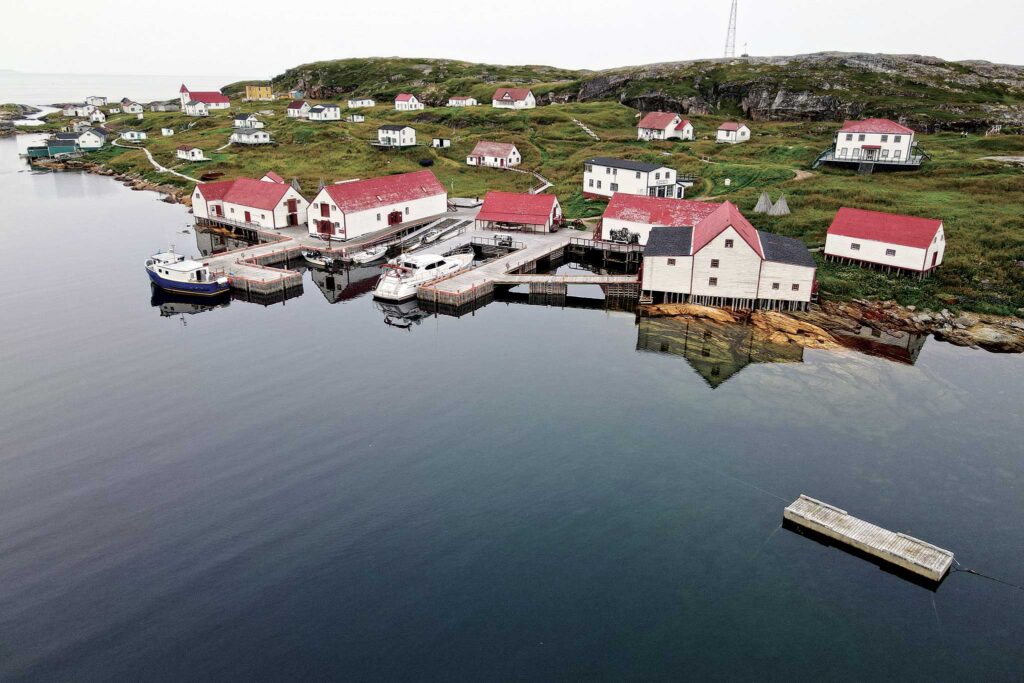
When the timing looked right for ice, they ploughed through a rough North Atlantic crossing to Battle Harbor in Labrador, Canada. “We didn’t plan any of the 20 odd ports after that. I just headed for what looked like it was going to be reasonable and took off,” he says.
It comes as no surprise that his love for travel includes a fascination with luxury trains. So, when in August, he found himself the lucky lottery winner of a cabin aboard Japan’s Seven Stars Kyushu train that runs east from Fukuoka to Oita Prefecture, the couple seized the opportunity. Gecko was moored at Prince Edward Island in Nova Scotia for two months while they rode the train. When they returned to the boat, they sailed her down to North Carolina, where the trip ended last November.
Has the experience whet their appetites for more seafaring adventure? Of course. They’re currently in the middle of a year-long journey along The Great Loop. After that, the couple may tackle the infamous Northwest Passage.
“The boat handles great, and even though conditions were pretty rough at times, I didn’t get seasick, which I typically do,” Bruce says. “I’m enamored with Gecko these days, and we’re now doubling down on piloting her as much as we can.”
This article was originally published in the June 2026 issue.