Certain boats are built to go the distance. Certain people find ways to take them all the way there, and then some.
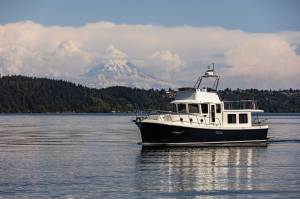
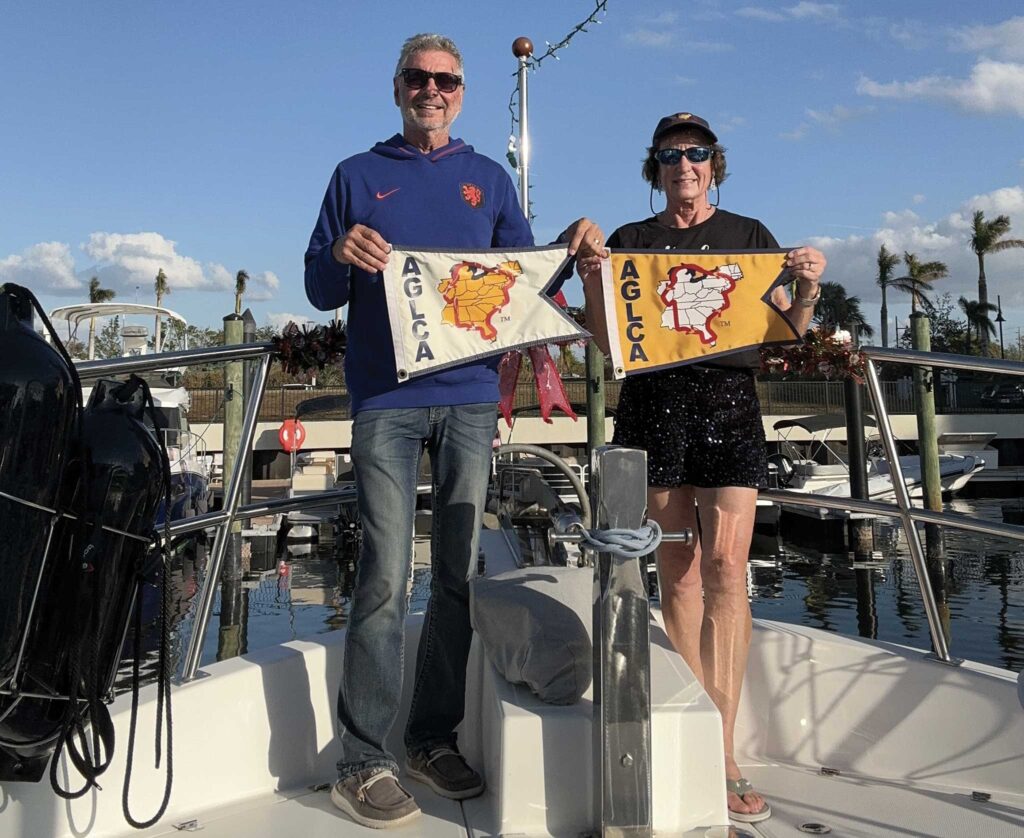
Tom and Jan Newman, aboard their Nordhavn 41 Meraki, are a prime example. Both sailors from a young age, they decided about 10 years ago that they wanted to retire on a boat. “The search for a boat became broad because we wanted to do the canals of France, the Baltic and the Caribbean. We wanted to do it all,” Jan says.
They took delivery of Meraki in December 2022. The couple picked it up in Istanbul and are taking, well, as long as they want to bring it home to Alaska.
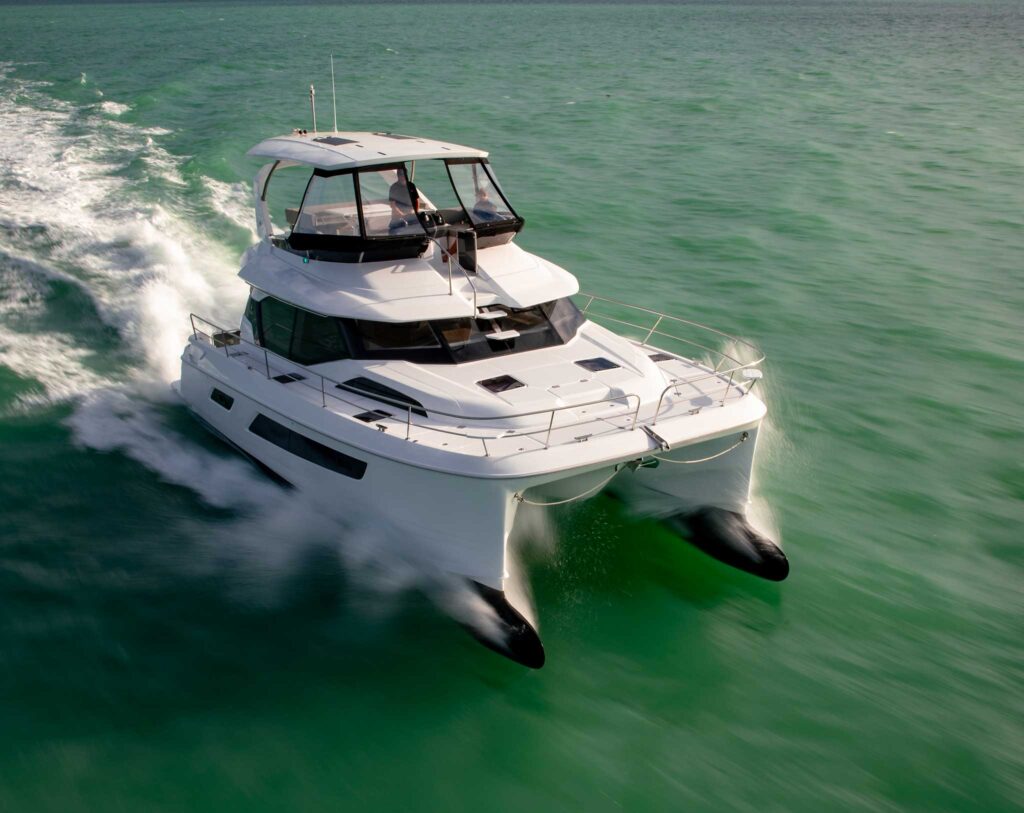
“That’s our story and we’re sticking to it,” Jan says. “We are slowly—over many, many years—heading west. We spent two years circling the whole Mediterranean, and this past spring we came up through the center of France. We’re now in northern Europe, Denmark and Sweden. We’ll head to the U.K. for the winter, maybe cruise next summer in Norway and Sweden, and then we’ll cross from the Faroe Islands to Greenland, then Iceland, and onto Labrador.”
The canals, they say, pushed the N41 to its limit. The trawler is bigger than the typical canal boat, but it’s built so sturdily, it handled the tight quarters just fine. Tom says they stripped things off the roof to squeeze through with less than 8 inches of clearance beneath some bridges. They disconnected the mast and laid it down because hinging it back wasn’t good enough. They pushed the hull through mud—many times. They carried 12 fenders and fender boards for going through the locks, where they sometimes had just 6 inches on either side before the concrete. The boat came through without a scratch.
“The cool thing about the N41 is that it did it,” Tom says. “And we were able to do it. When we started, the first lock we did in France was the first lock we had ever done on our own boat. Now we’ve before through close to 200 of them.”
Their only big question right now is whether they’ll keep Meraki after they eventually get home to Alaska. “It’s not about our age,” Jan says. “It’s about how much of the world we can see before we head home.”
Onward from Orlando
For Orita Issartel, on the other hand, passagemaking is a little bit about age. She’s 68, and her husband, Laurent, is 62. They’re both still working—she’s a property manager and he runs an events business—but they’re hoping to take their work afloat while doing some long-distance cruising. Ultimately, they’re considering living aboard.
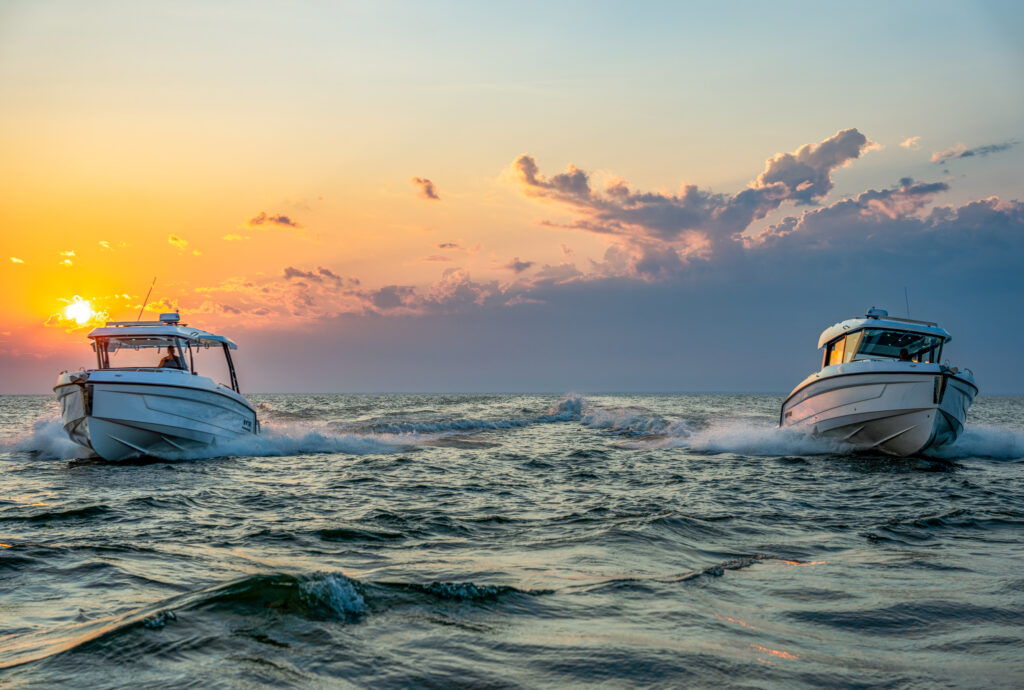
They bought a 2021 Aquila 44 this year, and as of late summer were on a run from their home state of Florida up to New York. This winter, they’re planning on exploring the Bahamas, followed by the Down East Circle Loop in New England next year.
“My son says that I’ve conned my husband my whole life,” Orita says with a laugh. “Before I met my husband, I lived on a sailboat for two years in the Caribbean. I never got over that. I would do that in a heartbeat again.”
But her husband wants no part of a sailboat, she says. “And I’m too old now to think about all the work of a sailboat.”
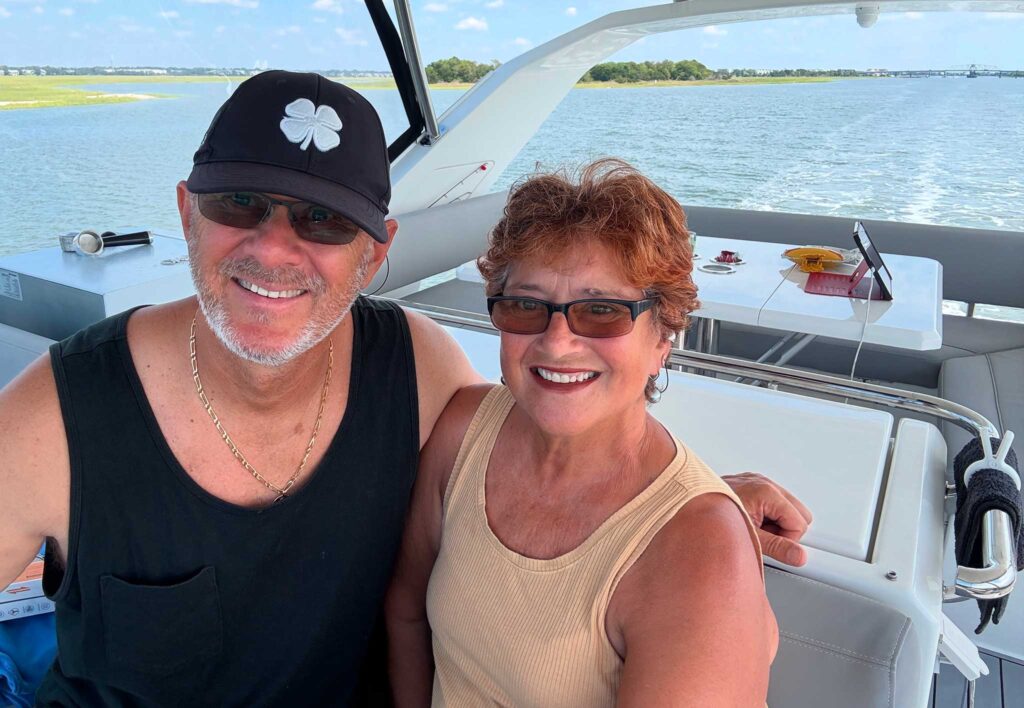
They love not only that the Aquila is a powerboat, but also that it has three staterooms, three heads and a big salon. And it’s only the two of them cruising, with their three children off having lives of their own. The couple is committed to the journey. They sold her car, had a delayed start when some issues cropped up with one of the businesses, and then decided there would never be a perfect time to cast off lines and make the big life change. So, they just went for it.
“There are little bumps here and there,” she says. “We bought two electric bikes. I fell off because of a stupid mistake. I broke a rib and messed up my right knee.” She’s moving slowly around the boat now, says Orita, but still moving, with no chance of giving up on their plans, which both of them fully embrace.
“He loves it,” she says of Laurent. “He loves to navigate. He’s happy being out on the water. We don’t like being in the marina so much. We like to anchor out. When it’s just stars and nothing else around, we are happiest. We’re going to visit some big cities, but I prefer the tiny little towns, the quiet and the beach.”
Looking for America
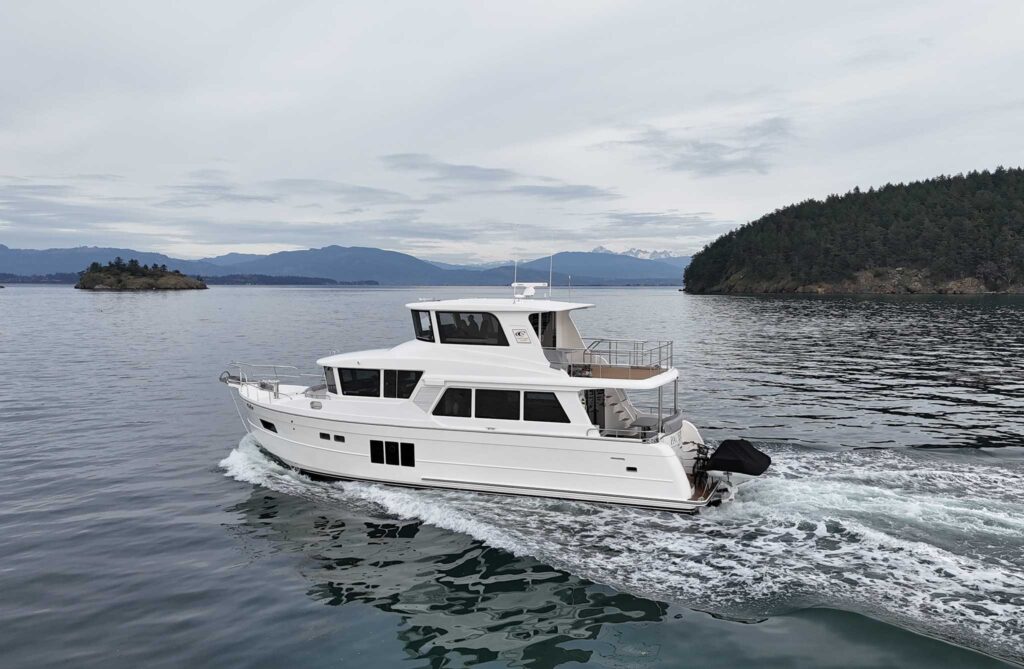
Frank and Sandy De Heer were always seeking out big cities on their North Pacific 45 Proost, which means “cheers” in the Netherlands, where Frank was raised. Their long-distance cruises, which started in spring 2022, were often about learning U.S. and Canadian history. Ports and tours that Americans might take for granted have stories that are brand-new to him.
“My history lessons, being from the Netherlands, are completely different. I’m learning about all these things, like the War of 1812. They still talk about that in Canada. It’s part of their history,” Frank says.
The couple has a North Pacific 59 on order, with expected delivery this fall. They’re upsizing after spending about three years taking their time along the Great Loop on the 45.
“We did the Loop differently from people who rush through it—though other people might think we’re too slow,” he says. “We wanted to see things and take our time. We wanted to spend several days wherever we could. We spent a month in Washington, D.C., going up the Potomac and visiting George Washington’s home. We spent a week in New York. We wanted to make it an adventure and see and learn as much as we could.”
They’re retired with no children, so they had no other obligations, other than to feed their onboard cat. And they tried heading home to Orlando, Florida, a few times, he says, “but whenever we came back to the boat, it felt the most like home of anywhere that we had been lately.”
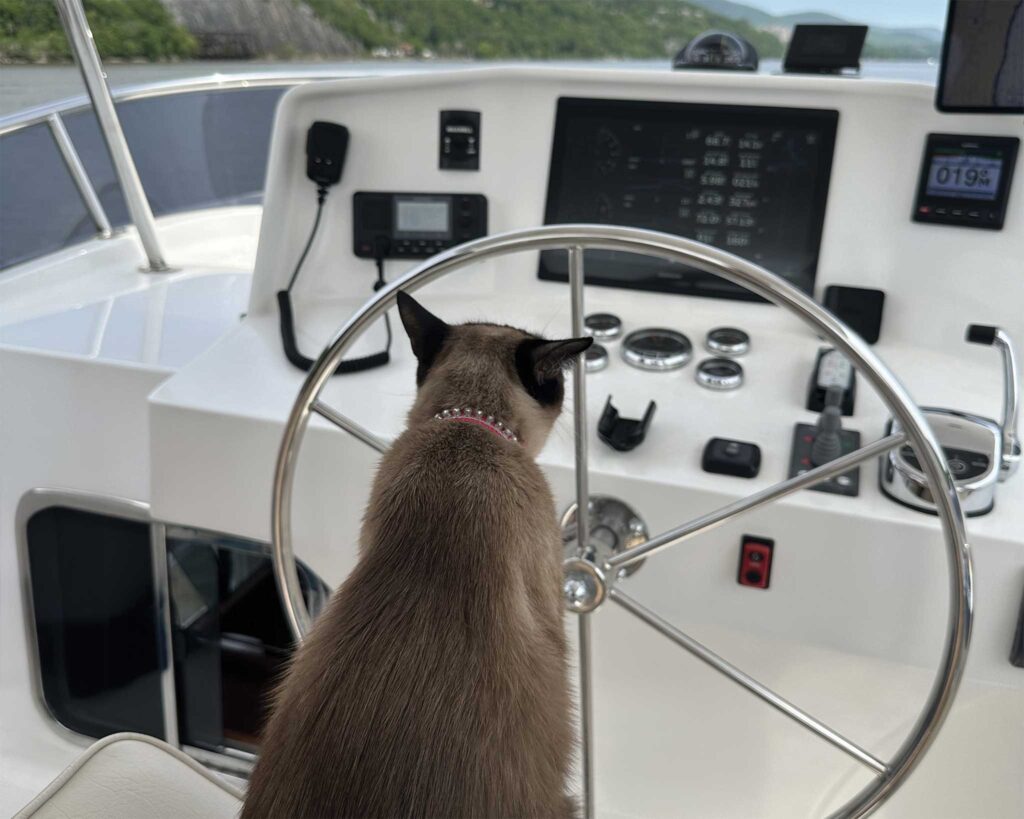
With the 59, it’ll be an even more comfortable home afloat, he says.
“To live on a 45 full-time is a bit small,” Frank says. “The 59 may not sound like much more, with another 14 feet in length, but it’s higher, it’s wider and there’s just more space everywhere. I can stand up in the engine room. There’s a real galley that’s equipped with everything. The 59 is going to be our home. We’re going to have it delivered to Florida. We plan to do the Northeast Loop to Montreal and that area, then Quebec City and the coast of Maine. If it arrives in January, we’ll do the East Coast of the United States one more time, maybe spend the winter in New York, and then maybe bring it back down and go to the Panama Canal. We’re talking about getting crew who have done the passage from the Canal to Seattle. When the boat is in Seattle, it will be our home, in that area.”
Best of all, he says, is that they can outfit the new build just for their needs and preferences.
“The original 59 has four bedrooms—two that are smaller and two that are bigger,” he says. “But one of the small ones originally designed for kids. We’ve transformed it into a huge bathroom, with a jacuzzi tub and a double sink. That way we’ll have three nice-size bedrooms and three bathrooms.”
It’s All About the Ice
Sam Devlin isn’t thinking so much about bathrooms as he is thinking about sleep.
The longtime boat designer has been on the cruise of a lifetime through the Northwest Passage—and on watch in the land of never-ending daylight—aboard Sarah-Sarah, which is Hull No. 2 of Circa Marine’s FPB-64, designed by Steve and Linda Dashew.
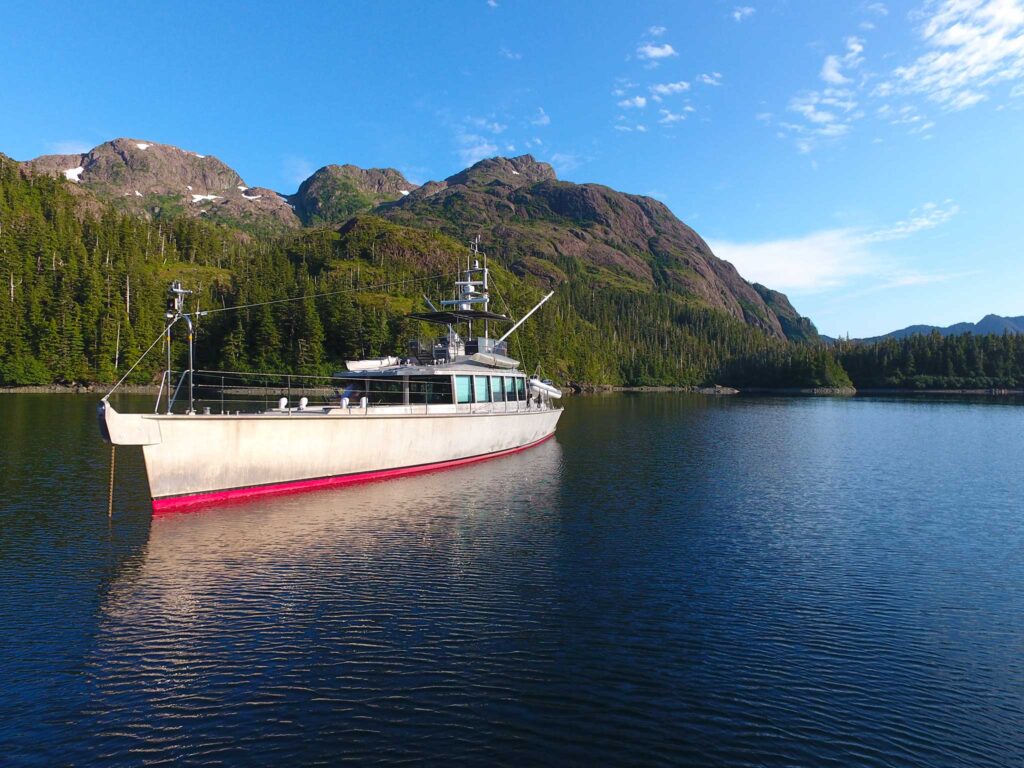
“I’ve wanted to do the passage since I was a little boy,” Sam says. “I didn’t think I was ever going to get there, but then this occasion came up. This boat isn’t mine. The owner, Scott Evangelista, is a former customer of mine. He bought this Steve Dashew 64 and took it down through the Panama Canal, and he was saying he didn’t know how he wanted to get the boat back to the Northwest, where he home-ports it. And I said, well, let’s do the Northwest Passage.”
“That’s classic Sam Devlin,” he laughs. “Living vicariously through other people’s expenditures.”
Devlin is impressed with the boat, which he’d been aboard for two months as of late August. And he’s been surprised by what he’s finding as they make their way through the passage.
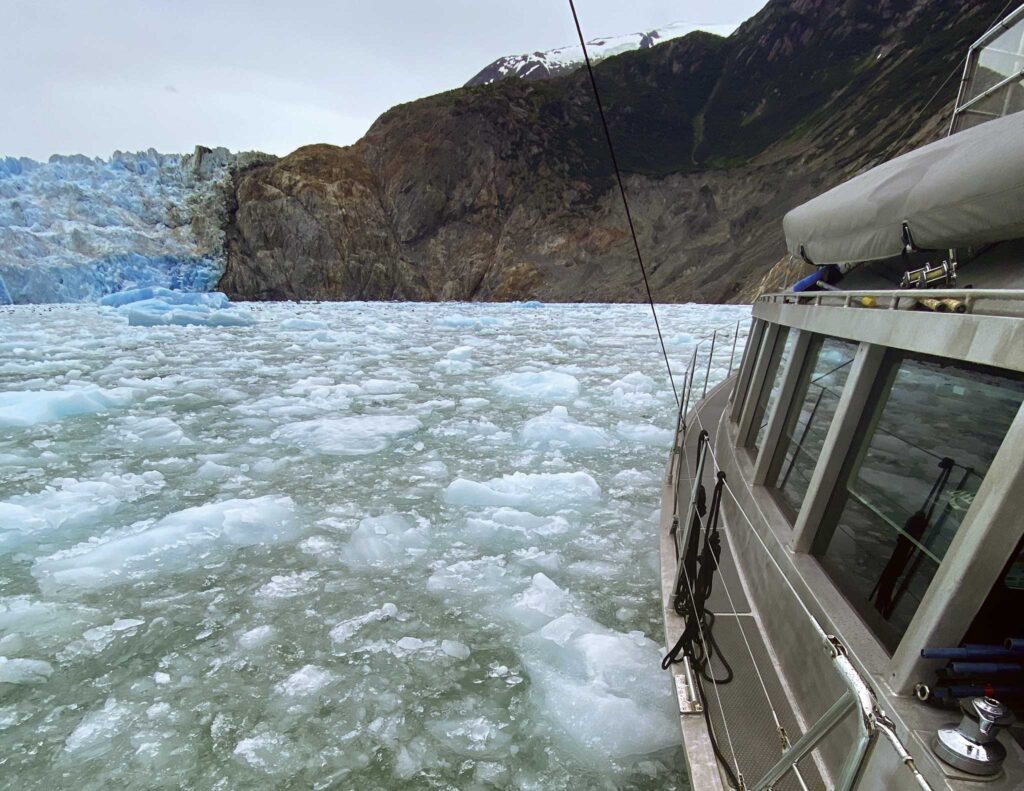
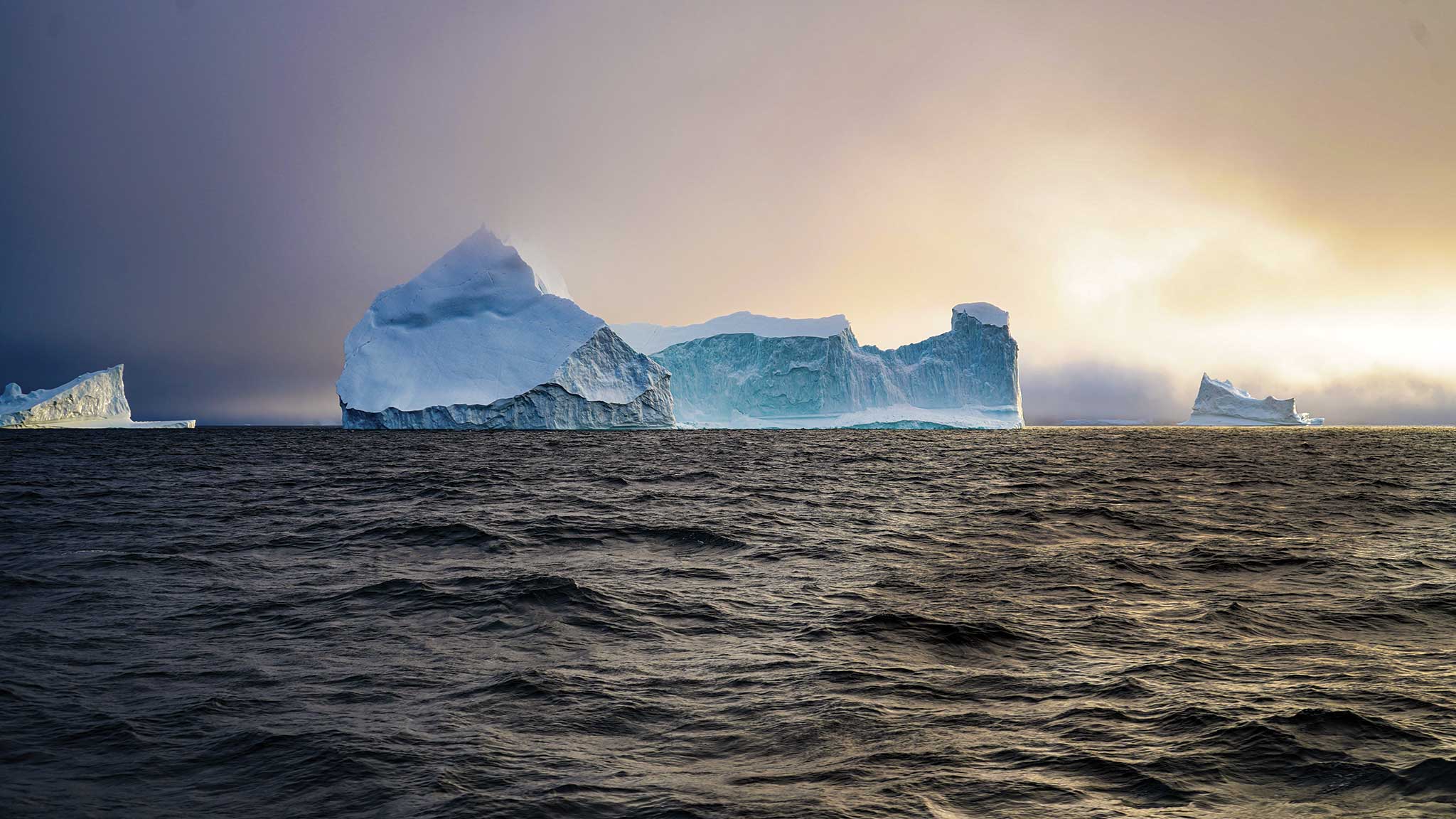
“I thought we would be moving and pushing through a lot of rotten ice—very, very small ice that was kind of chunking as it’s melting and coming apart from bigger bergs,” he says. “In reality, that almost never develops. There are medium bergs and big bergs, and some small bergs, but there’s not a lot of that rotten stuff.”
There also has been far less wildlife than he was hoping to see. “That’s a disappointment to me,” he says. “My early degrees in school were wildlife-related, and I really like that kind of stuff. The count is OK species-wise, but we’re just not seeing the numbers I was expecting.”
The geology, on the other hand, has been fascinating. He’s watching it go by at whatever pace the ice allows.
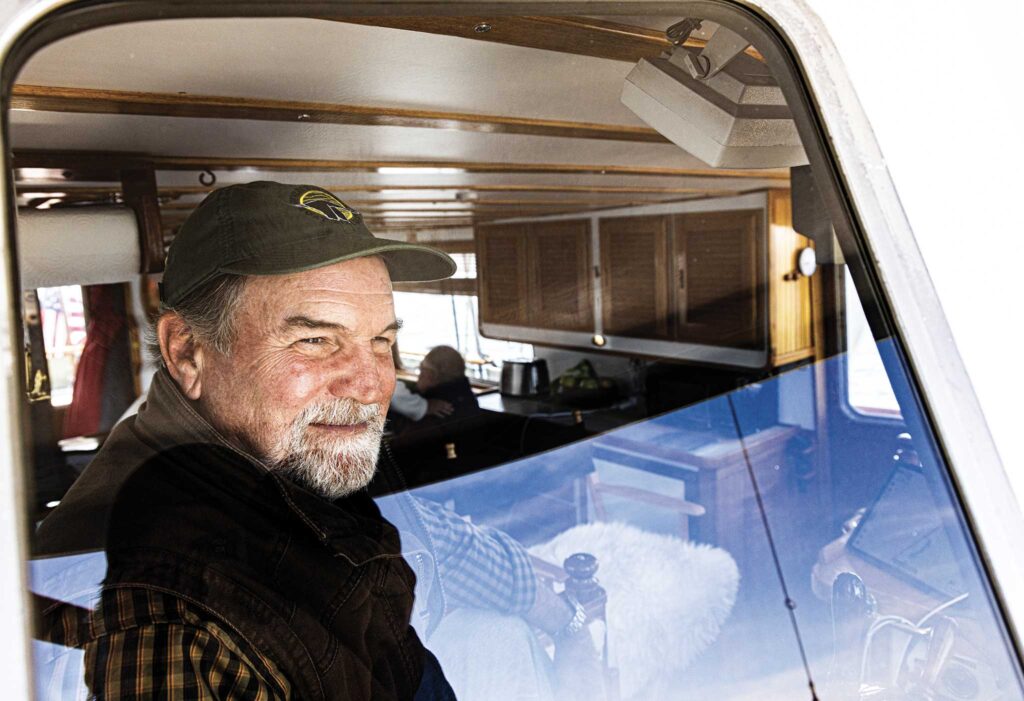
“In the Northwest Passage, you have to really push,” he says. “If the ice is going to open up, it doesn’t really open up until certain weeks in August. You’re watching the ice reports every day, and you dash out and across and start to go through, but you have to push, push, push, because that’s leaning into late in the season.”
They run all day, anchor around 10 or 11 at night—when there’s still lots of daylight—and then retire to the bridge for drinks and cigars.
“We’ve had very few times when we sat idle, just waiting for ice to break up,” he says. “When we do, we’re kind of furtively looking. We do these little probes. We poke around a little bit and reset the anchor.
“I don’t know how I would change that if I did another Northwest Passage trip,” he adds. “It’s because of the timing. This is not an exploration kind of a trip, in terms of lots of shore-walking and stuff. In other places, everything’s dictated by weather. Here, everything is dictated by the ice. You have to pay attention to it, and if it opens up, you’ve got to blast through.”
November 2025