At some point, most boat owners dream about chucking the shoreside life and moving aboard to live as a seagoing vagabond. Other folks simply want to find a slip in a tropical climate and enjoy icy margaritas in the cockpit of a marina queen.
Whatever your liveaboard dream, it’s just a fantasy until you do it—although the reality can be somewhat different. Here’s what four families discovered when they made the switch to living aboard.

Time to Wander
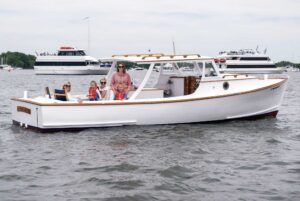
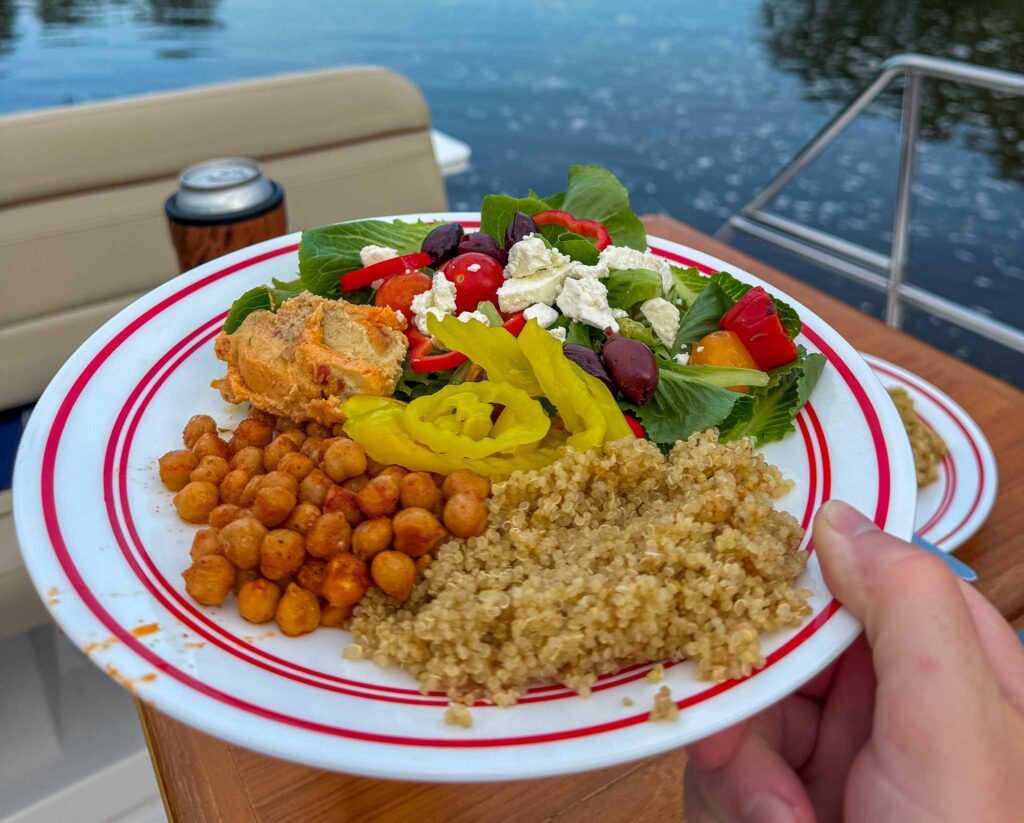
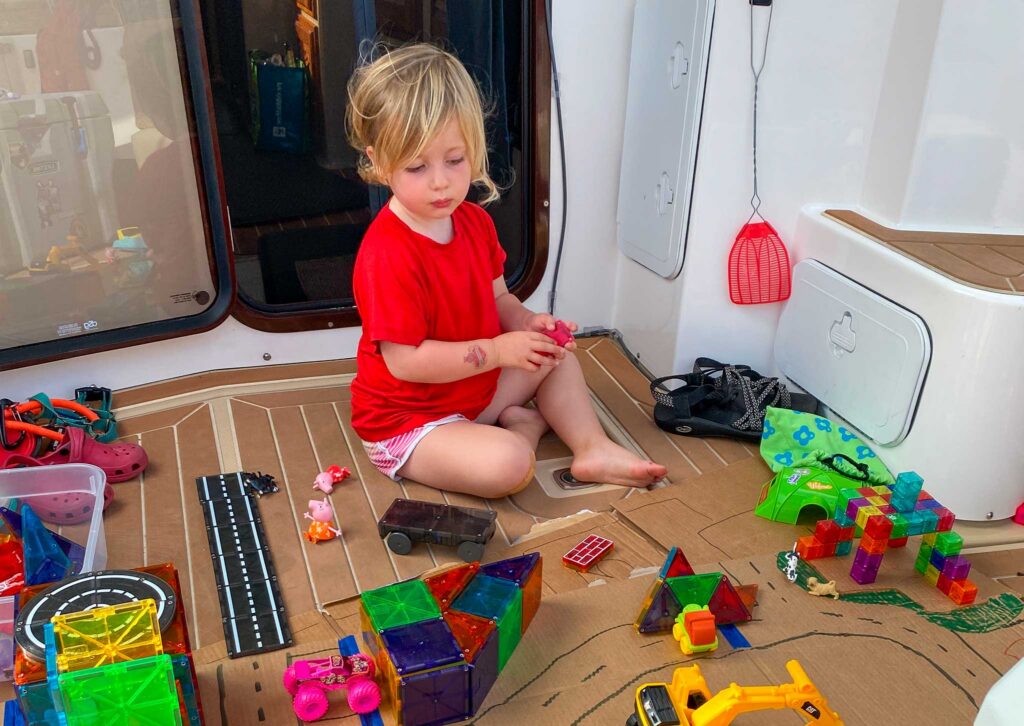
Jason and Morgan Reel bought their 2019 Ranger Tugs R-31 CB Hoppy Trails for doing the Great Loop. Their daughter, Willow, was only 3 years old when the family set off on the Loop in September 2023 from St. Paul, Minnesota. They figured on a year of living aboard, but completing the Loop actually took them a little more than two years, with a nine-month hiatus after the first 12 months.
Choosing the right boat for living aboard is critical, and for the Reels, the R-31 was ideal. Hoppy Trails draws only 2 feet, 6 inches, so the family can anchor almost anywhere, which the Reels prefer to a marina. Her single diesel is economical, and bow and stern thrusters make the boat easy to handle. Cruising speed is 7 knots, but she can hit 15 knots when necessary. There is a RIB on a stern platform to take crew ashore for R&R.
“A boat is a pressure cooker compared to living at home,” Jason says. “You have to find outlets for energy, so we spend a lot of time ashore.”
With a beam of 10 feet and a fold-down flybridge, Hoppy Trails is trailerable without much fuss, although a beefy tow vehicle and an oversized load permit is necessary. After closing the Loop, the Reels trailered the boat to Florida, then cruised to the Keys. When the weather warms up, they plan to trailer the boat back to Lake Superior for the summer.
Now that Willow is ready for school, their cruising schedule will be limited, but Jason says he’s already planning to tow the boat to the Pacific Northwest for summer 2027.
“Take the journey,” Morgan says. “It changed our lives for the better.”
Going All the Way
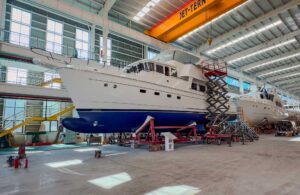
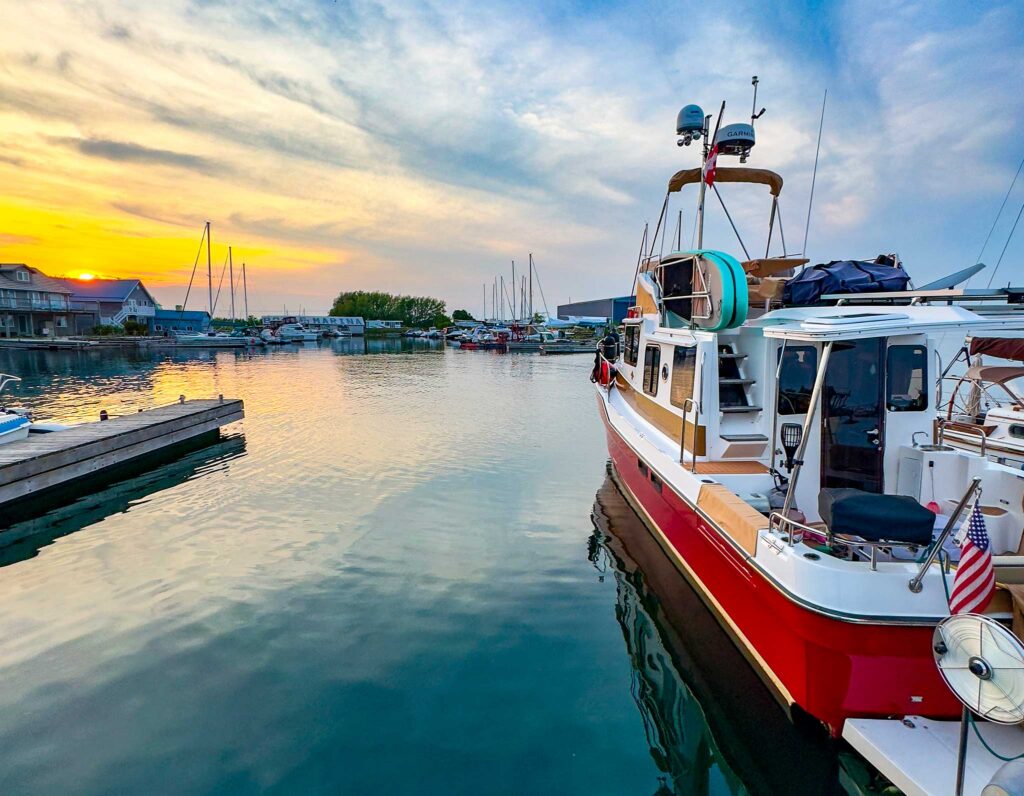
When Russ and Jamie Dykstra, both in their mid-50s, decided to live aboard, they sold their house, bought a 50-foot Navigator Classic and completed the Great Loop. They then sold the Navigator, bought a Selene 60, Naut Lost, and spent five months cruising Chesapeake Bay. This past January, the Selene was in Guatemala for refitting and repainting. After that, the Dykstras plan to cruise to Maine for the summer. But, Russ says, “our plans are written in sand at low tide, so who knows where we will end up.”
The Dykstras started their transition to living aboard years ahead of time. “We went from a 6,000-square-foot house on 50 acres in the mountains to a 600-square-foot boat,” Russ says, adding that it’s best to start getting rid of stuff at least a year before moving aboard. “You’ll find out if you can live without that stuff, and you’ll get over the emotional step of committing to this lifestyle change.”
The couple has good advice for liveaboards. For instance, if you don’t have extensive experience in larger boats, make sure you can get insurance. (The Dykstras owned a 38-foot Sea Ray prior to the Navigator.) Don’t buy more boat than you need, and be sure to get appropriate training. “No one can be prepared for all the circumstances out there,” Russ says, “but the better-prepared you are, the less stressful it is on you, your crew and your boat.”
The biggest unknown has been the cost, he adds. When you cruise full time, you put more hours and wear on the boat in a year than weekend boaters do in a lifetime, so you face more maintenance, more repairs, more refits and the occasional large and expensive breakdown.
“As they say, cruising is doing boat repairs in exotic places,” Russ says. “It’s not all Bacardi and bikinis.”
Just Do It
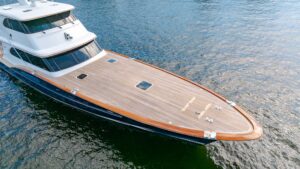
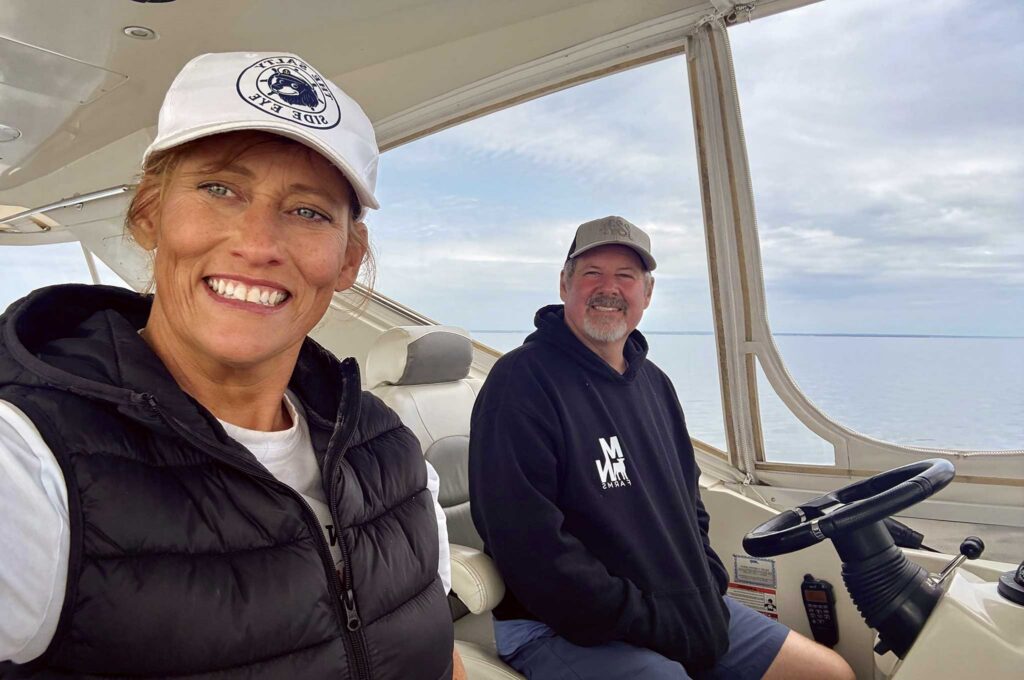
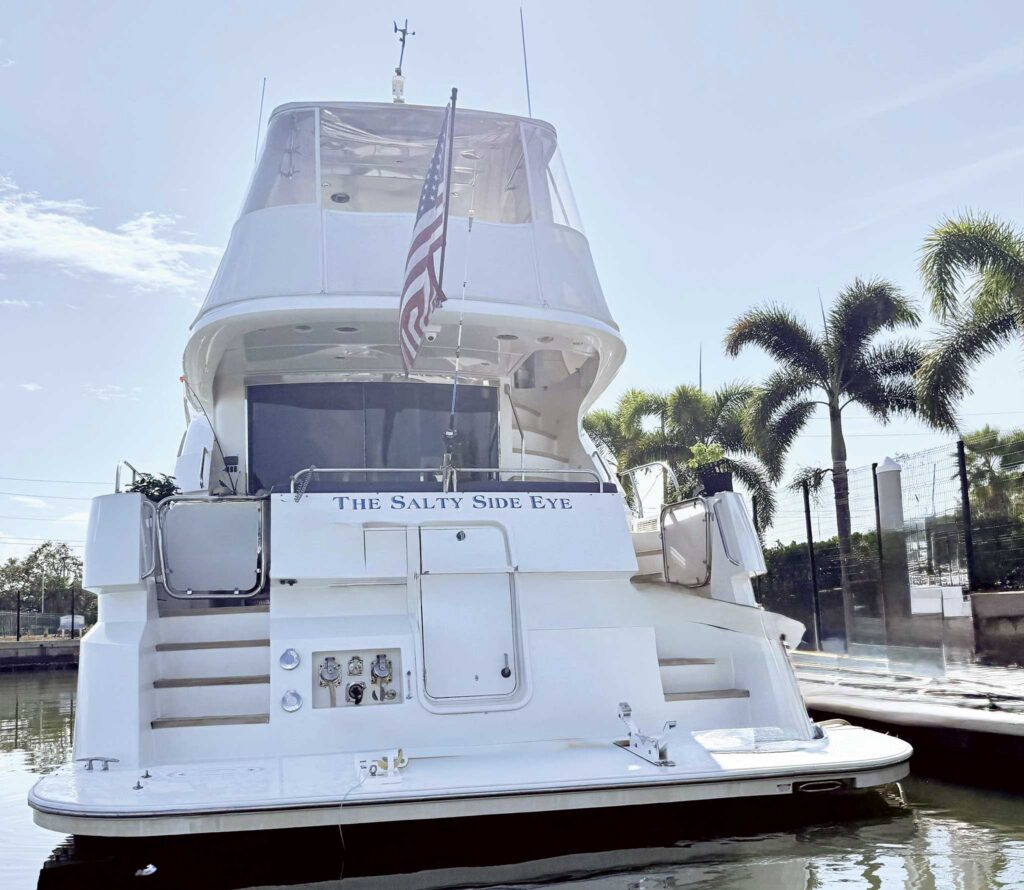
The Brown family didn’t start boating until July 2025, when they cast off from Savannah, Georgia, and started the Great Loop aboard their newly purchased Marquis 55, The Salty Side Eye. This past January, all four of them—Phil and Jenny, both in their 50s, with daughters McKenzie, who is 20, and Ellee, 18—arrived in Key West, Florida, with their dachshund, Longfellow, who is 6. The St. Louis family plans to close the Loop early this year.
Phil was a boater before he started his corporate career in the early 1990s, but had gotten away from the water. When he had an opportunity to retire early, he suggested the family tackle the Great Loop.
“We thought it was the craziest idea,” Jenny says. “However, with time, we all got on board 100 percent, and months into it, are so happy we did. Being full time on the boat has brought more joy to our lives than I ever expected.”
The Browns chose their boat the way people choose all kinds of things today: They went online, watched YouTube videos and listened to podcasts. They read books, took courses and checked out possible boats until they found the three-stateroom Marquis.
They cast off just three days after closing on the boat, with Capt. Will Mason from The Captain’s Coach aboard for the first week to train them. Taking their time finding just the right boat, and hiring a pro to teach them all about it, really paid off.
“The Marquis 55 has been the perfect boat for us,” Jenny says. “It just feels like home.”
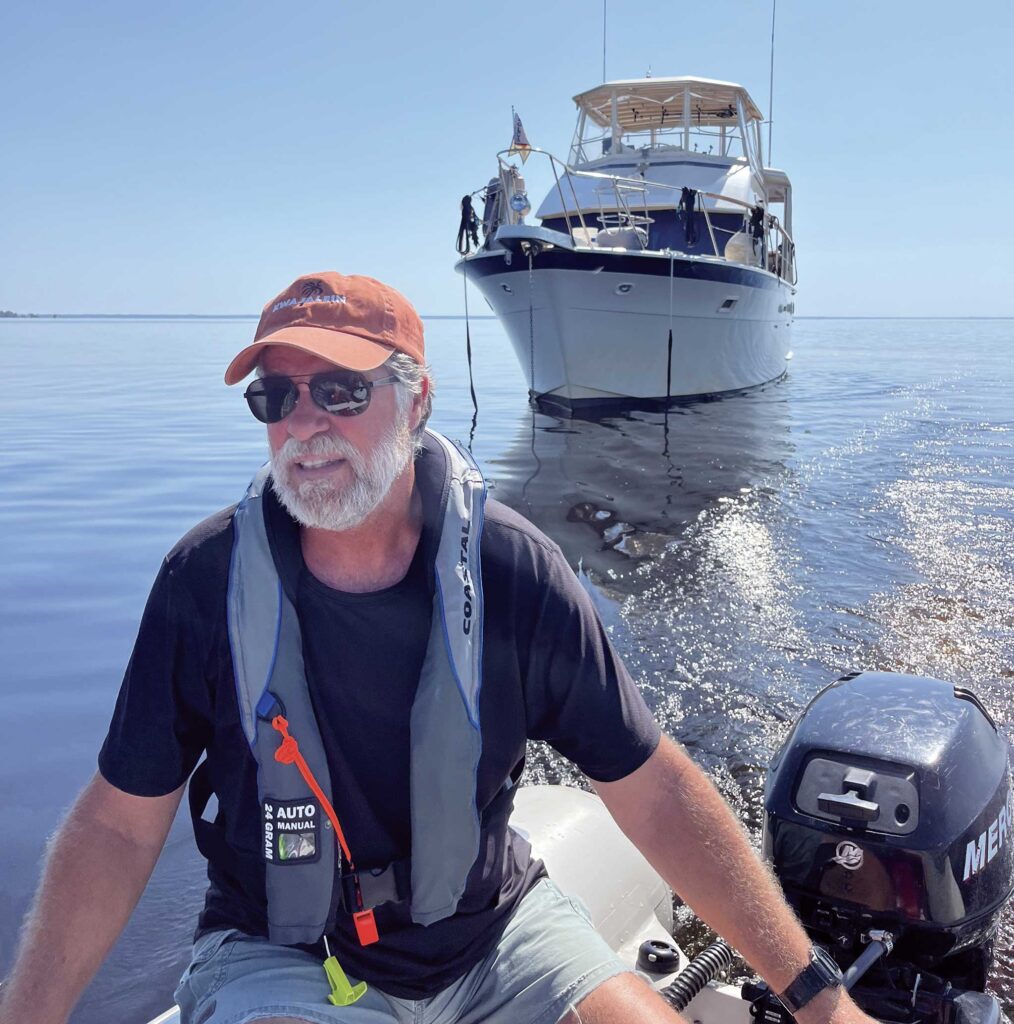
Martin off the bow of his Hatteras 43 Motor Yacht. Malinda and Keith Martin
Living Well
Malinda and Keith Martin own what they call a “dirt home” in Huntsville, Alabama, but spend lots of time living aboard their 1987 Hatteras 43 Motor Yacht, Sea Cottage. “If the boat needs repairs, we have a place to go,” Keith says.
The Martins were retired for a year and a half before buying the Hatteras. They owned a 20-foot fishing boat, but they wanted more from retirement, and the Hatteras provided it. “On the boat, every day is different, with its own challenges,” Keith says. “It’s good for your mental acuity. You learn things all of the time.”
In two years, the Martins have put more than 10,000 miles on the boat, including a lap around the Great Loop. And they have more cruises planned after wintering in Huntsville while their boat gets improvements to make it more comfortable. They stay connected with other cruisers through online boat-owner groups, particularly the Marine Trawler Owners Association and special interest groups run by the America’s Great Loop Cruisers’ Association.
If you think you want to move on board full-time, think harder, Keith says. Many people decide to go cruising and sell their house, but it doesn’t work out, and they’re left without a home. “Look at the end game,” he says. “Are you going to live aboard for a year or two, or is it forever?”
Cruising is a nomadic lifestyle. It’s the closest thing to being an expat in your own country. Malinda, who grew up in a U.S. Navy family, says it’s like being in the military: You move around and meet new people from all walks of life. “Nobody asks what you did,” she says. “They’re more likely to ask what kind of engines you have.”
Keith adds: “Strangers are only friends you haven’t met yet. That’s really true when you cruise. You relearn the art of visiting. It’s like sitting on your porch back in the 1950s when the neighbors dropped by. People help each other out.”
Living aboard is doable on almost any budget, Keith says. You can buy a smaller boat, an older boat and DIY the maintenance. You can live with less, but you’ll still get the same million-dollar view as the folks with the million-dollar boats.
“Take the leap,” he says. “Live the adventure.”
This article was originally published in the April 2026 issue.