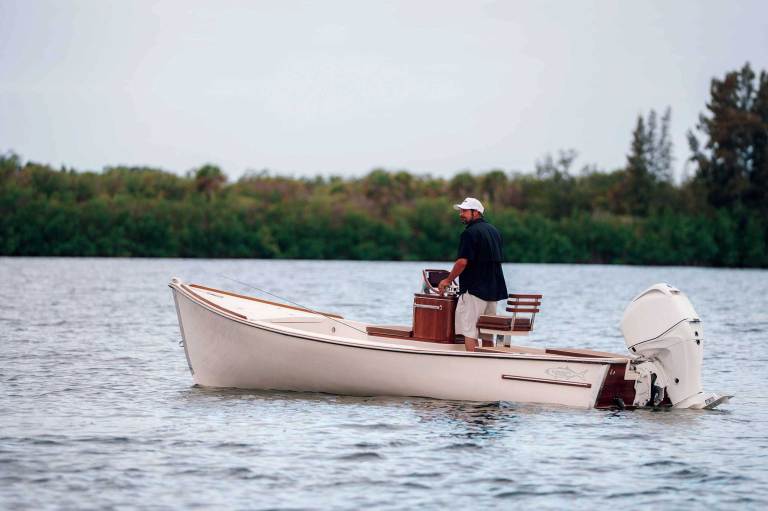
The Chris-Craft Launch 27 is one of the award-winning boats that was lauded for integrating thoughtful design from stem to stern. Courtesy Chris Craft
The kings’ sport of yachting dates back hundreds of years, but the recreational boating industry as we know it today was largely born in the 1950s. That’s when a booming postwar economy and innovations such as fiberglass construction combined to get all sorts of people out on the water aboard first-of-their-kind boats. As history goes, it’s actually been just a blink of time since “newfangled this” and “whizbang that” gave way to more streamlined, complex systems in boat design and construction.
Based on what the judges saw at this year’s Miami Innovation Awards in February, boatbuilders have hit another tipping point in the timeline. Decades’ worth of human experience and craftsmanship are combining with new technology and tools to create all kinds of elevated onboard experiences for owners.
Judges found this trend to be evident on boats of all sizes, including the smallest models in the competition, in ways that nobody imagined being possible a generation or two ago. “If you look back over the last couple of decades and compare it to now, there’s so much more seamless connection between the stuff we put in the boats and the boats themselves,” says Tim Murphy, chairman of this year’s Miami Innovation Awards judging panel. “It feels like the whole experience is designed.”
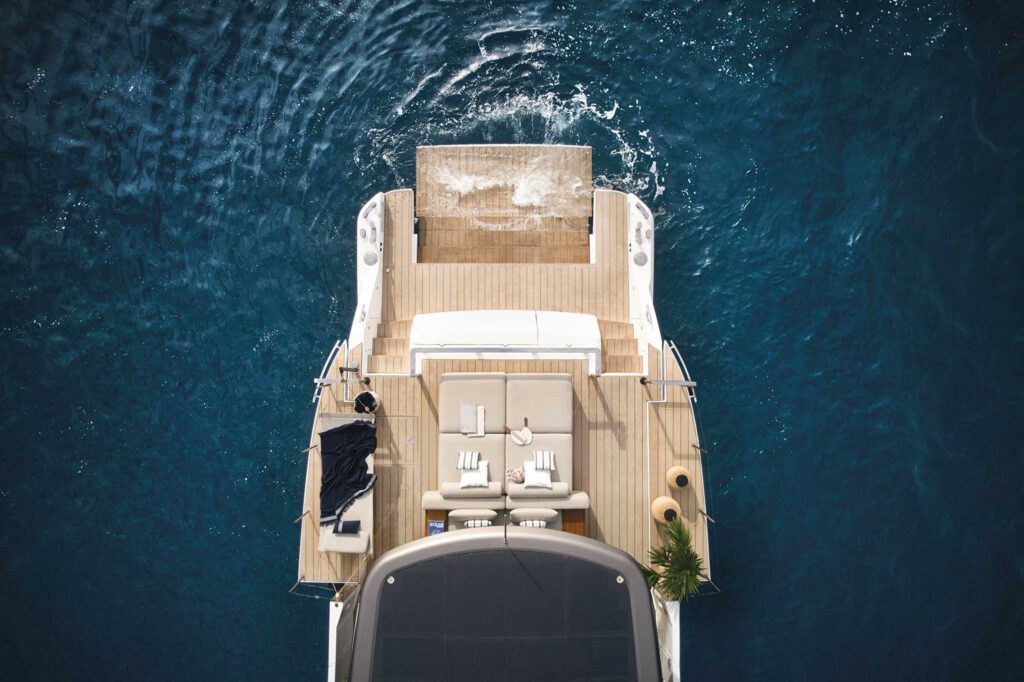
The judges, all members of Boating Writers International, gave accolades in various categories to the Azimut Seadeck 7 (with a length overall of 71 feet, 2 inches), Regulator 35, Chris-Craft Launch 27 and Hurricane SunDeck 230, among others. Those shout-outs had a running theme, even though the winners represented different size ranges and types of boats. With each winning model, the judges noted how the boat—no matter its intended purpose—smartly and seamlessly incorporated all kinds of features and design elements.
On the Azimut Seadeck 7, judge Ben Stein cited a tour de force of smart features and refined design. The Hurricane SunDeck 230, according to judge Brady Kay, packed premium comforts into a twin-engine boat at an affordable price. Judge Gary Reich noted that Regulator’s 35 includes multiple innovations, all within bulletproof build quality. And Chris-Craft’s Launch 27, Reich said, quite simply oozes refinement.
“Longer ago, there was often a feeling of different minds designing different parts of the boats. Now it’s really a seamless package,” Murphy says. “It’s using technology, but it’s using technology in a way that brings decades of experience into one whole vision.”
Murphy says he even noticed this convergence of technology advancements, design elements, construction techniques and human expertise in award entrants that didn’t snag the top prizes. The Mastercraft X24 was one such example of holistic thinking.
“The theme was using this very limited space as cleanly and elegantly as possible,” he says of the 24-footer, which gives people a way to store a bunch of boards without racks that can become unwieldy and unsightly. “They had this transom locker where a bag could hang in there, and the boards could be underneath the deck. They weren’t in the middle of the cockpit or on racks outside the boat.”
Such features aboard a 24-foot wakesurf boat are of course quite different from the Azimut Seadeck 7’s focus on sustainability in propulsion and materials, including the use of a Volvo Penta hybrid-electric IPS propulsion system for more efficient family cruising. But in each case, Murphy says, the boats in the Innovation Awards competition represented a complete and well-executed thought process from stem to stern.
“These are two different themes, but with the tiniest boat and the biggest boat, they followed their idea all the way through,” he says.
The Chris-Craft Launch 27, he says, was yet another example, with a focus on how to combine modern design and a retro look. “They used some great thinking about passage straight from the transom through the middle of the boat forward,” Murphy says. “They almost used automotive thinking in terms of where you sit at the helm. There was a wide, horizontal display. It felt almost like being in a vintage car with modern tech.”
Such results aren’t just a matter of new components, smart technology and construction materials, Murphy says. It’s all of those things, plus years’ worth of human expertise and hands-on know-how coming together to enhance the boating experience in many ways.
“The whole idea of certified technicians—these people who have the same body of knowledge no matter what company they’re working for or who they have learned from, even as they move among companies—it allows people to see the whole boatbuilding process from a much broader perspective,” Murphy says. “And it [encompasses] the majority of the marine industry, all these people who are in it with a longer view, and how they bring these approaches together.”
This article was originally published in the May 2026 issue.