A couple of years ago, business took me to Europe for a month. I visited Germany, Spain, France and Switzerland, and then took a jaunt over to Tenerife. I started packing the day before I left, and from start to finish, it took me one hour to fill a carry-on bag and a backpack. In retrospect, I could have skipped the carry-on and crammed a change of clothes into the backpack beside my laptop and then bought a few pieces of clothing in Frankfurt. On that trip I traveled from city to city, where access to services and goods was largely uninterrupted, so I didn’t have to worry about forgetting something.
My next big trip won’t be like that. For the first time in my life, I am being forced to think differently, to plan and prepare like I never thought I would. It’s been exhausting and I’m not done yet.
Back in February, owing completely to Soundings Deputy Editor Pim Van Hemmen, I was invited on a months-long cruising adventure from Portland, Maine, to Anacortes, Washington. And we’d be traveling the hard way—up and over the top through the Northwest Passage. While there are settlements along the most northern reaches of the route, the Northwest Passage redefines the word “remote” for most people, and certainly for me. Thus, if we don’t take it with us, we simply won’t have it. Safely planning for a trip like this takes as many days as the trip itself.
When we cross the 75th parallel and make our way toward Lancaster Sound at the eastern entrance to the Northwest Passage, we’ll be committed to managing all the normal hazards of being offshore, which will be compounded by distance from help and supplies. In addition, we’ll be under time pressure to move through that part of the water that is always one day closer to freezing over.
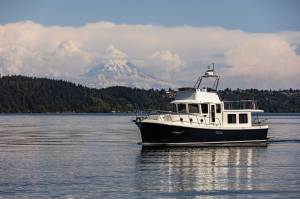
Fortunately, we’ll be taking a Steve Dashew-designed FPB-64, the M/V Sarah-Sarah, from Portland to her home port in Anacortes. FPBs are what you get if you build a trawler like General Dynamics builds a tank, with half-inch-thick hull plating and bulletproof windows. Sarah-Sarah is owned by veteran passagemaker Scott Evangelista.
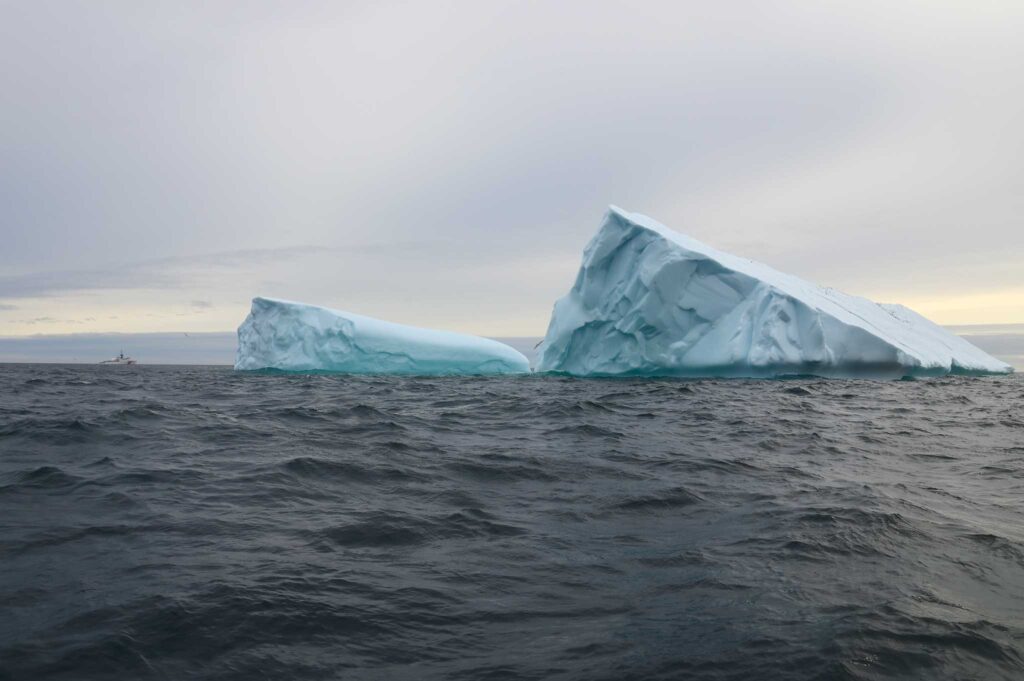
Though most of the trip will be coastal cruising in well-charted waters, there will be a section where the boat will be over 1,000 miles from the nearest rescue base. There are lots of places on Earth like that, but most of them are in the middle of global shipping routes, not the Arctic. There, the distance to help is measured in days. What I know about trouble on the water is that “days” is a very long time. For that reason, my planning method of asking, “what can go wrong and what can I do about it,” has been getting a workout.
Think about it: If a crew member slips and breaks an arm 40 miles off Cape May, New Jersey, at worst you’ll be meeting the ambulance at the dock in a few hours. Slip and fall in Coronation Gulf in the Canadian Arctic Archipelago and the wait may be much, much longer. If someone falls overboard and gets hypothermic (31-degree water does that), you’d better have a plan and the gear to rewarm that person to full recovery, because no one else will get there in time.
In most of the world, the time to rescue is measured in hours, with the average time to rescue, globally, being 257 minutes. The Arctic lowers that average, specifically because of its distance from other ships. Last year, just 38 vessels made the transit through the Northwest Passage. Where there are very few ships, there will be no search and rescue base nearby. That doesn’t mean rescue is impossible, but you’d better be able to hold your own for a while.
Thankfully, Scott has broken up the planning burden and I’m actually confident we’ll get it all done. Boat builder Sam Devlin is coming along and he is working with Dr. Ken Williams, our shoreside medical support, on crew fitness, medical considerations and first aid equipment. He has also taken on damage control in the unlikely event that the indestructible FPB is more destructible than anticipated. Scott is preparing the boat for every eventuality with maintenance, spares for the spares, and redundancy considerations. His use of the Vessel Vanguard software to catalog, maintain and inventory all vessel systems and spares is confidence-inspiring to say the least.
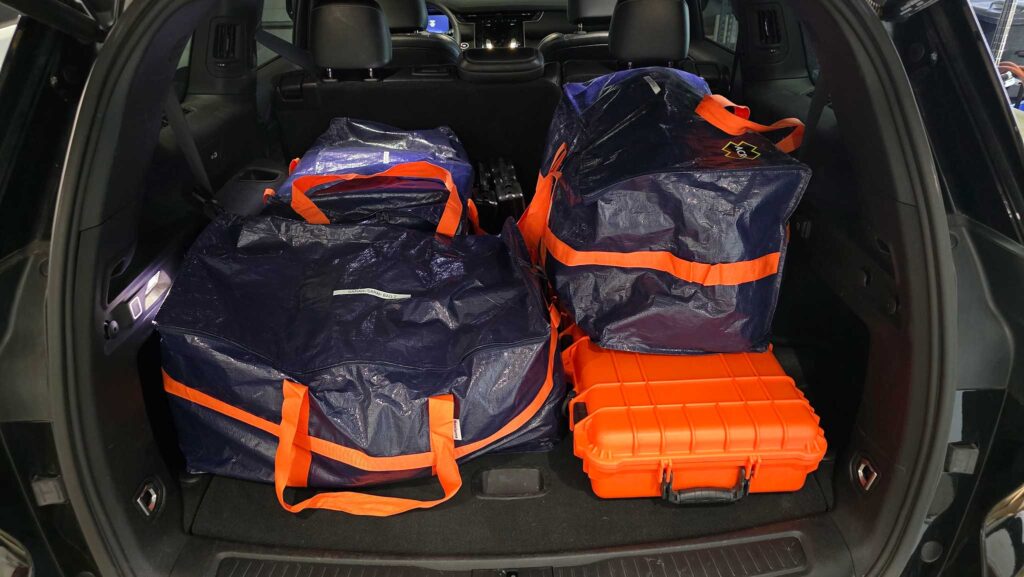
My job? Safety and communications. Two months in and I’ve got half the gear to the boat already with the bulk of the personal protective and survival equipment arriving next week. Now it’s time to take my own advice and set-up lifejackets for real-world overboard use in that part of the world. I’m also working on a plan for everything that might go wrong and how we intend to face challenges, should they come.
As we travel along the route from July through September, we’ll be making videos, testing equipment and continuing to plan for safety. Check back here for updates.
August 2025