
Courtesy J. Russell Jinishian Gallery
Throw away your radar, GPS and cellphone. Disconnect the autopilot, and toss your VHF radio into the waves. Shut down everything powered by electricity. Hundreds of miles offshore, you’ll begin to imagine what it was like aboard a great wooden merchant ship in the 1800s.
Picture this: You are 24 years old and captain of a 177-foot, three-masted bark, a workhorse of the ocean with a crew of 22 men including the cook, carpenter, sailors and officers. Pigs and chickens breed and get butchered in your hold. Your cargo of bird guano, a prized fertilizer from the Chincha Islands, leaves a layer of noxious white dust across every surface.
As you approach Cape Horn at the tip of South America, water gushes through the timbers near the bowsprit. The seas are mountainous, the skies black and raging. The ship’s carpenter struggles to repair the damage, and the men at the pumps are losing ground. There’s not another boat in sight.
You are alone.
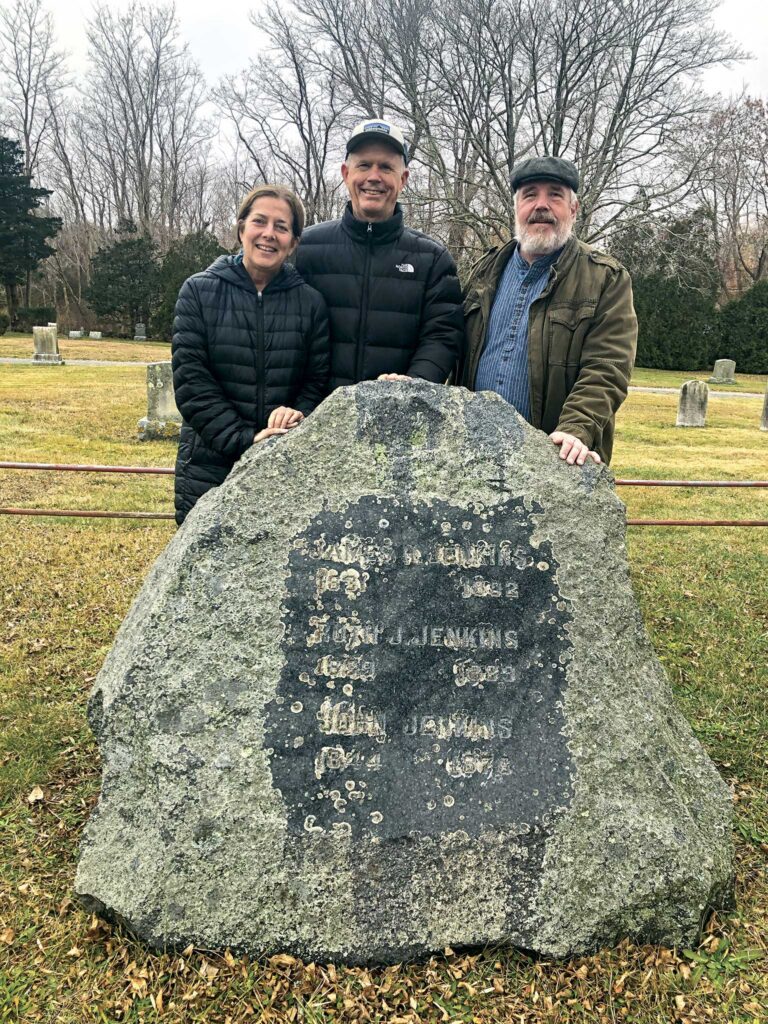
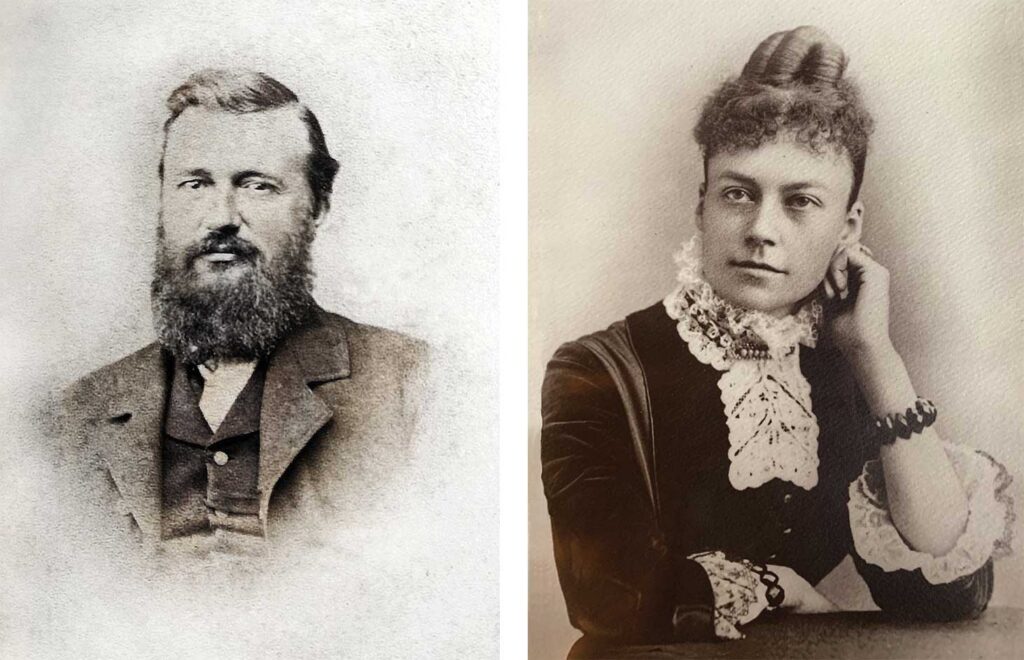
This was all just another day at work for James Hamblin Jenkins, who went to sea in the 1840s at age 13. By his 24th birthday, Jenkins was captain of his own ship, crisscrossing the globe to New York, San Francisco, China, India, Australia and Europe. He was part of a generation of sailors who connected cultures and continents, establishing a global system of trade during the final chapter of the Age of Sail.
Merchant sailors like Jenkins were different from their counterparts on land, who spent their lives working on farms or in trades close to home. These sailors experienced the food, religions, languages, music and customs of foreign lands as the fleet transported coal, lumber, tea, porcelain, silk, cotton, spices and a host of other products from continent to continent.
In these floating cities of men, sailors endured a brand of loneliness rarely experienced on shore, separated for years at a time from home and family. Some wrote letters spanning oceans and time. Jenkins was one such man.
Found Documents
I first heard of Capt. James Jenkins 30 years ago, shortly after I married Bob Elder, a lifelong sailor. His father gave me a transcription of a letter from James, who was Bob’s great-great-grandfather. I was intrigued. This captain shared many qualities with the sailor I had just married. Across the centuries, I could hear James speaking. He made me laugh and pulled me in with his vivid descriptions of a life at sea.
Writing in 1859 to Ruth Fish, a sea captain’s daughter, James described a “rough weather day” aboard Chilo, the first ship under his command.
The mate comes into my room, gives me a shake, and says, “It is breezing up, Sir, and the weather looks bad,” and then returns to the deck. I can feel it in my room. The ship is lurching and pitching so that I can scarcely stand. My boots, hat and coat, which upon retiring I had placed by the side of my berth, have tumbled over to leeward. I can hear the whistling of the wind among the ropes and the groaning of the masts and spars. I slip on my big coat, sea boots and sou-wester hat, and go out on deck where at first I can see nothing at all, but gradually as my eyes become accustomed to the darkness, I can dimly discern the white sails aloft strained to their utmost tension and ready to burst with the force of the wind.
As the writer in the family, I often wondered if there might be other letters. Every so often, I would return to the original letter and marvel at the way James captured the experience of sailing a mighty wooden ship.
Down comes the rain, blinding and smothering, in the midst of which the crew, headed by the second mate, scramble aloft to the sail close on the yard, where they can no longer be seen from the deck by reason of the thick darkness. Perhaps if it blows hard, they will be aloft half an hour before they will succeed in getting it tied up, for the canvas is very hard and stiff and the wind causes the sail to slap and jerk so that it is almost impossible to get hold of it.
I tried to imagine myself at age 24, shouldering responsibility for ship and crew in the middle of the ocean, long before tracking devices, search planes and satellite phones. Many a ship was lost with all hands aboard. And yet James kept his calm and sense of humor when writing to Ruth.
The top of a big sea comes on board and about half a dozen barrels of water fall directly upon my head. If I have seen or heard it coming and braced myself to receive it, my hat and coat shed the greater part of it, and only a few quarts find their way in about my neck and run inside my clothes until it all settles in my boots, which I take off and empty, put them on again and stand by for another sea. But if I should not have noticed it as it was coming, very likely it will wash me away into the lee scuppers, where I have a nice little swim for it and get back to my place half drowned and caring very little whether my boots are full or only half full of water.
Years later, I discovered hundreds of pages of letters, ship’s logs and journals as we prepared Bob’s family home for sale. James, Ruth and her younger brother, Josiah, all seemed to pour their hearts out on paper inked more than 150 years ago. Theirs were not the great names of history. Rather, these were the voices of working sailors, soldiers and women who risked their lives for love and livelihood.
Personal Stories
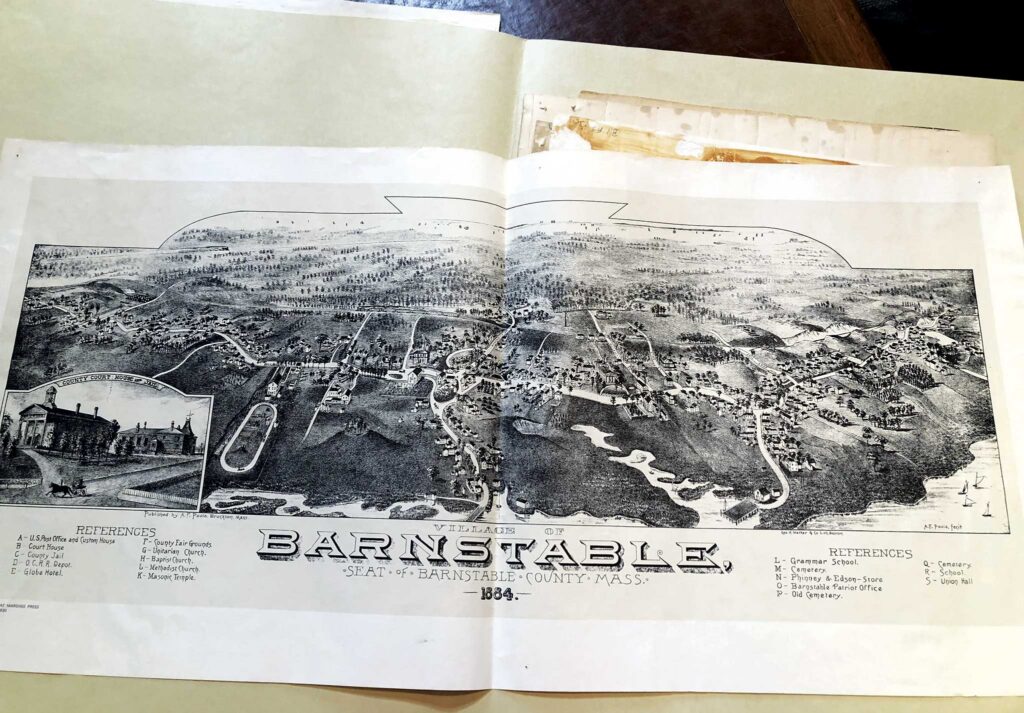
Growing up on a small farm in West Barnstable, Massachusetts, Ruth dreamed of sailing at a time when the idea was all but unheard of for women. Months into her first voyage aboard a merchant sailing ship, she learned to calculate latitude and longitude, read navigational charts and understand the rigging. In a letter to her mother, Ruth reflected on her early days aboard Hoogly, which James captained in the 1860s.
James & the mate and stewards are laughing at me every day and call me “old sailor.” I was a little sick for a few hours, but I don’t think I was so bad off as James was. I did not begin to feel sick till I had been up about half an hour. I could not eat any breakfast, and James gave me some lavender and sugar, but that did not do me much good. The steward brought me some strong ginger tea and I vomited it up.
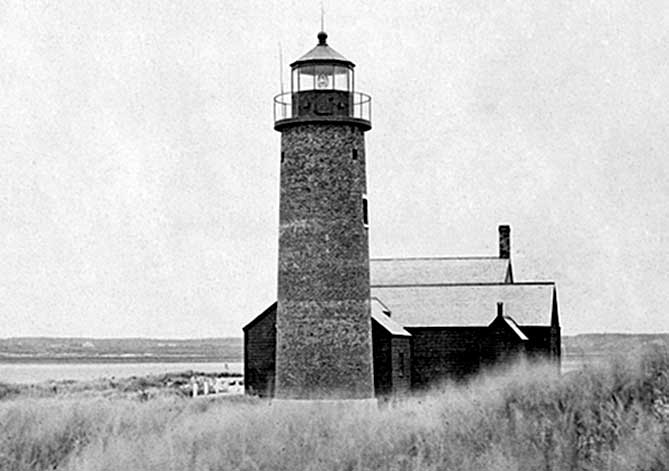
About 12 o’clock James came down and says, come Ruth, if you want to get the last look of Cape Cod. I ran to the window as well as I could, for I had not got my sea legs on then. And all I could see of Cape Cod was a little bit of land, a few rocks and a lighthouse. But your face, and Minnie’s, Georgie’s, Father, Eliza’s, and Aunt Zelia’s, all flashed across my vision. For the first time since I had made up my mind to try the sea, I felt like having a good cry.
Many young sailors like Josiah left home as a merchant ship sailor but ended up a soldier as the Civil War raged on. Josiah enlisted when the ship he’d been working on met a Union blockade in Peru. Struck by a sense of duty, Josiah signed on.
Through the long years of fighting, he wrote home and sent his wages to help his mother. From an encampment near Hagerstown, Maryland, in July 1863, Josiah described the scene for his brother.
At 10 A.M. came to Camp, put on our traps and prepared to leave when the Rebels commenced to shell us. We were moved into the woods, out of range, where we all succeeded in getting unhurt, except one poor fellow who was wounded in the head the night before. Had his leg taken off below the knee by a solid shot just as he had got in the edge of the woods. They said that 125 was killed in front of us the night before.
We left the White Oak swamp and traveled all night. Division went on picket that night and at 3 o’clock on Wednesday the 2nd, it commenced to rain. After dragging through mud to our knees 5 or 6 hours, we arrived at Harrison’s landing and made ourselves as comfortable as possible. The suffering you cannot imagine; what the sick and wounded suffered through that long weary night. Wet to the skin and nowhere to rest but the deep mud and in drenching rain.
During his long tour in the Army, Josiah longed for the feel of a sea breeze. He urged his brother and friends to stay on their merchant ships or join the Navy.
Peril on the Sea
During this time of war, when privateers and warships were as likely to appear from the mist as merchant vessels, the decision to assist vessels in distress wasn’t easily made. James faced such a choice hundreds of miles off Liverpool, England. Just as the sun was setting on a December afternoon, the mate poked his head in the captain’s cabin to report a sail on the lee bow.
“Can you see her colors?” James asked.
“The fog’s too thick, Sir.”
James had no reason to fear privateers in these waters, but something pushed him to get up and have a look. He peered through the spyglass. He fancied he saw her coming about, but he wasn’t sure. The fog shut in.
Just at that moment, his own vessel was having the first fair wind the crew had seen for weeks. He didn’t relish the idea of running the Hoogly off her course on the bare supposition that the other vessel might be in distress.
He stood a moment, contemplating the horizon. Then he directed the man at the helm to steer the Hoogly nearer to the ship and get a better look at her. The vessel began burning blue lights and making signals to attract the attention of the Hoogly.
“We’re sinking, Sir! Can you take us aboard?” the captain shouted.
“Are your boats ready?” James yelled back over the rails.
“Aye, they’re ready, and we haven’t much time!”
“Gather your men, bring what bread you have—we’ve been out more than a hundred days and our provisions are low—but don’t bring any rum.”
The captain, his mate and the crew of the English bark James Lamb of Liverpool—13 souls in all—scrambled into the boats and were soon safely aboard the Hoogly. The James Lamb was left to her fate. She had sprung a leak three days earlier. The crew had been pumping night and day. They were just about to abandon ship and take their chances in the small boats when they saw the Hoogly through the fog.
The night after they were rescued, it blew hard. The next day they bore up against a heavy gale. All hands on the James Lamb would have been lost if they had been tossed about in those small boats on such seas.
The End of an Era
The Age of Sail, when great wooden ships ruled the ocean, gave way to steam at the end of the Civil War. Many sailors were displaced from the only work they knew. Jenkins felt the first turn of the tide in 1862, when he’d learned the outcome of the battle at Hampton Roads, Virginia. The Confederate ironclad steamship Virginia had mowed down two wooden-hulled sailing warships like so much fodder.
A day later, the Virginia met its match, battling for hours against the ironclad steamship USS Monitor. The duel ended in a draw, and both ships survived to limp home and fight another day, but the battle changed the future of sailing.
Great Britain and France abandoned any further construction of wooden-hulled sailing ships, and the other countries fell like dominoes, trading sail for steam. The Hoogly would be one of the last great wooden-hulled sailing ships to ply the oceans.
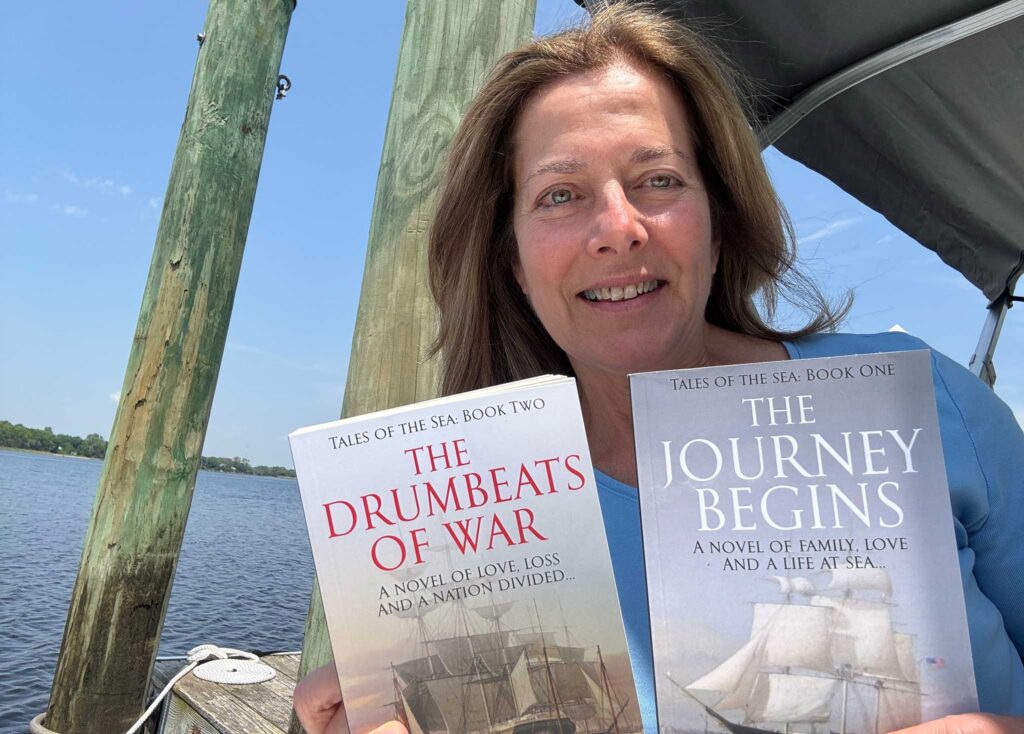
As I read all these letters, I knew I had to transform them into a novel. These people lived in an era of technological change and deep political division, as our country marched toward the bloodiest war in its history. Four years of work resulted in the two-volume historical fiction novel, Tales of the Sea, published in May 2025 by Holand Press. Book one is The Journey Begins, and book two is The Drumbeats of War.
These stories are grounded in original sources and often told in these people’s own words, recovered from a dusty box on a back porch where they had lain quietly for decades, waiting to be discovered.
This article was originally published in the April 2026 issue.