When funeral director Jack Conway visited a friend who ran a marina in Freeport, New York, on Long Island in the 1970s, he always admired the distinctive motorboats floating in the adjacent Woodcleft Canal.
“Every time I’d go to visit my buddy, I’d see these Groverbuilts tied up in the canal,” Conway recalls. “And I said to myself, ‘I’m going to own one of those someday.’” That day came in 2005, when he purchased a 28-footer.
Today, the boat Conway purchased looks very different, as it just underwent a keel-to-cabin top rehabilitation. She’s all spiffed up and back at Conway’s home on Shelter Island, New York.
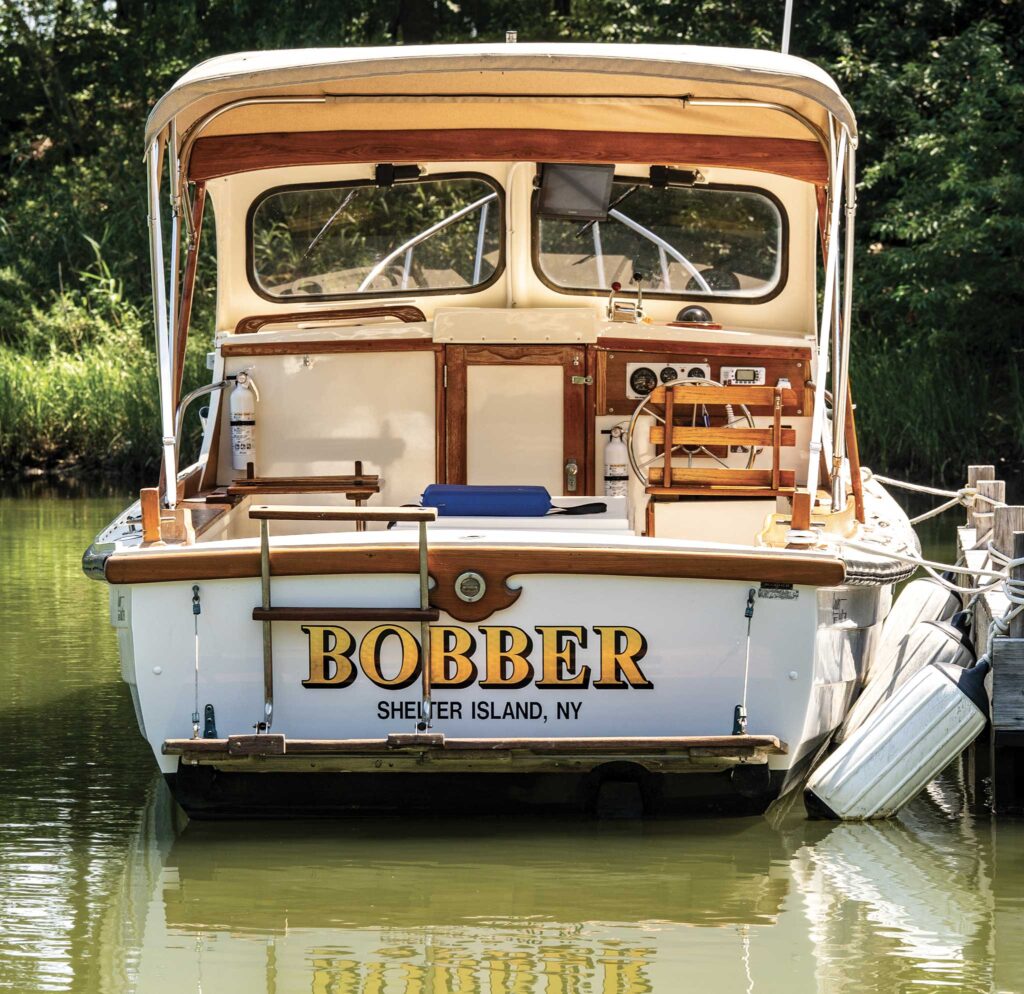
Bobber is a unique boat, because she was originally used by Al Grover, Sr., the founder of
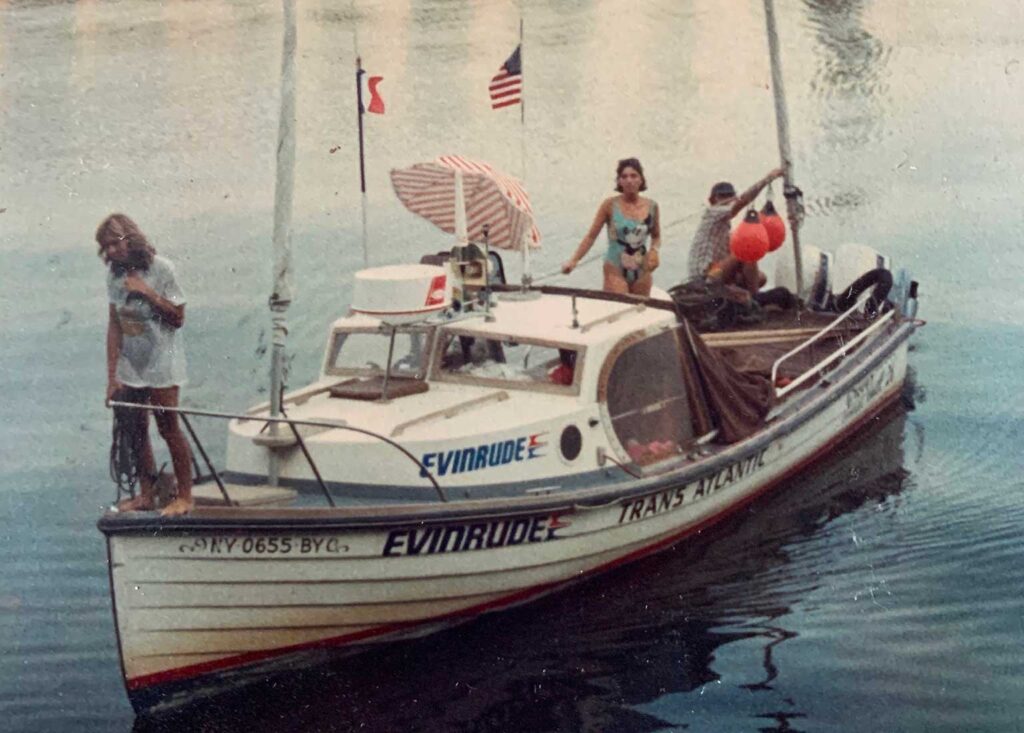
Groverbuilt. Conway heard about the 28 from Al Grover, Jr., who told him that his brother Dante had taken over the family’s marina business and had the 28-footer for sale. That boat was built in 1985, the same year that Al, Sr. made headlines by taking a 26-foot Groverbuilt across the Atlantic in 33 days. He set a record as the first person to cross the ocean in an outboard-powered boat.
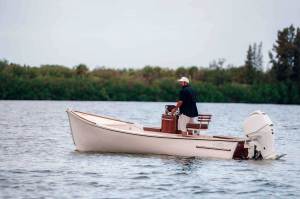
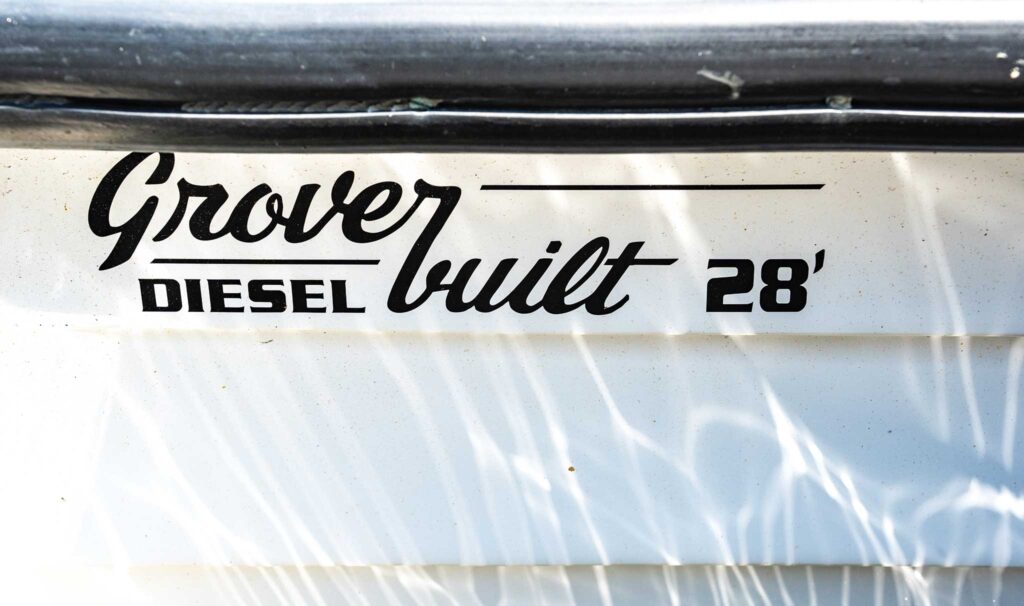
Al Grover and his sons built a total of 183 lapstrake fiberglass boats in Freeport from 1972 until about 2015. They built 126 of the 26-foot diesel boats and 57 of the 28-foot diesel skiffs. Al, Sr., who’s now 97, says he used them if they didn’t sell right away during economic downturns. “Then if I got lucky, somebody would come along and buy my own personal boat,” he says.
He based his designs on a skiff constructed by the Verity family in Baldwin Harbor, New. York. “They were wooden boats. Up until World War II there was quite a fleet of them, fishing all year round,” he says. “I worked on them as a kid, and I fell in love with them because they were very, very seaworthy.”
In the 1970s, during the oil crisis and long lines at gas stations, Al, Sr. figured he’d find a Verity that was in good shape to use as a mold and build fiberglass replicas to keep the business going during the downturn. “I never thought it would sell well because it was not a speedboat,” he says. “Most of them had a single diesel. So, we fished a little bit with the boat, and people began to get interested. And then we went into production, which was about one boat a month.”
He built the 26 model first. “A lot of the design for the 28 came out of requests from 26 owners,” he says. “They wanted her a little wider and a little drier, so she was a plank wider on each side of the keel to give more stability.” The 26 weighed about 6,000 pounds; the 28 about 8,000 pounds.
Al, Sr. was working in the community where he’d been raised, having grown up in Freeport fascinated by the water. After serving as a paratrooper during World War II, he bought a Jersey skiff and fished commercially for several years. With the help of his brother-in-law, he purchased the property at 195 Woodcleft Avenue and started selling boats, initially Old Town and then Thompson, Chris-Craft and Mako. He soon became one of the largest dealers of small boats on Long Island.
Today, the Grover family owns two marinas. Al, Jr. runs Al Grover’s Dock on Woodcleft Avenue. It opened around 1950 with about 50 slips. Some of the old structures now house restaurants, a gift shop, a cultural center and a brewery. The marina has 34 boat slips and 60 spots for personal watercraft. Al, Jr.’s younger brother Dante runs Al Grovers High & Dry Marina on Main Street. It offers sales, indoor storage for 100 boats, and 960 marina slips in several locations. Al, Sr. bought the property in 1969 to build the first enclosed marina on Long Island. Dante took over management in 1978, at age 18.
Now, back to Conway. He became part of the Groverbuilt story when he decided to pursue his idea of providing burials at sea. He paid $50,000 for the 28.
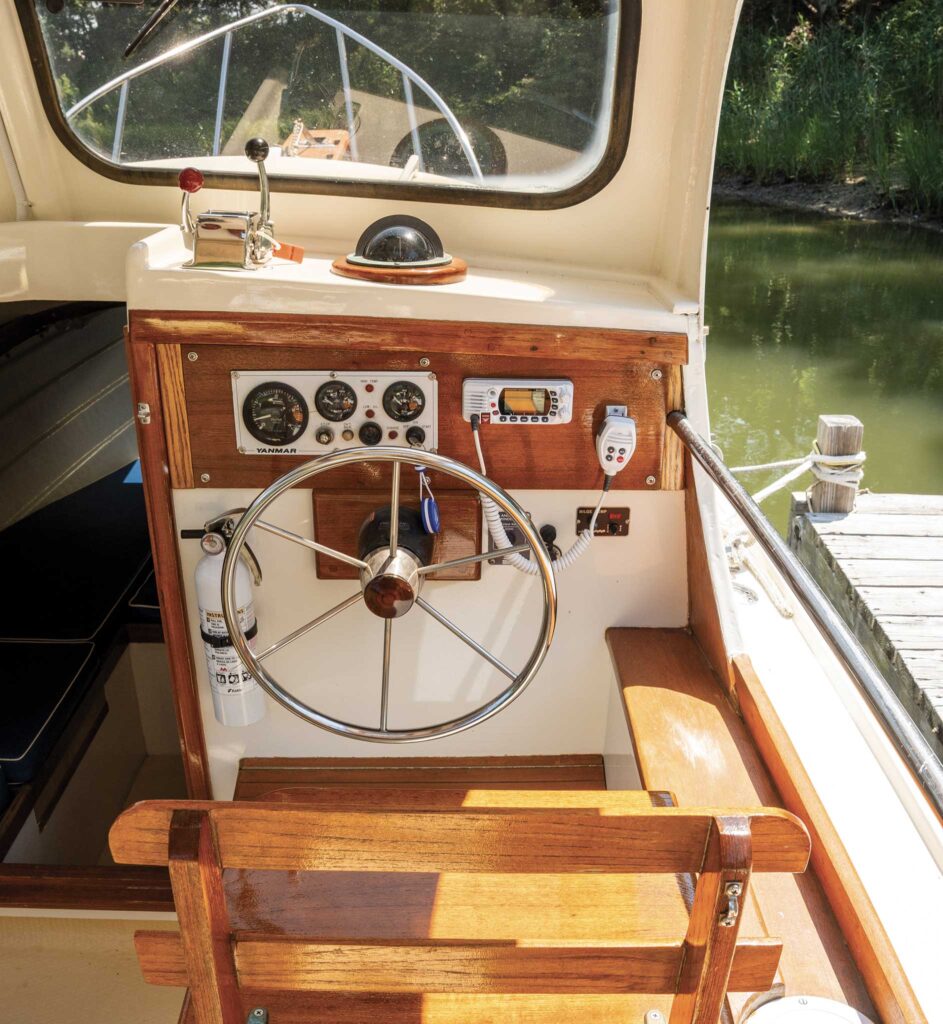
“It had a lot of brightwork on it, teak and mahogany that had to be varnished,” Conway says. “And I actually hesitated when I saw all this high-maintenance wood. But I went ahead anyway and bought the boat. I redid the brightwork myself during Covid. I spent two weeks sanding and scraping and re-varnishing. It was a labor of love.”
He then got his U.S. Coast Guard license and connected with funeral homes in the New York City area. He did burials at sea for about 15 years, he says. After that, as a charter captain, “I used the boat to take people fishing and sightseeing around Shelter Island.”
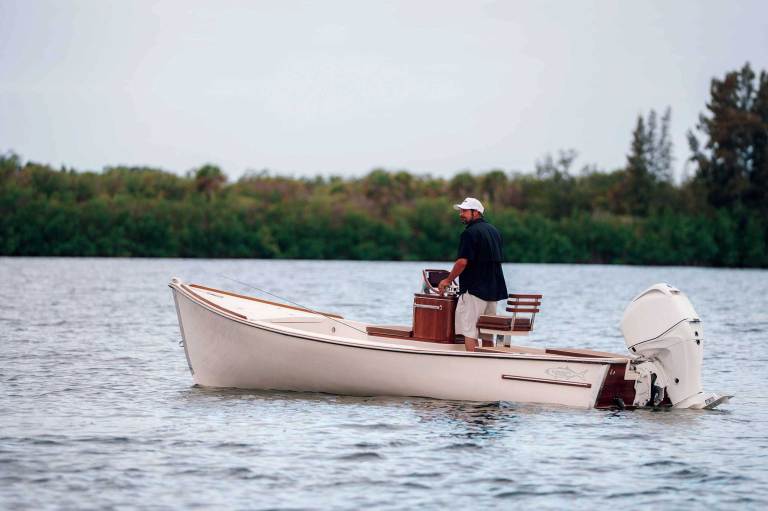
Eventually, Bobber was used exclusively for pleasure at Conway’s summer home in West Neck on Shelter Island. The boat—which has a length of 28 feet 3 inches, a 9-foot six-inch beam and draft of 22 inches—has a lapstrake fiberglass hull. “It’s what we call a semi-displacement boat because it gets above displacement speeds but it’s not able to plane off,” says Al Grover, Sr. “It was built for fishing offshore. Some of the 28s we built had a wood keel added forward to help them point up better. It was added as an accessory and Bobber had one.” The interior layout includes two 6-foot bunks forward and a 16-foot cockpit for fishing.
“We loved the boat, but the boat was looking tired,” Conway says. “We didn’t abuse it, but we didn’t give it the TLC that it really needed and deserved. We got to the point where we said to ourselves, ‘Do we sell the boat and be done with it or put a good bit of money into it? We decided to restore the boat.”
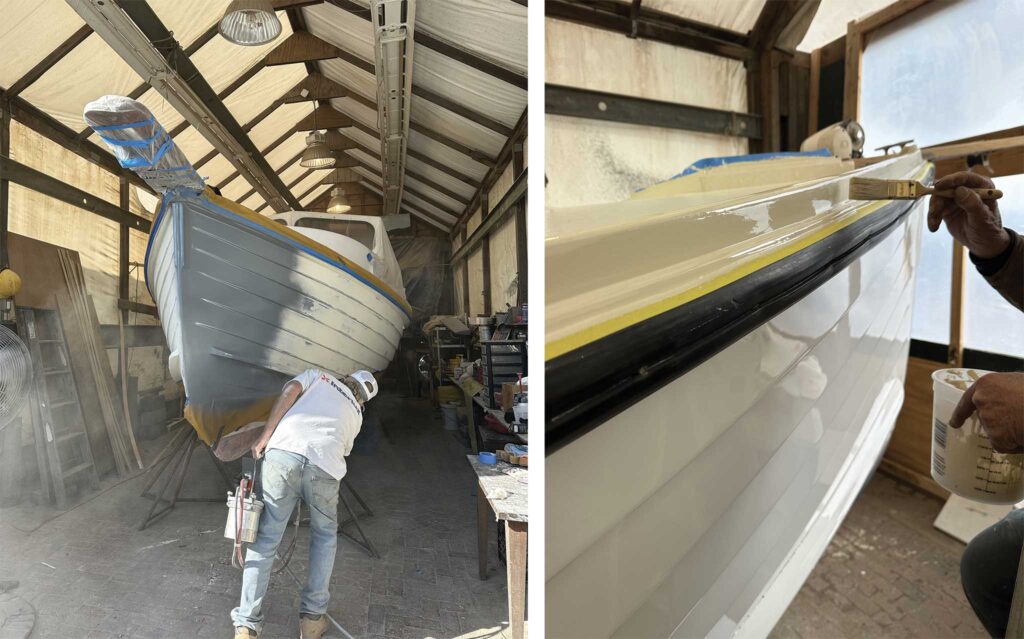
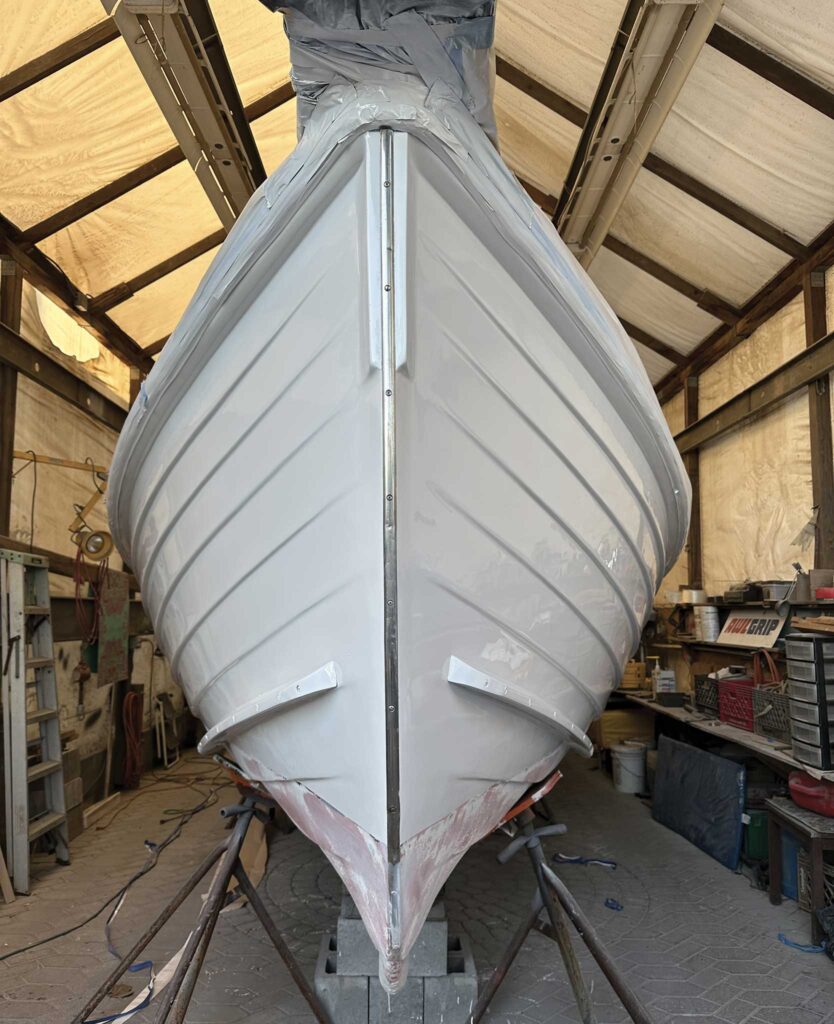
Conway then reached out to Lukens Marine Services in West Babylon, New York, a boat repair shop founded by the father-son team of Peter and Mike Lukens in 2000. In September 2024, they hauled the boat, and work on the old Groverbuilt continued all winter.
“It was definitely distressed,” Mike Lukens says. “Just years of use, no neglect or anything like that. Stress cracks and soft spots in the decks and hull. We stripped the boat completely, three layers of paint. The decks were soft in the back, so we replaced them with meranti plywood glassed in with epoxy.”
The boat was finished in Bristol beige Awlgrip on the decks, and oyster white on the topsides. There’s also 8 to 10 new coats of varnish on the brightwork.
Bobber was originally equipped with a Volvo diesel. “Most of the 28s had a Volvo TMD 40 turbocharged six-cyclinder diesel with 124 propshaft horsepower,” says Al Grover, Sr. “You could go on a three-day trip to the canyon on 50 gallons of fuel. I had built a handful of them with gas engines, but I pulled the gas engines out and put in diesels. I rented one to Ronald Reagan with a six-cylinder outboard on the back.”
At some point, one of Bobber’s previous owners replaced the Volvo diesel with a 240-hp Yanmar, which was overhauled at AM Marine Service in West Islip, New York. “They ended up replacing the turbo and doing a full 1,000-hour service on the engine,” Lukens says.
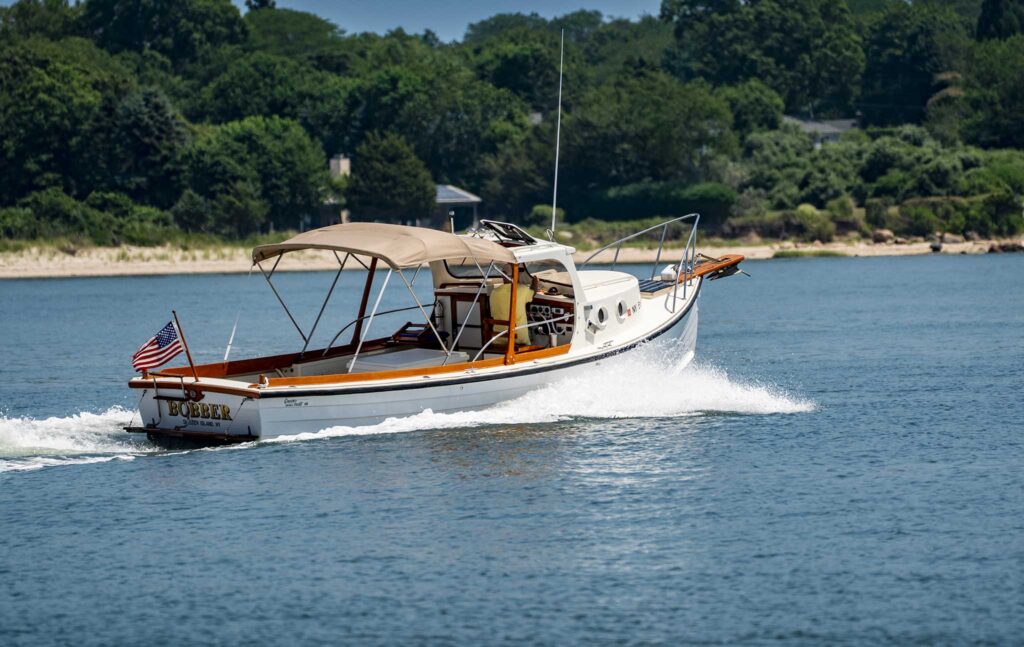
Overall, the project took about 2,000 work hours and seven months—and it left the boat not only looking better but also running faster.
“When they bead-blasted the bottom of the boat they took off probably 40 years of buildup of bottom paint,” Conway says. “Then they faired the bottom and made it perfectly smooth, before coating it with epoxy.” The result was a top speed of 24 mph, up from the previous 18 mph.”
Conway says it cost him about $90,000 to restore Bobber, and he has no regrets.
“We loved the boat so much, and the boat deserved it,” he says. “I felt that it served us well for 20 years. This brought it back to the way it was. It’s beautiful. Anybody who is going to do this is never going to get their money back, but the boat got what it deserves. It really is a great boat.”
October 2025