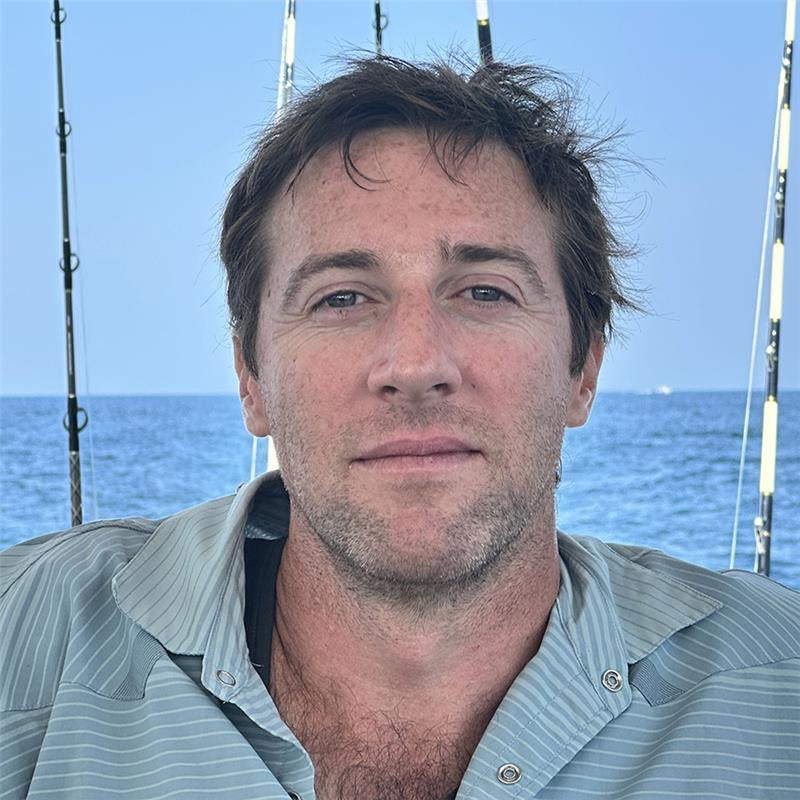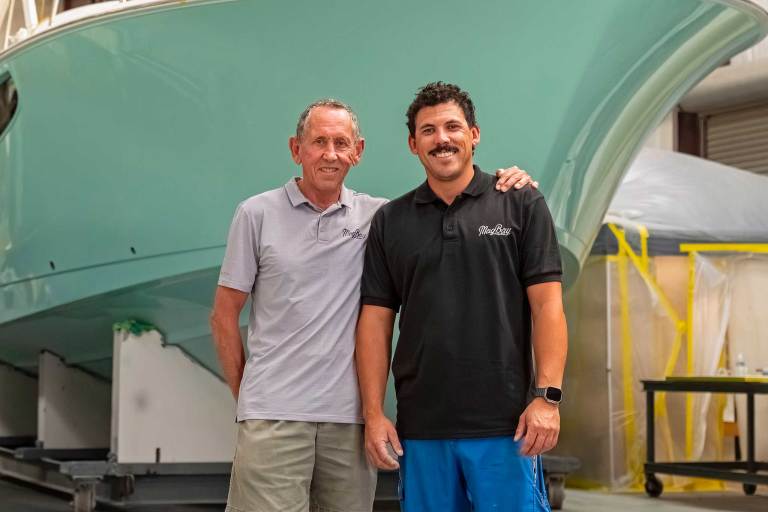
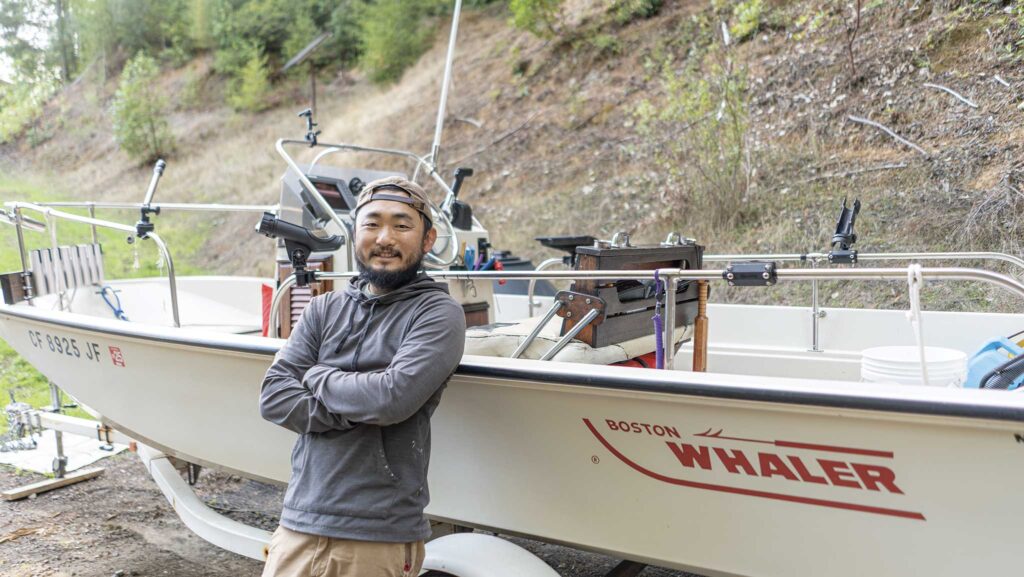
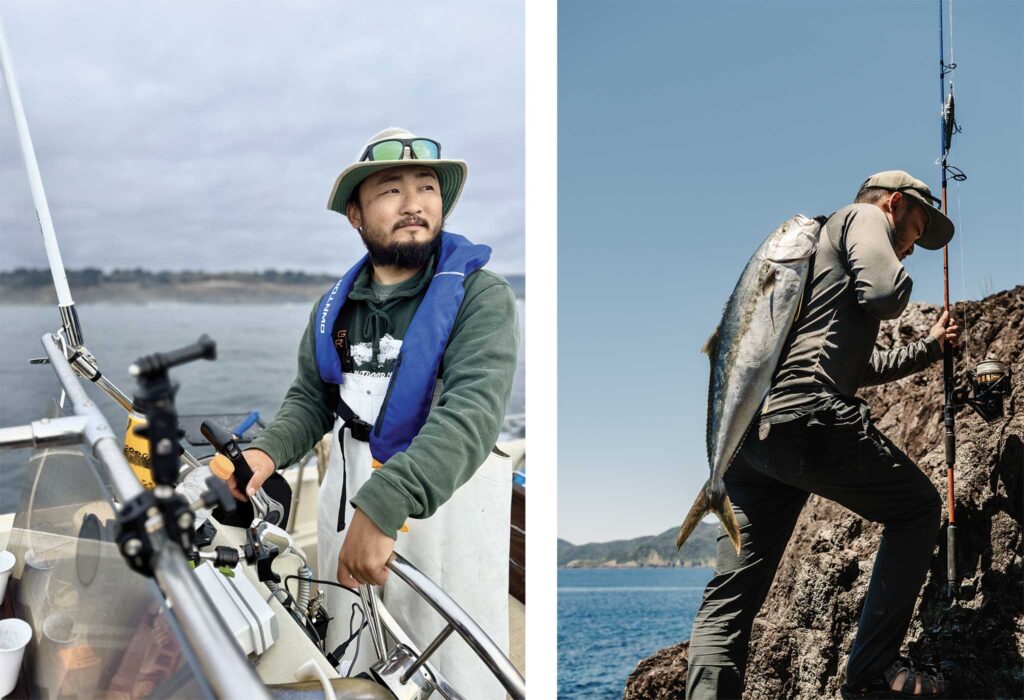
Northern California’s Mendocino Coast has a quiet magic to it. Towering redwoods, rugged cliffs and the constant whisper of the Pacific are a world apart from bustling Bay area cities. It’s here that Taku Kondo, a former sushi chef and now a YouTube catch-and-cook sensation, has chosen to put down roots, embracing a lifestyle that blends adventure, craftsmanship and a boat—his first, a Boston Whaler Montauk 17.
“I just love it here,” he says. “It’s peaceful, but it’s also the perfect base for exploring the coast, fishing and, honestly, just living a life that feels authentic.”
Kondo was born in Osaka, Japan, and grew up fishing. By age 5 or 6, he was out with his father wading into freshwater streams for largemouth bass or standing on public piers trying to land ocean species. Fishing was a family ritual, a connection to the outdoors, and a lesson in patience and observation.
“I remember my dad teaching me how to feel the subtle bite of a bass on the line,” Kondo says. “It’s all in the touch, the rhythm. You can’t rush it. You learn to wait, to anticipate, to respect the water.”
When he was 9, Kondo says, his mother made a bold decision: She moved him and his siblings to the United States, seeking a childhood that would be less dominated by academic pressure, and more by play and exploration. “She wanted us to just have fun, to really be kids,” he says. “I didn’t fully understand it at the time, but looking back, it was incredible. It gave me the space to explore things I loved, like fishing and, later, cooking.”
High school brought a pause in his fishing journey, but after college, he rediscovered the thrill when he caught a striped bass with a friend. “It was like coming home,” he says. “That moment reminded me why I loved it in the first place. The feel of the rod, the smell of the ocean breeze—it all just clicked again.”
Kondo had a degree in kinesiology and worked in physical therapy for a time, but culinary arts eventually took center stage.
“I wanted to see if I could actually be a sushi chef,” he says. He dove into the fast-paced kitchens of San Francisco, eventually landing at Hinata, an omakase-style restaurant on Van Ness Avenue. The restaurant’s 24-seat dining room was a crucible of creativity and pressure.
“It was very different from the traditional, quiet sushi restaurant,” he says. “We could joke, laugh and have fun. The customers loved it. Sometimes they’d buy us sake shots. It got a little wild, but it was a great experience.”
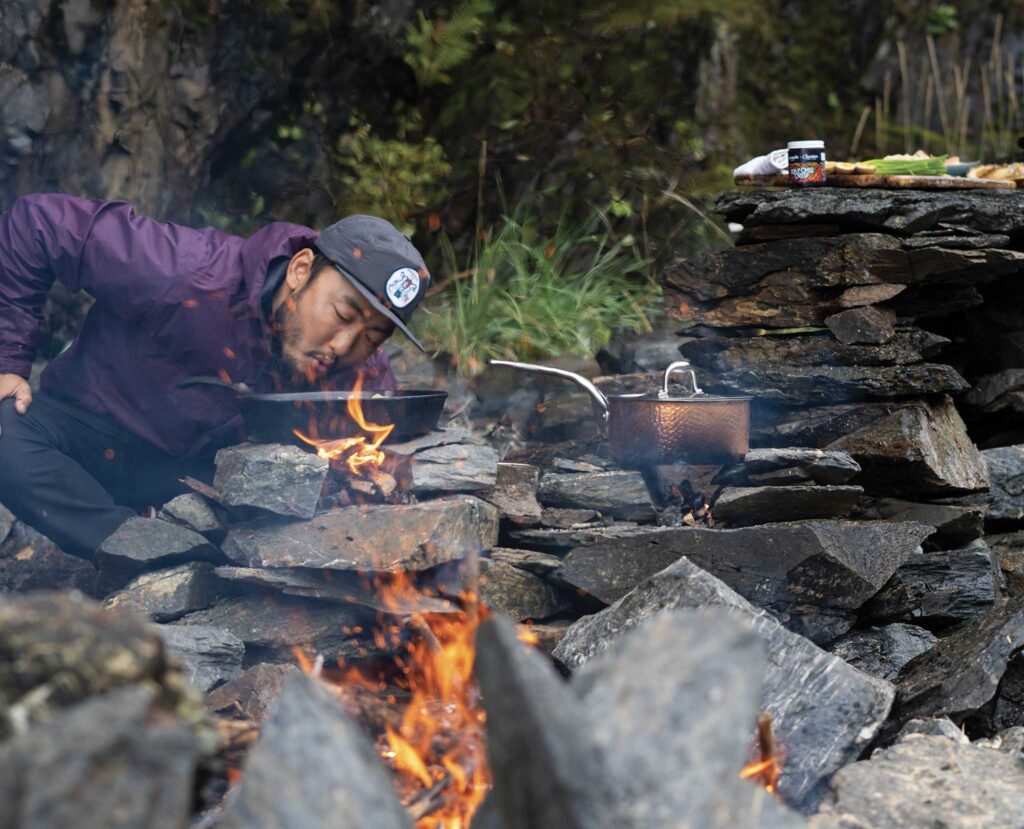
Soon, he had an idea to create catch-and-cook YouTube videos under the title “Outdoor Chef Life.” He first focused on foraging and coastal fishing, diving for sea urchins, clams and mussels along the California coast. He’d then craft dishes that were educational and visually appetizing, far more polished than the rough-and-tumble style that predominates catch-and-cook social-media channels.
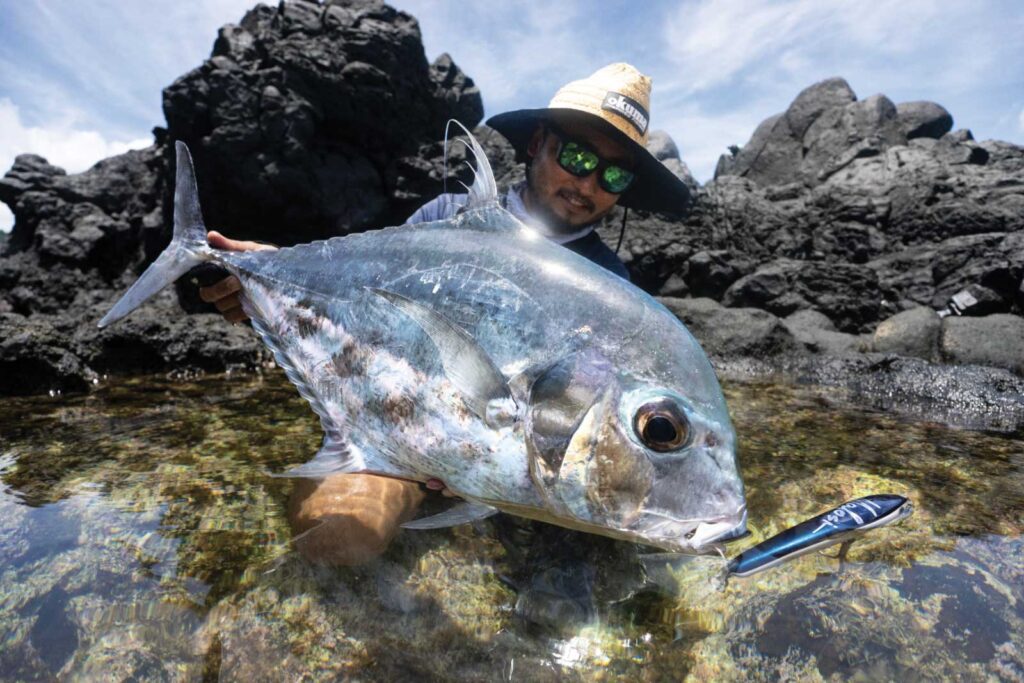
“My first videos were kind of tutorials,” he says. “How people could gather their own seafood and cook it properly. I wanted to show what you could do with fresh, high-quality ingredients.”
He only had about 10 subscribers when he told his boss at the restaurant that he had 200,000, and that he was quitting.
“He was like, ‘OK, buddy. Sure. Good luck with that,’” Kondo says. Within a year and a half, he had about 160,000 subscribers and figured that was close enough. “Once you get a taste of making a living from something you love, it’s hard to go back.”
His real breakthrough came with collaborations. Working with Hiroyuki Terada’s “Diaries of a Master Sushi Chef” and Matt Madsen’s “Fisherman’s Life” gave his channel a boost. “That first collab with Hiro was huge,” Kondo says. “It’s still my most-watched video to this day. That’s when I knew I could make this a career.”
In 2020, during the pandemic lockdowns, he and his partner, Jocelyn Gonzalez, began traveling full-time, often in a Sprinter van they converted into a camper. They explored Alaska, Hawaii, Japan, Thailand and New Zealand, with fishing as the constant thread connecting each adventure.
“Van life really teaches you what you need,” he says. “It’s about the experience, not the stuff. I remember one morning in New Zealand, waking up to the sun hitting the mountains, and just watching the mist over the river while we brewed coffee. It’s moments like that which make the long drives, the cramped spaces and the late-night fishing runs all worthwhile.”
The South Pacific left lasting impressions too. “Fishing there was incredible, but it wasn’t just about catching fish,” Kondo says. “It was about waking up to the sunrise over pristine waters, interacting with locals, understanding their traditions, and sharing meals made from our catch. Those moments stick with you more than any trophy fish.”
In Panama, he says, he caught a “massive” cubera snapper. “The fight lasted longer than I expected, and when I finally got it on board, the adrenaline and satisfaction were unreal,” he says. “And the food there—cooking that snapper with local flavors, fresh herbs and techniques I learned from locals, that’s the magic of travel.”
Gonzalez and Kondo returned to California in 2024 to find a home base. They settled on 10 acres in Mendocino with redwoods, a home built in 2006, a dog named Roscoe and a rain catchment system that lets them live sustainably off of the grid.
“The property just felt right,” he says. “It’s beautiful, functional and gives us the freedom to fish, explore and work.”
Kondo also recently purchased a 1986 Boston Whaler 17 Montauk, a center console that’s hard to beat for solo trips or short outings with a friend or two. He christened her Seafoo—a play on the Japanese sifu, a kung fu term for “master” that sounds like “seafood”—after his maiden solo voyage aboard her proved fruitful, with several albacore tuna coming over the rail.
“It’s a whole new game compared to fishing from a kayak or the rocks,” he says. “Even when I’m not on the water, working on the boat and putting in upgrades is part of the fun. I’ve added a wireless man-overboard system and a remote kill switch, so even solo trips feel manageable. It’s a mix of adrenaline and peace all at once.”
Kondo is practical about boat life, and he’s willing to take advice from online fans who have more on-water experience.
“It’s easy to underestimate the ocean,” he says. “Even on calm days, things can go sideways fast. You have to respect it. But that’s what makes it exciting. It teaches you humility, focus and patience, things that carry over into all parts of life.”
The East Coast is currently calling, Kondo and Gonzalez say. “It’s a whole different scene,” he says. “But that’s what excites me—the challenge and learning from a new environment. Fall seems like the best time, when everything is running. Striped bass, bluefish, false albacore.”
Throughout all his adventures, Kondo’s perspective remains grounded in gratitude and humility. He now has sponsorships and a growing reputation, but he remains approachable. He shares with his audience knowledge, enthusiasm, respect for the environment and seamanship.
“It’s not about the numbers, the subscribers or the catch,” he says. “It’s about the life you live, the experiences you have and the joy of sharing it with others. That’s what makes it all worthwhile.”
This article was originally published in the January 2026 issue