Robert Price
Seasickness. We all get acquainted with it the hard, humiliating way.
My experience occurred years ago off New Jersey, aboard a 40-foot convertible with a crew of anglers I didn’t know well. They were competing in an offshore billfish tournament. I had never been to the canyons and was excited as we left the dock to power offshore. Winds were brisk, and muscular seas heaved under the hull. All was going well until it was time to put the lines out. The captain throttled back to a slow trolling speed, and the boat settled into a trough, where it rocked like a giant cradle. Thirty minutes later, I was hanging over the rail while the crew politely pretended nothing was happening. I spent the rest of the day—all eight hours of it—feeling limp, green and defeated.
That experience made me hesitant to fish offshore for a long time. That is, until recently, when Dometic Marine invited me for a demonstration of its DG3 gyrostabilizer in Florida.
I figured the 40-footer in New Jersey had nothing but trim tabs to curtail the nausea-inducing roll. A gyro system, with its promise to eliminate up to 95 percent of roll, could be a game changer.
Slow and Steady
A SeaHunter 37 with the DG3 was tied up at Oceans Edge Key West Resort & Marina. With some low-key concern, I stepped aboard and asked the universe to return me to the dock at the end of the day, dignity intact.
Seas were 2 to 4 feet with 15 knots of wind. “Conditions might be sporty,” said Capt. Chris Trosset, whose plan was to fish the Gulf of Mexico for yellowtail snapper, mutton snapper, grouper and kingfish. The owner of Reel Fly Charters, he’s the son of Keys legend Capt. Robert “RT” Trosset, and he’s been fishing these waters all his life. He’s put his clients on multiple world-record fish and is an expert boat captain, which I appreciated even with a high-tech system like the DG3 aboard.
A pair of live wells were filled with pilchards as we ran out, triple 300-hp Suzuki outboards on the transom. The DG3 was installed forward, under the fiberglass module supporting the helm bench.
Also aboard was Joey Greenwell, application engineer at Dometic, who explained that, in essence, a gyrostabilizer spins a heavy flywheel inside a vacuum sphere at high speed to create angular momentum. When a boat begins to roll, internal sensors detect the motion, and a control unit adjusts the orientation (precession) of the spinning flywheel. This creates a powerful opposing force (torque) that counteracts the roll. The result is a smoother, stabler ride.
The anti-rolling gyro isn’t new. It’s been used on ships for some time. It went mainstream in 2008 when Seakeeper introduced its first unit for leisure craft. But in 2025, Dometic launched this competitor, which surprised some boat owners as the company is better known for steering, marine refrigeration and climate-control systems. Its DG3—designed for 35- to 41-foot boats and the first model in a planned series—made waves quickly when it earned a 2025 Innovation Award from the National Marine Manufacturers Association.
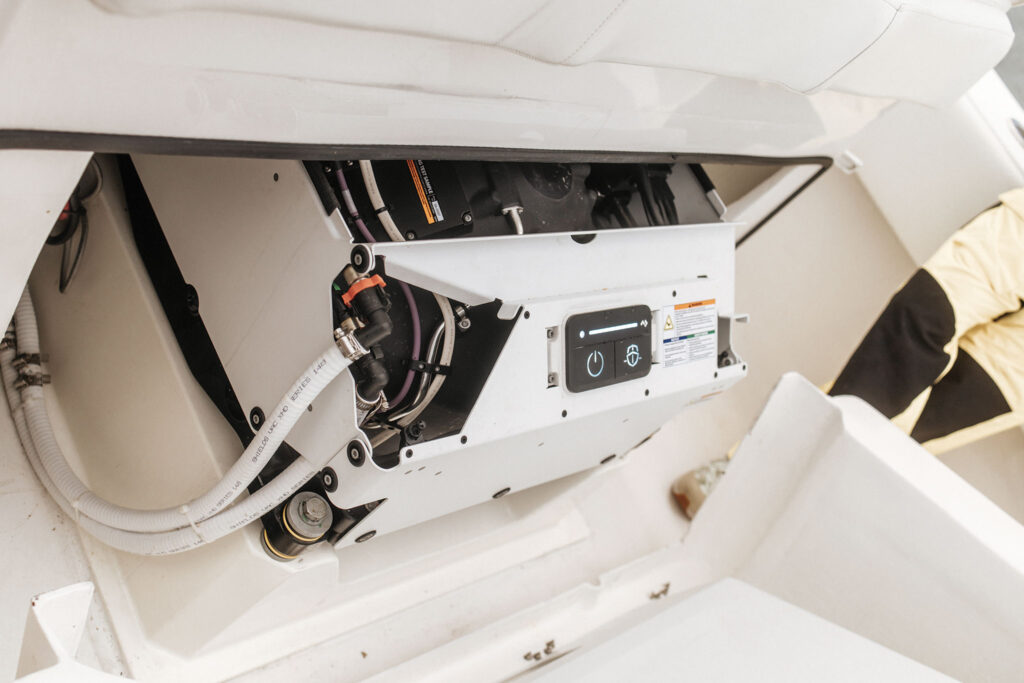
A couple things differentiate Dometic’s DG3. First, it’s the only gyro with an electric actuator. The actuator controls the precession motion of the gyro, or how the sphere tilts forward and back. Unlike a hydraulic actuator, this electric unit has no fluids to change or leak, which means Dometic’s unit requires less maintenance.
The DG3—compatible with 12, 24 or 48 volts—is also fast. All gyros need time to spin up and get the flywheel to full operating rpm (4700 on the DG3), and then to spin down or slow the flywheel back to stop. “Spin-up time is 16 minutes. Twenty to spin down,” Greenwell said, adding that competitors can take 50 minutes to reach maximum rpm and two hours to spin down.
The moment of truth arrived in 80 feet of water, as we approached a position that typically holds fish. The mate started baiting hooks, and Trosset cut the motors. I planted my feet on the nonslip, clutched a handrail and prepared to turn the color of week-old lettuce.
That didn’t happen. Instead, the gyro swished to remind us it was hard at work, and the 12,000-pound boat didn’t lurch, rock, pound or wobble in the beam sea. It seemed untroubled by the wind and waves, floating steadily as if we were anchored in a calm harbor.
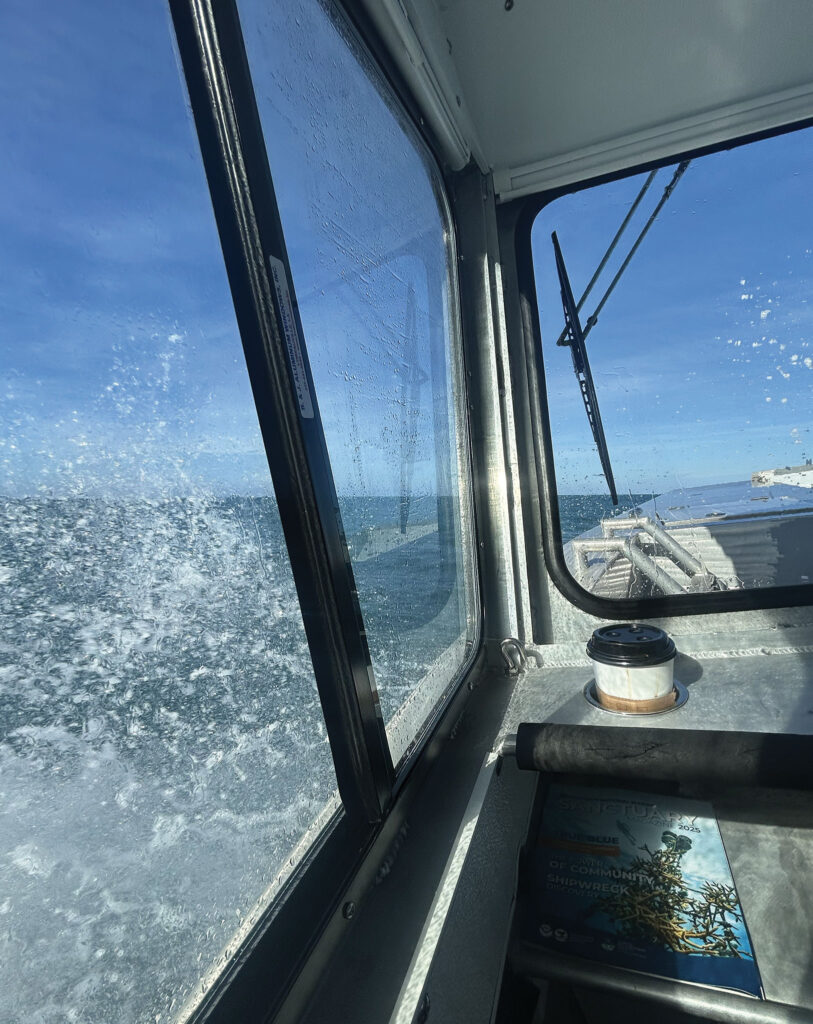
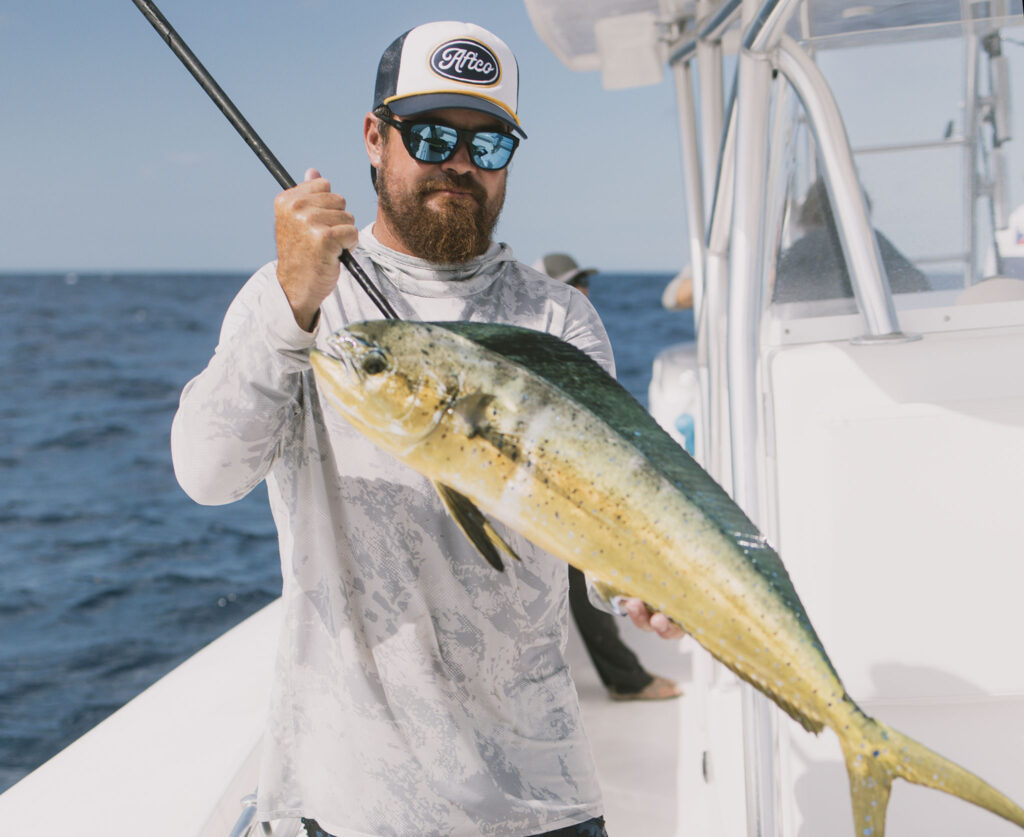
Trosset handed me a rod, which had a fish on the end of its line. I braced my knees against the coaming and reeled until the yellowtail surfaced. By the time it was in the fishbox, I felt giddy knowing that all hell would not break loose on this boat.
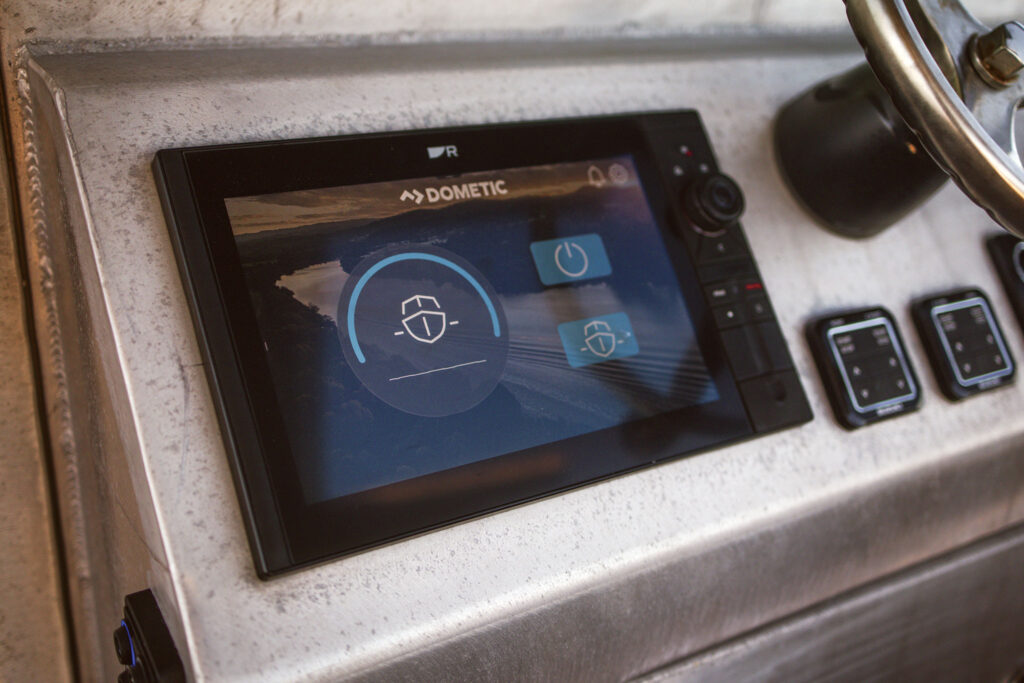
Greenwell must have sensed my relief because he opened the Dometic app on his phone and showed me the display. “This here shows precession angle,” he said. “About 10 degrees. It has the capability to move to 70 degrees. We’ve got plenty left.”
Steady in the Tortugas
“The proof is in the demos,” said Eric Fetchko, president of Dometic Marine, who met our group at the dock the next morning. “Once you experience our gyro, you won’t want to go back to a boat without one. Our engineers spent years finding ways to apply our core technologies and manufacturing capabilities to eliminate many of the common issues associated with owning and using one.”
Gyros do more than tame the wobble when a boat is slow-drifting. They also steady the ride when the boat is underway by cutting the roll in a range of sea conditions. To prove that, Dometic invited us aboard another boat equipped with the DG3 for a 70-mile run west across the Gulf to Dry Tortugas National Park.
Park Shark, a 35-foot Razorhead aluminum catamaran, is the boat of Robert Trosset III, master diver, founder of Finz Dive Center in Key West and sibling to Chris. The brothers have been integral in helping Dometic test and refine a range of boating solutions.
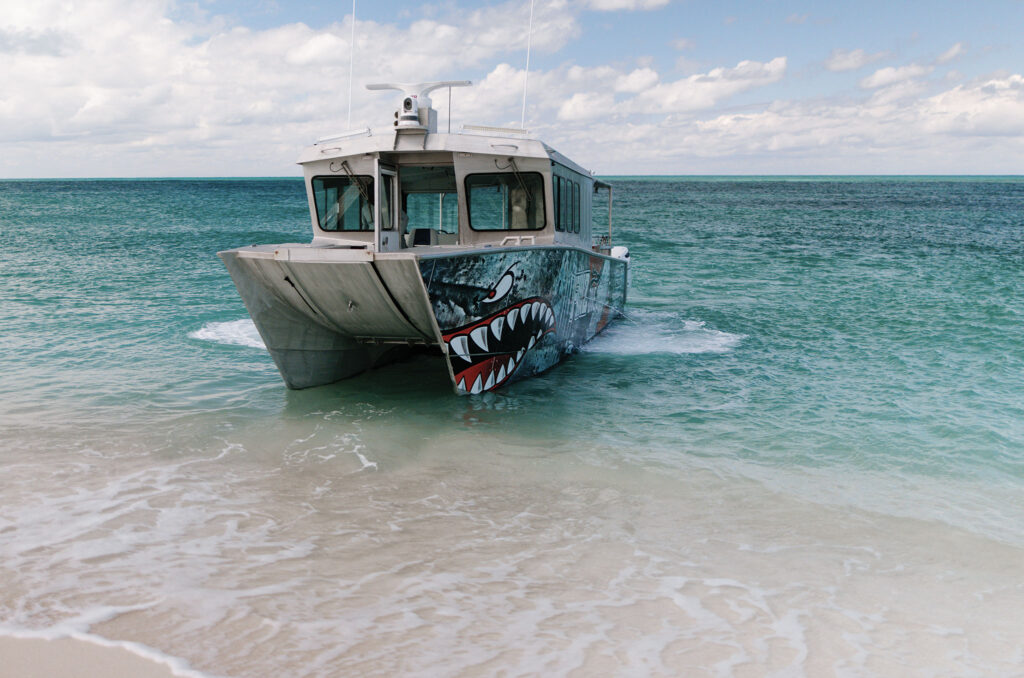
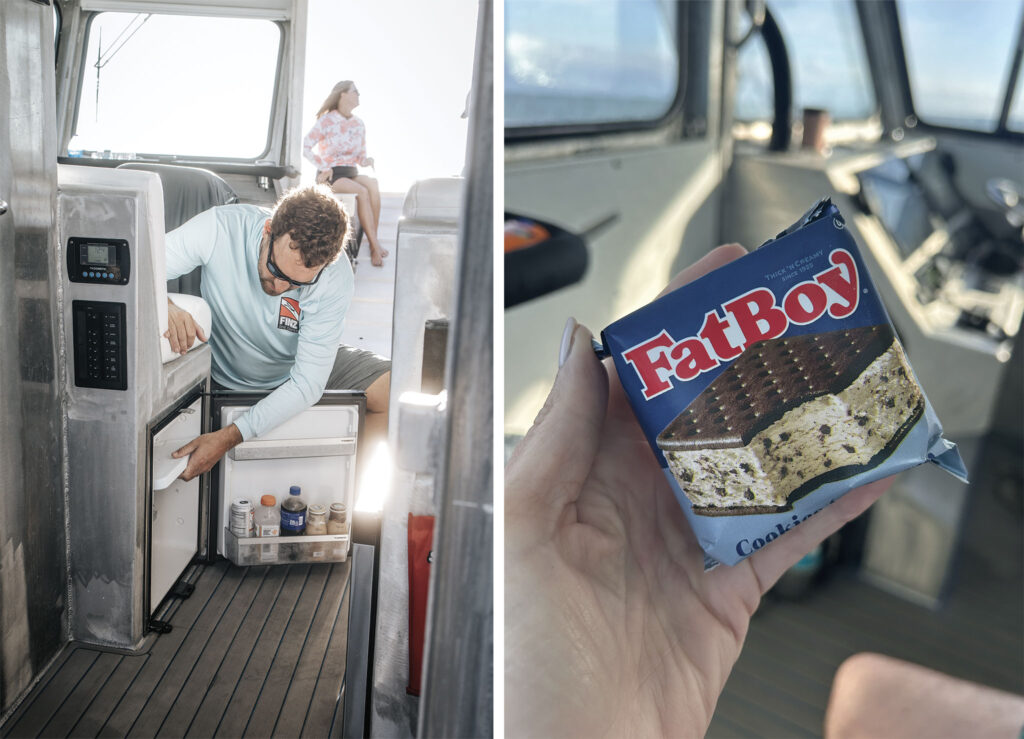
Seas were once again running 2 to 4 with 15 knots of wind when we left the dock. As our crew settled in, we learned that Dometic had made almost every electrical system on board, from the 18,000-Btu air conditioning system to refrigerator/freezers, inverter, toilet and more. Trosset could run these systems and the gyro all day without a generator, partly because of the DG3’s energy efficiency system.
The DG3 handles energy in two ways. First, a dedicated 48-volt lithium battery and Dometic’s Inverted Roller Screw technology power the gyro’s flywheel, which spins slower than other models to reduce power consumption. Energy stored in the spinning flywheel is recaptured during spin-down time, to recharge the 48-volt battery.
Second, during operation, the DG3 recaptures energy from the electric actuator as it dampens the flywheel’s precession. The combination, according to Dometic, results in 40 percent less power consumption overall compared to other models.
I was confident the two-hour ride out to the Tortugas would not be torturous. And it wasn’t, although it was a really interesting experience, as I’d never been on a cat with a gyrostabilizer before.
Monohulls (without gyros) roll more deeply and more often than twin hulls. A cat, on the other hand, is designed to deliver good pitch stability (fore-aft motion) and reduced roll with its wide beam. But a cat can still exhibit quick, snappy movements in a confused chop and slow, wide roll cycles in beam seas. A gyro can cut that residual roll and twist, and make a cat feel more level and predictable at slow and moderate speeds.
Predictable is what we experienced while running at a good clip with four 300-hp Suzukis. That’s not to say the ride was thoroughly refined. The beam-to chop had punch, so I hurried to slug coffee from a paper cup to keep Trosset’s deck clean. But given the conditions, the long ride was steady and stable.
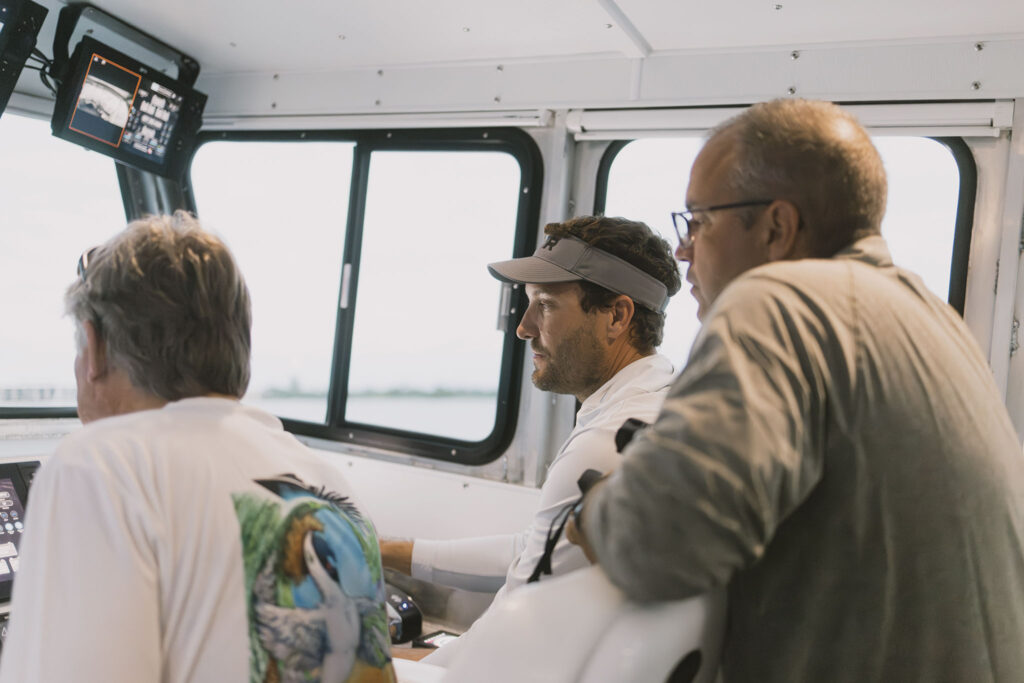
“It’s hard to describe how much more uncomfortable we’d be without the gyro,” Trosset said from the helm, where the multifunction display was connected to the DG3 via an Ethernet connection. “The boat would be falling off the big swells a bunch. That’s not happening here. The autopilot gets to do most of the steering today.”
Like any piece of technology on a boat, the DG3 has its compromises. The upfront cost can be hefty, and the price of installation and electrical integrations can increase the investment. And at 570 pounds, the unit needs careful planning for placement. But it offers benefits too, including a low-maintenance profile, with sealed needle bearings (instead of bushings) and a corrosion-resistant titanium heat exchanger, which eliminates the need for sacrificial anodes.
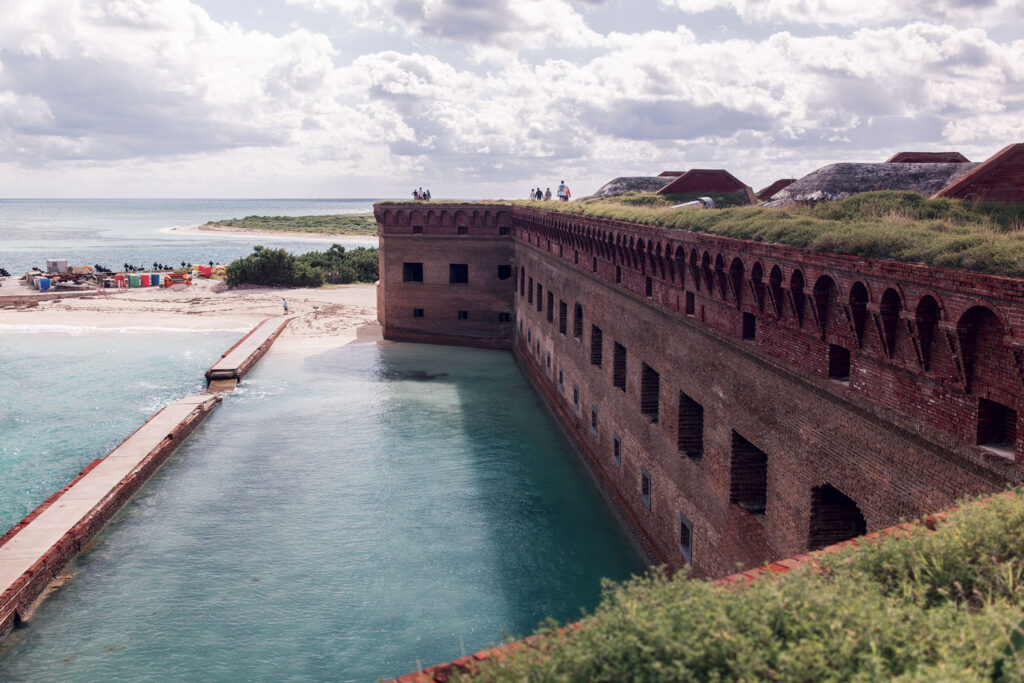
We arrived at our destination by 10 a.m. We spent a few leisurely hours at the national park, exploring the cavernous corridors and gun rooms of historic Fort Jefferson, walking white-sand shorelines, and snorkeling a vibrant reef.
The Dry Tortugas seem untouched. Even experienced cruisers describe the run out to this national park as a rite of passage, a chance to unplug, slow down and savor a corner of the Keys that still looks and feels like it did a century ago. The seven-island cluster is reachable only by boat or seaplane, a fact that instantly elevates the sense of adventure.
Fortunately for us, and thanks to the DG3, the adventure did not come at the expense of comfort, or a queasy stomach.
This article was originally published in the February 2026 issue