
Humans have been desalinating seawater to produce clean, fresh drinking water for more than 2,000 years. Aristotle wrote about the process in the 4th century BCE, and by the first century CE, Roman mariners were carrying distillation equipment aboard their ships: Sailors boiled seawater, then condensed the now-salt-free vapor back into liquid. The process produced not only potable fresh water, but also salt—a valuable commodity in those days.
Distillation isn’t rocket science. It’s simple, and it was the primary method of desalinating water for more than two millennia, until reverse osmosis replaced it in the late 20th century. Now, for the 21st century, two actual rocket scientists—Jonathan Criss and Andrew Harner—have developed a space-age approach that uses reverse osmosis not only to desalinate water, but also to filter and purify it. Their goal is to provide clean drinking water to everyone, everywhere. To that end, they founded Vital Lyfe, and by the end of 2025 had secured $24 million in funding to get the company off the ground.
Criss, Vital Lyfe’s CEO, spent 13 years at SpaceX as lead integration and test engineer on the Dragon and Starlink programs, playing a pivotal role in developing the first reusable spacecraft. It was there, he says, that he came to understand how technology could make a meaningful difference in people’s lives. Harner, Vital Lyfe’s COO, is a Stanford graduate who spent nine years at SpaceX as an avionics engineer and mission manager, and has since consulted for businesses across the space and tech industries.
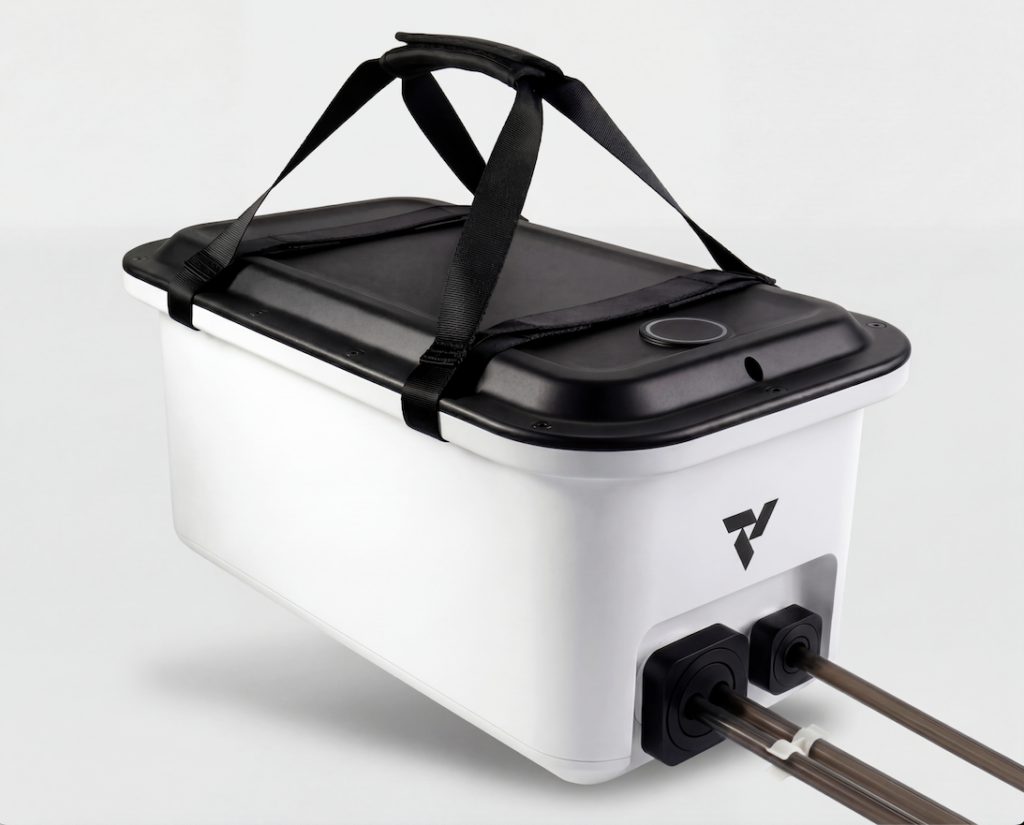
Their first product, Access, combines reverse-osmosis desalination with filtration in a compact, portable and affordable system. Unlike a conventional desalinator, Access can draw from multiple source types (seawater, brackish water and contaminated fresh water) and process each automatically, without any operator input. The entire system, aside from the 6-foot supply and output hoses, fits in a case measuring 20 by 9 by 8 inches and weighing about 25 pounds. “It’s about the size of a size-12 shoebox,” says Criss.
An internal battery powers the system for up to an hour, which is long enough to produce up to 6 gallons of desalinated ocean water with more than 99.5 percent of salt removed, or up to 13 gallons of filtered fresh water. Plugged into AC or DC power, it runs indefinitely on 200 watts. Recharging from a ship’s batteries or a generator takes three to five hours; solar recharge time varies with panel size and sunlight.
Operation is straightforward. Put the hose in the source water, press start and collect the output. The system does the rest, sensing the characteristics of the source water and adjusting pressure, filtration and performance automatically. “We focused on removing complexity without sacrificing performance,” says Harner.
Criss puts it more personally: “We designed it for Terry.” That’s a reference to his mother, who, he says, has no interest in becoming a systems engineer to operate an appliance.
A companion smartphone app lets users monitor the system and flags when it’s time for maintenance, which amounts to occasionally replacing the membrane.
For boaters, Access offers a practical alternative to a more expensive, permanently installed watermaker. Most boaters don’t need desalination regularly, but it comes in handy on an offshore passage or when you’re away from a dockside hose for a long period of time. Access will also appeal to those looking to eliminate single-use plastic water bottles. Setup takes minutes; then you just fill your tanks or reusable containers, stow the case, and forget about it until next time.
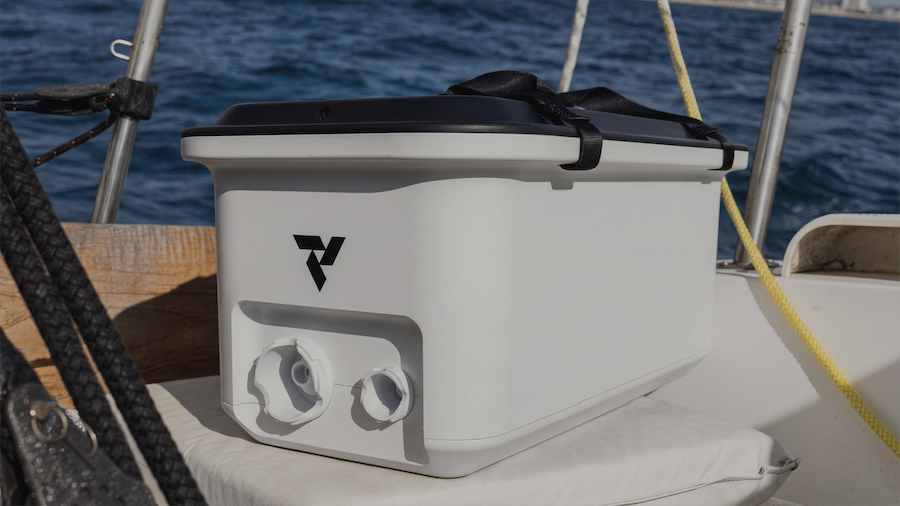
Criss and Harner say Access has been thoroughly field-tested, including aboard boats. It is expected to hit the market at the end of summer at a retail price of $749.