Gary Caputi
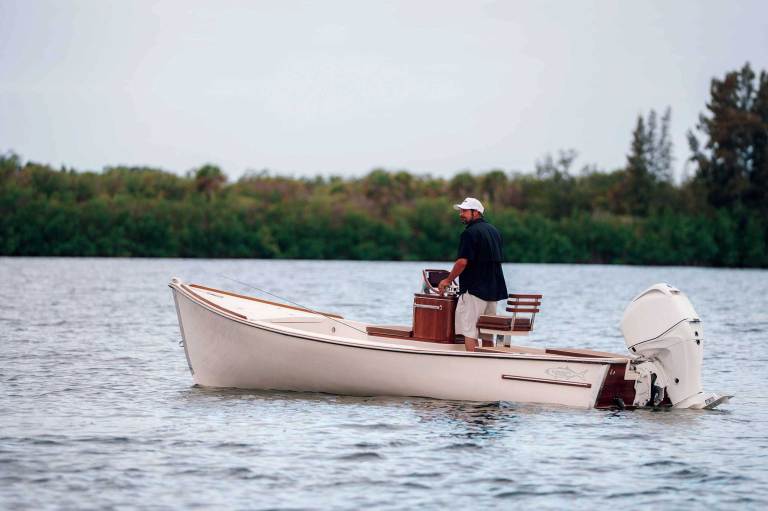
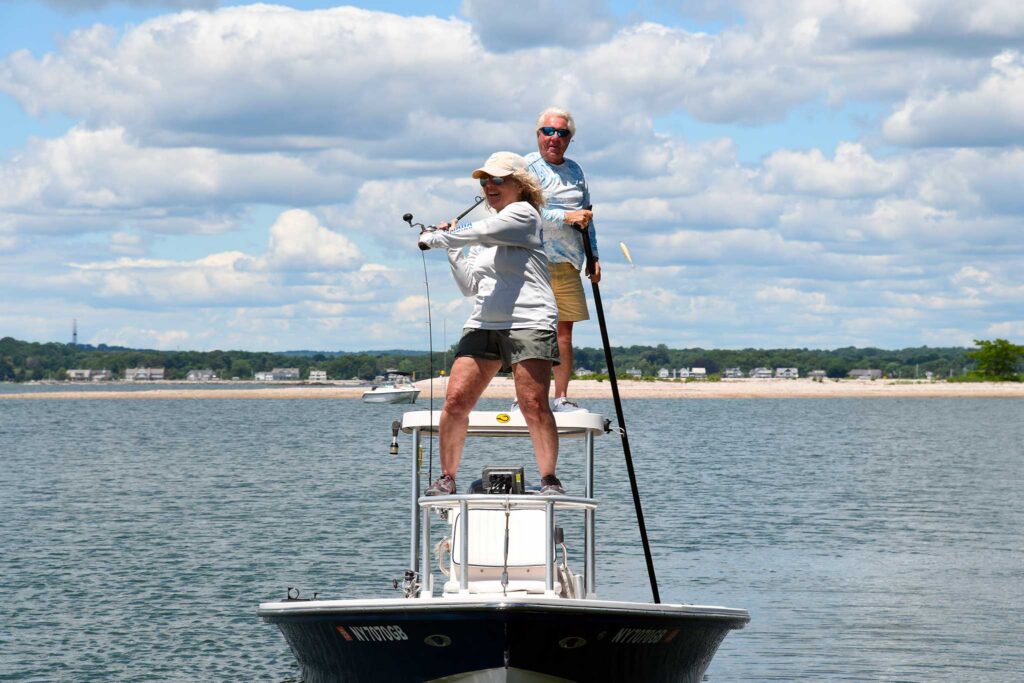
Have you ever seen a technical poling skiff, more commonly known as a flats boat? Typically under 18 feet in length, it features a casting platform on the bow and a raised platform over the outboard. It has scant freeboard, few creature comforts, is extremely lightweight and runs fast with modest power from an outboard.
Even the earliest designs were created to make it possible for a fishing guide to quietly maneuver through just a few inches of water using a long push pole while the angler stood on the bow to sight-cast. The original flats boat was created specifically for shallow-water fisheries in Florida Bay off the Keys, and the Bahamas. It was designed for species like bonefish, permit, redfish and tarpon. Then, in the late 1980s, poling skiffs started to appear in western Long Island Sound, specifically the area around the Norwalk Islands in Connecticut. A few years later, they were migrating farther north to Cape Cod and east to the tip of Long Island.
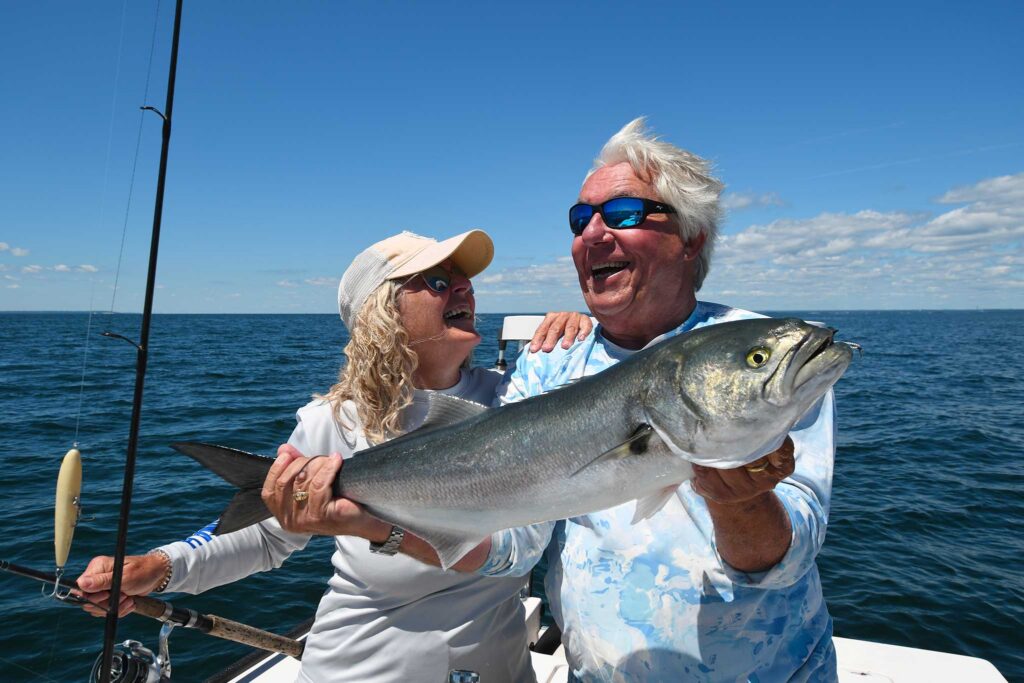
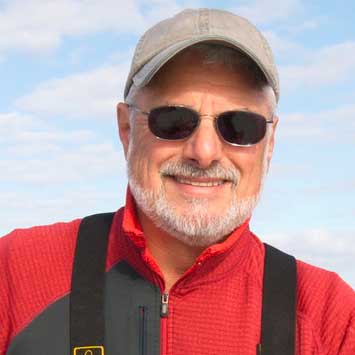
As it turns out, the driving force behind that migration was a forward-thinking guide and marina owner from Connecticut. Capt. Jeff Northrop was one of the first people to recognize the potential for poling skiffs in shallow waters that held striped bass and bluefish. As the owner of Northrop Yacht Sales in Westport, Connecticut, he was the first flats skiff dealer north of Florida.
Northrop was born in 1952 and raised on the banks of the Saugatuck River in Connecticut. His family has deep roots in the Westport area, stretching back to before the Revolutionary War. His ancestors were watermen, farmers and landowners with property holdings obtained through land grants from King George III, one of which Northrop holds today. A lifelong fishing enthusiast, his first encounter with saltwater gamefish occurred when he was 14 years old.
“I was used to fly-fishing for trout on the upper river and thought it would be fun to catch snapper bluefish on the same outfit,” Northrop recalls. “I went to a shallow cove off the Sound, cast my Mickey Fin fly as far as I could and hooked a fish that stripped my fly, leader, line and all my backing.” At that moment, he had found his passion.
After graduating high school, Northrop took his fly rods and moved to Bimini, Bahamas, where he fell in love with the fishing, the laid-back island lifestyle and a girl named Tomi Ann. He met and spent time with Michael Lerner, a famous angler, writer and researcher in his own right, who had a marine laboratory on the island. While there, Northrop was also tutored by the renowned Reverend William Duncombe, or “Bonefish Willie.”
“Willie was the most famous bonefish guide in the Bahamas. He fished with actors and celebrities from his flat-bottom, wooden skiff. It had lawn chairs for guests and a heavy wooden oar that he used as his push pole,” Northrop says. “Willie guided Ted Williams to both of his bonefish world records, but he was also the head of the church on the island. It was called a ‘jumping church’ for all the dancing and chanting that went on during services. For a 19-year-old Episcopal kid, it was quite a revelation. I started fishing with him and joined his congregation. So much of what I became as a fisherman and a person was influenced by Willie. He taught me how to read the water, how to look for fish walking and tailing, how to understand tides and to be aware of everything around me.”
Time spent with Bonefish Willie helped Northrop become one of the most intuitive shallow-water guides to ever climb onto a poling platform. He then brought those skills to an unusual place: Long Island Sound. Upon returning home from
Bimini with wife Tomi Ann, Northrop knew he wanted to get into the boating business. So he opened Northrop Yacht Sales in 1984 and started selling boats.
“Initially we sold brokerage boats, mostly sportfishing models,” he says. “Then we became a dealer for Herreshoff Cat Ketch sailboats, and co-brokers with Rybovich and Northrop & Johnson Yachts.” In 1985 Northrop became one of the first dealers for Rampage, which had just debuted 19- and 24-foot models by New England designer Dick Lima. The fishboats were built by Tillotson Pearson, one of the most innovative builders at the time.
Northrop’s company expanded quickly, and his fishing exploits were on a similar trajectory. He was fishing offshore for tuna and swordfish from a 32-foot Prowler built in 1962 by Miami builder Forest Johnson. He kept it in Montauk, New York, for part of the year. At the same time, he was searching for a boat to fish the shallows around the Norwalk Islands.
“The first flats boat I had in Connecticut was an Action Craft that was given to me as a demo,” Northrop says. “Then, at the Miami Boat Show in 1986, I saw the Maverick flats boat display and approached Scott Deal, the president of the company, to inquire about becoming a dealer. When I told him my marina was in Westport, he literally laughed me out of the display. After all, who needs a flats boat in Connecticut?”
Undeterred, Northrop returned later in the day. Deal told him that Maverick built a limited number of technical poling skiffs and only sold them manufacturer-direct, but he was in the process of purchasing Hewes Boats, the largest and best-known flats-boat brand in Florida at the time. In the end, Northrop took on the Hewes line and became the first flats boat dealership north of Florida.
The first 10 boats arrived as the Northrops were opening a new marina, Northrop’s Landing, in Westport in 1987. The couple’s partner, Phil Pundzelt, owned the waterfront land, and he built and ran the marina. It featured 55 slips, Yamaha outboard sales and service, and offices for the yacht sales business. Of the initial 10 boats, Northrop kept a Hewes Redfisher that he christened Godzilla for his charter business. The other nine boats in the shipment sold quickly. He became one of the top dealers for Hewes and later represented the Maverick and Pathfinder brands in addition to Rampage, which was then building boats to 40 feet.
“At one point, 50 of the slips were filled with flats boats,” Northrop recalls. “The interest in shallow- water fishing and skiffs grew quickly. Even when the economy went in the tank, there were enough people who wanted to fish and could afford to buy a skiff.”
His charters were overwhelmingly fly anglers who had learned about the new sight fishery in the Norwalk Islands. Having recognized a growing interest in the sport, the Northrops opened a world-class saltwater fly shop called Westport Outfitters. Many of his charter customers were Manhattan businessmen who commuted to and from the city from the Westport train station. Northrop would pick them up there, load them in the boat with sandwiches from a local gourmet shop and whisk them away to the fishing grounds.
His clients loved the scenery around the Norwalk Islands, and the fish were typically obliging. Northrop’s reputation as a fly-fishing instructor and angler continued to grow. Soon, fly fishermen from around the country were booking charters to challenge the area’s gamefish.
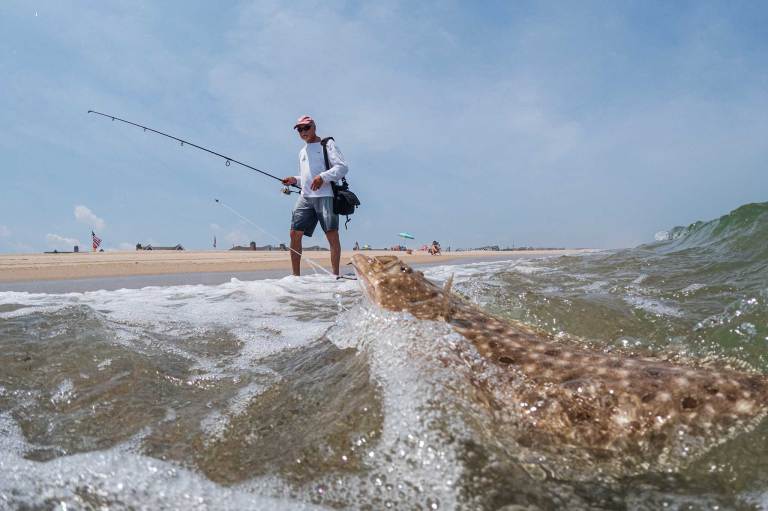
The fishing in western Long Island Sound during the late 1980s and ’90s was world-class, with amazing runs of striped bass and bluefish that fed on the massive schools of baitfish, often in very shallow water. When fishing with Northrop, anglers would cast to striped bass and bluefish as they swam like ghosts in just a foot or two of water. His clients set numerous spinning and fly records, and as the fishing peaked, even more flats boats were sold.
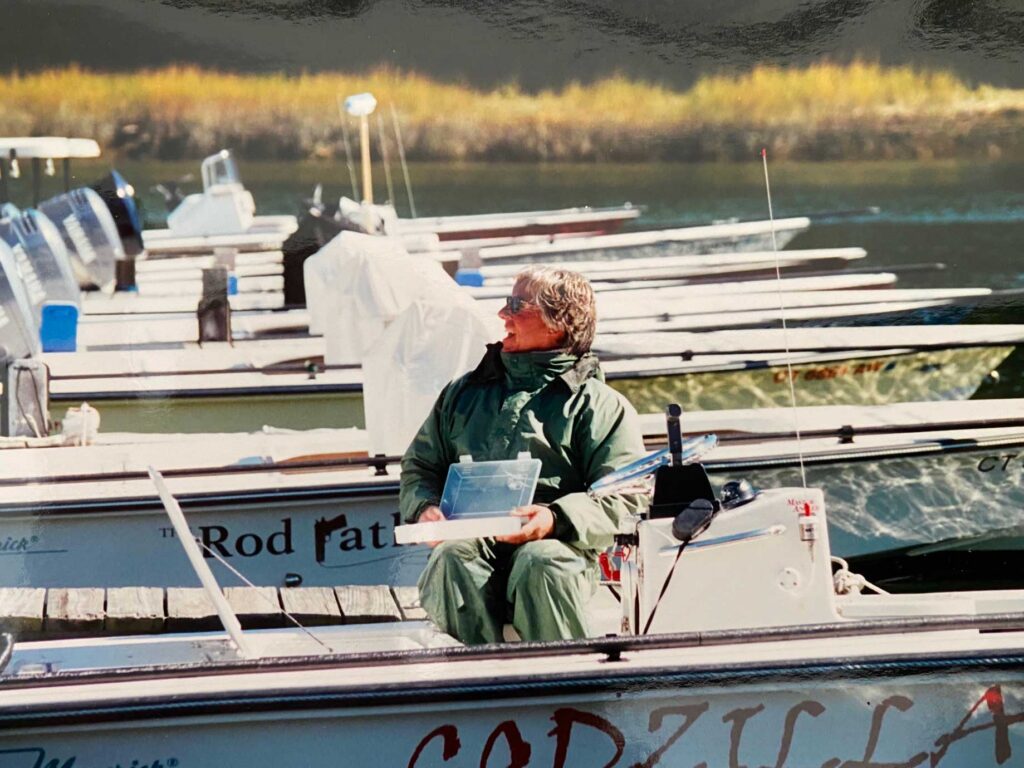
Connecticut. Courtesy Jeff Northrop
Suddenly, these specialized skiffs were showing up in Massachusetts. Their owners were fishing for stripers on the sand flats around Monomoy refuge in Chatham, and in Cape Cod Bay. The same thing happened in the waters around Montauk and in other places along the east end of Long Island, including Gardiners Bay, where anglers could watch stripers hunt sand eels in mere inches of water through the summer and fall.
By this time, the Northrop’s marina had become home base for dozens of shallow-water guides, but most of the boats were being sold to private owners who wanted to get in on the action. The marina was hopping, Northrop’s guide service was booked solid, and his tackle shop had become the go-to source for fly-fishing gear and clothing in the New York/Connecticut area.
In 2008, a wealthy gentleman walked into Northrop’s office and offered to buy the fly shop and marina. And just like that, it was sold. The timing could not have been better for the Northrops; within months, the Great Recession caused a major disruption in the marine industry. Northrop maintained his charter business and a few years later expanded an oyster seed farm on a salt pond that had been in his family since the 1700s.
The couple settled into a more relaxed lifestyle. Today, Northrop continues to run his charter business from the Maverick flats skiff that he keeps in a slip on the Saugatuck River. He takes out a select group of clients.
The fishery he discovered and pioneered remains a part of his legacy. Flats boats, and now bay boats, continue to patrol the waters of the Sound, searching for the next great run of striped bass to make their way into the shallows.
This article was originally published in the May 2026 issue.