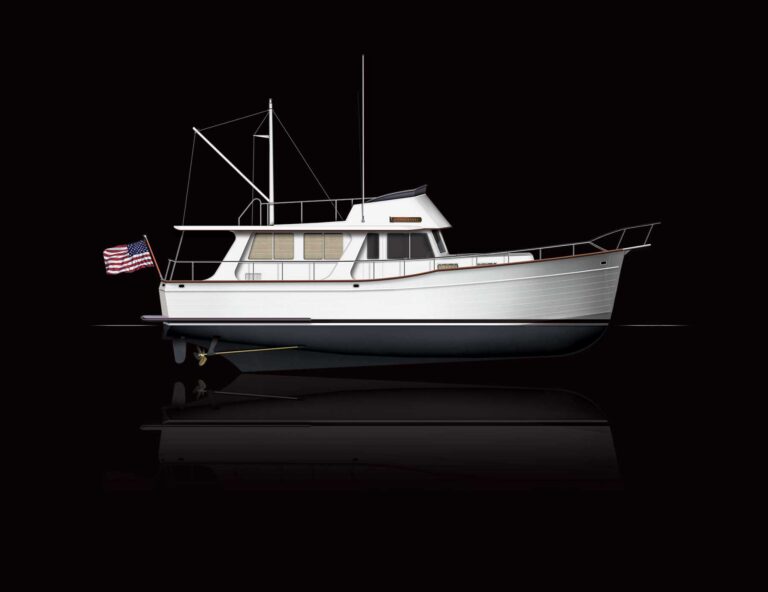
When Jim Siders, a longtime sailor taking delivery of his first powerboat, spec’d out his Kadey-Krogen 44, he knew he wanted active stabilization. He wouldn’t have sails to dampen the roll like he did on his Amazon 44 cutter, and he didn’t want to take any chances.
But rather than going with conventional fins, Siders ordered MagnusMaster stabilizers built by DMS Holland. A demo ride convinced him that the sales pitch was true: Their cylindrical rotors create lift thanks to the Magnus effect, allowing better performance at low speed and more versatility in positioning the stabilizers, but without the complication of hydraulics.
The MagnusMaster was the best option for him, but with so many other options out there these days, there’s pretty much a system for every boat. Naiad, ABT-Trac, Quantum Marine and Sleipner, among others, build fin-based active stabilizers with combinations of components that make it possible to match the needs of almost any vessel. Seakeeper, ARG, Dometic and Smartgyro are among the companies that offer gyrostabilizer systems. Zipwake, Volvo Penta and Humphree make interceptors.
The question is: How to choose? A smart selection isn’t just about hull length. Speed, displacement and hullform are also factors. Placement of the fins on the hull is also crucial.
A good place to start is by understanding how these systems work, so you can ask informed questions and make the best choice for your particular boat and cruising lifestyle.
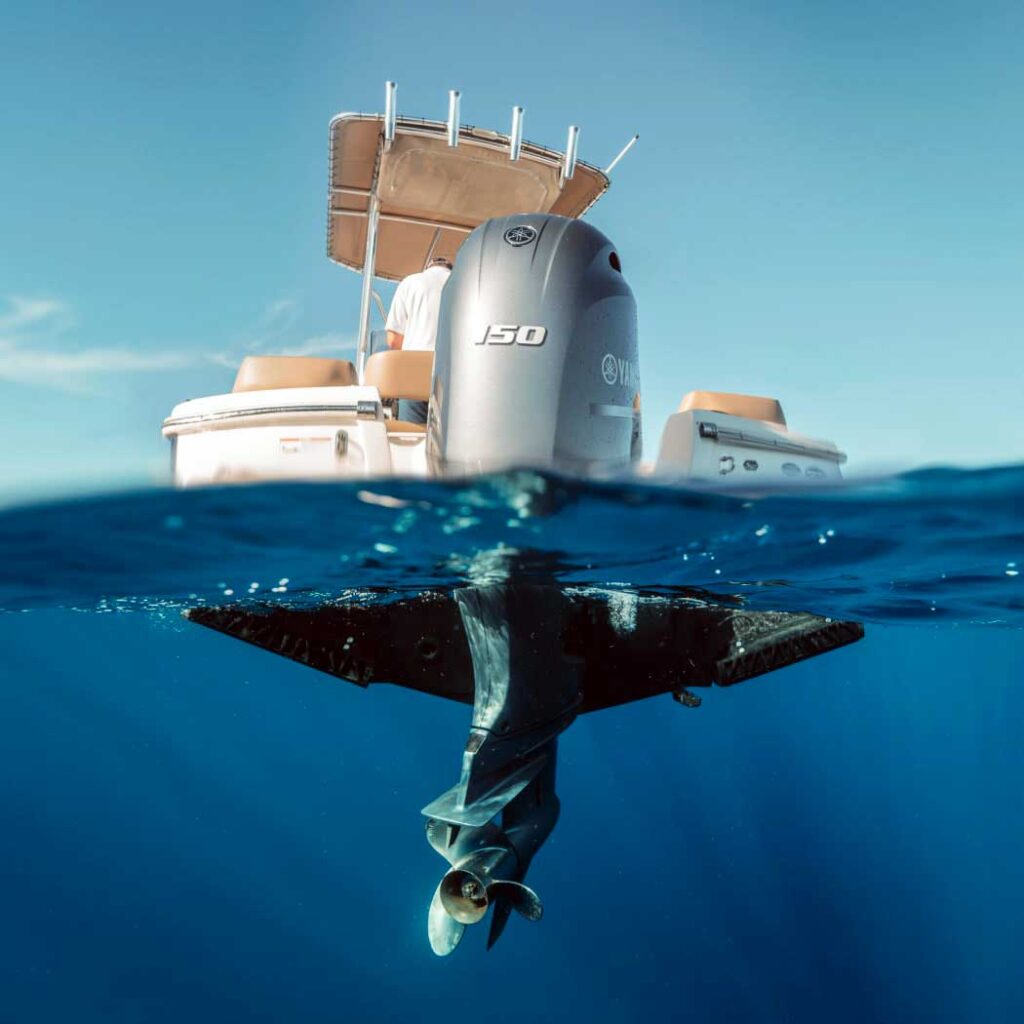
The Magnus effect
In the mid 19th century, German physicist Heinrich Gustav Magnus discovered that a spinning object moving through a fluid created a force perpendicular to its forward motion, strong enough to deflect the object from a straight path. That’s the principle behind the rotors on the Magnus-effect stabilizers. They’re essentially carbon-fiber tubes about 48 inches long. They project into the water as it moves past the vessel.
When the rotors spin, the Magnus effect creates an upward or downward force, depending on the direction of rotation. That force counters the boat’s roll. Siders said that on his sea trial, the force was strong enough not only to mitigate rolling, but also to induce heeling in calm water. To address this, a control system with a three-axis sensor manages the rotor operations, adjusting the speed and direction of rotation 10 times per second.
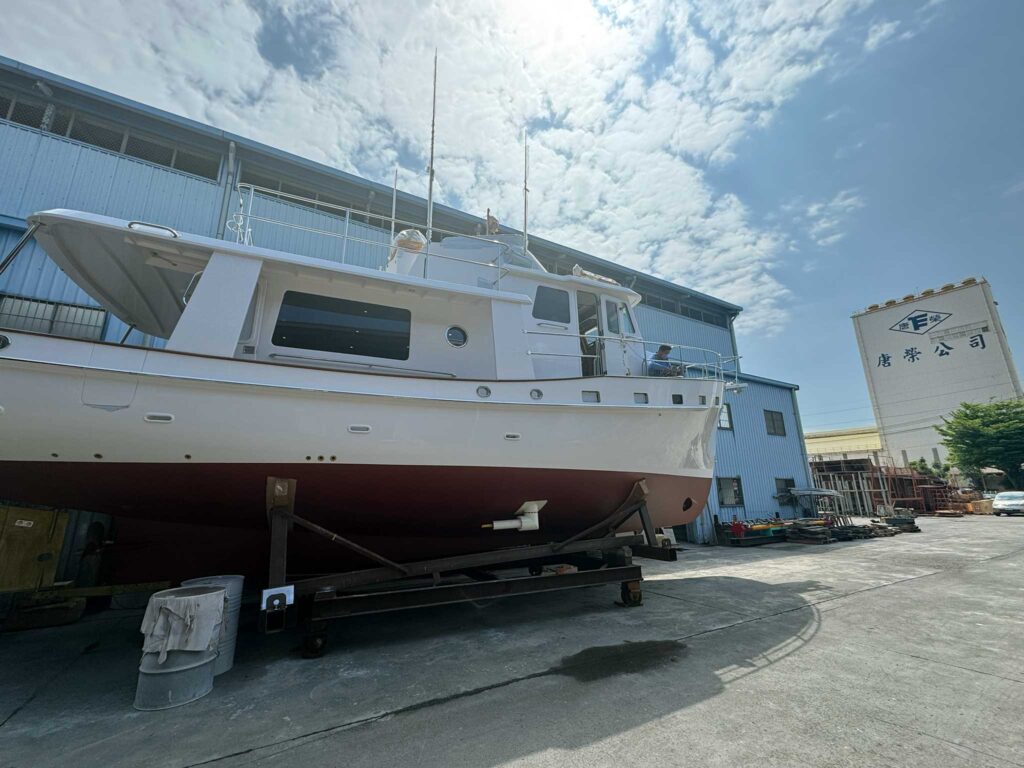
When the stabilizers aren’t needed, the rotors fold aft, parallel with the boat’s keel. This reduces drag and makes them less susceptible to damage or fouling by kelp, discarded lines and the like. That matters to Siders, who cruises in the Pacific Northwest amid all sorts of debris. He also says the rotors are safer than fins because if you hit something hard enough, you might tear the fin, its shaft and its mounting structure out of the hull. He likes that the MagnusMaster rotors are mounted with shear bolts designed to break off and be easily replaced. Replacing a damaged rotor is also a simple job that can be done in shallow water, without hauling the boat.
DMS Holland isn’t the only builder of Magnus-effect stabilizers. Quantum’s MagLift rotors are hydraulic rather than electric. The company says they’re effective up to about 14 knots. When the boat’s not moving, the rotors pivot fore and aft, creating movement relative to the water that’s enough to generate lift. This kind of stabilization at rest is important for long-haul cruisers who spend more time at anchor.
Fun with Fins
Most active stabilizers employ hydraulically powered fins located roughly amidships. When the system’s electronic control unit senses a roll, it deflects the fins to create a force opposite to the rolling. The hull has to be moving fast enough that the water exerts sufficient force on the fins; different manufacturers claim different minimum speeds, but the average is 6 to 8 knots. Yacht owners often choose oversized fins to lower the effective speed, but that increases drag and fuel consumption. However, some newer fin-based active stabilizers work even when the vessel’s at anchor or drifting.
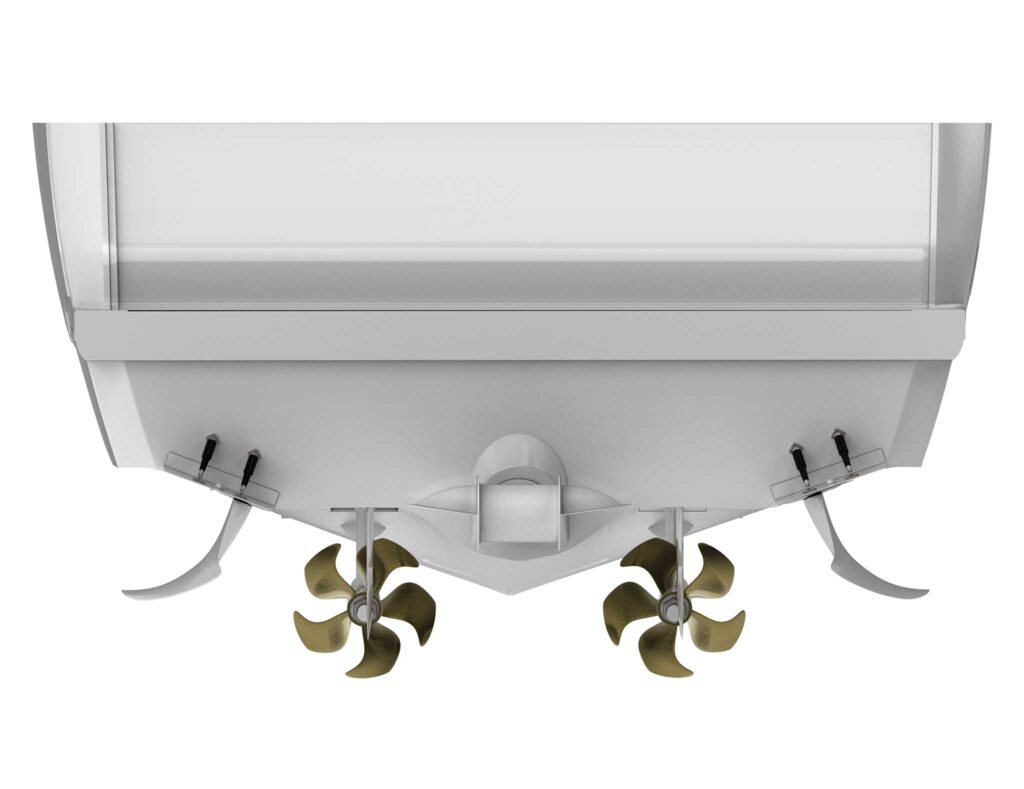
Naiad has a long track record with stabilizers installed on vessels the world over. Its fins look like rudders and work the same way.
ABT-Trac uses fins with winglets on their tips, like those on racing-sailboat keels. The company says the winglets reduce turbulence across the bottom of the fins, making them more efficient.
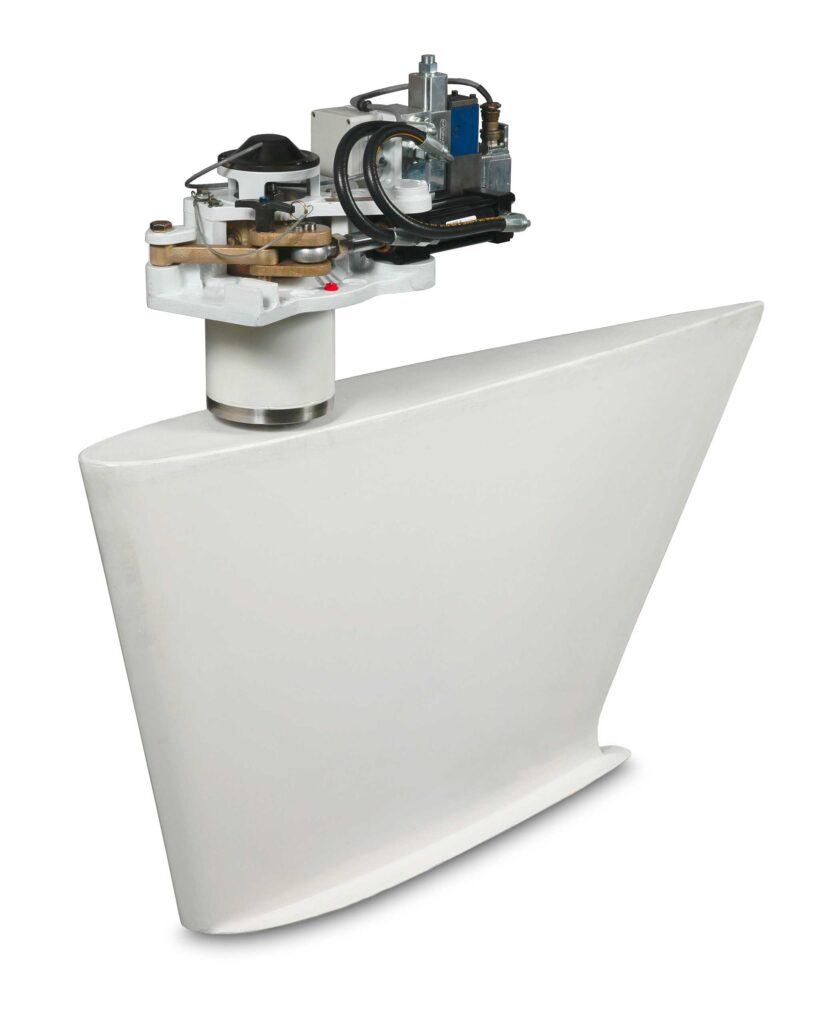
Quantum Marine’s Zero Speed stabilizers use a fast-moving fin that acts like a paddle to dampen rolling when the vessel’s at rest or operating at low speed. When the control unit senses a roll, it rotates the fin quickly to create a counteracting force. Once the yacht gets underway, the Zero Speed system acts like a typical active stabilizer.
Sleipner’s Vector Fins aren’t flat. They splay outward like the flippers of a sea lion on land. The curved fins direct the lifting force almost vertically to where, the company says, it’s more effective at roll damping compared to a conventional fin. The Vector Fins are thinner in cross-section compared to typical straight fins, and they are asymmetrical—all factors that reduce drag, which in turn improves fuel economy. Vector Fins also reportedly reduce roll up to 50 percent more than flat fins when the boat’s at anchor.
Spin to Win
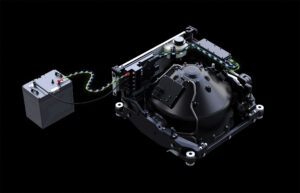
Rather than rotors or fins, many boats carry gyrostabilizers bolted to their hull structure. There’s nothing protruding from the bottom to add drag, increase fuel burn or be damaged by debris. Because a gyro has no connection with the water at all—it operates on physics, not hydrodynamics —it doesn’t matter if the boat’s moving. The gyro steadies the boat at anchor as well as underway.
A passive gyro operates without external control. Advocates of passive-control gyros tout their simplicity and need for virtually no maintenance, while critics say they tend to be less effective in calm weather and over-active in rough seas. ARG is a primary builder of passive gyrostabilizers, with models for boats as small as 20 feet.
Active-control gyrostabilizers regulate the speed and angle of the gyroscope with hydraulic rams that are, in turn, controlled by a computer that crunches input from an array of sensors. Active control makes the gyro more effective across a wider range of conditions, including ultra-calm and super-rough weather. It also adds expense, complexity and maintenance. Most gyrostabilizers use active control.
Seakeeper builds active-control gyrostabilizers to fit boats as small as 23 feet. Dometic says its DG3 spools up faster than other gyros, and it’s fully electric, with no hydraulic components. Sanlorenzo installs two Smartgyro SG80s in its Bluegame BGM75 power catamaran; the gyros are tuned to operate in parallel even when the hulls are in different sea conditions. According to Bluegame, the twin gyros give the cat roll reduction equal to a monohull’s.
Gyros are more costly than other stabilizers. They need a long spool-up time—sometimes nearly an hour to work at full capacity—and an even longer spool-down time. Gyros for boats over 40 feet or so require 120 volts, which means running the genset all the time. Smaller models run on 12 volts DC but still need sufficient battery capacity and recharging capability. Manufacturers recommend spooling up 12-volt DC gyros at the dock with shore power plugged in.
Trim Tabs on Steroids
Rather than trim tabs, many boats today have guillotine-like interceptors bolted to their transoms. Like tabs, interceptors adjust fore, aft and athwartships trim, but they do it automatically. They will also minimize roll. Unlike trim tabs, which hinge at the transom, interceptors plunge straight down. Typically, the interceptors only intrude an inch or so into the slipstream, so their drag is low. Manufacturers say the maintenance of optimum running attitude offsets the added drag.
When combined with a control system, interceptors provide automatic, constant trim control and roll suppression. Set ’em and forget ’em.
Zipwake and Volvo Penta, among others, build interceptors for boats of all sizes. The Seakeeper Ride system does the same thing as interceptors, but uses a different technology: a rotary blade that pivots into the water stream. Seakeeper calls it a Vessel Attitude Control System and says it works better than interceptors. It’s also more complex.
Humphree, based in Sweden, builds interceptors and fin stabilizers. Its Lightning System uses deeper immersion than typical interceptors for more lift and faster response. It will work at up to 62 knots. The system controller takes input from the boat’s steering via NMEA 2000 and then fine-tunes the interceptors when it senses the boat’s turning.
The upshot is this: Waves exist everywhere there’s water, so even if your cruising plans involve a slip before sunset, the right kind of stabilizers for your boat can make the experience out there far more enjoyable.
Lead image credit: Onne van der Wal
September 2025