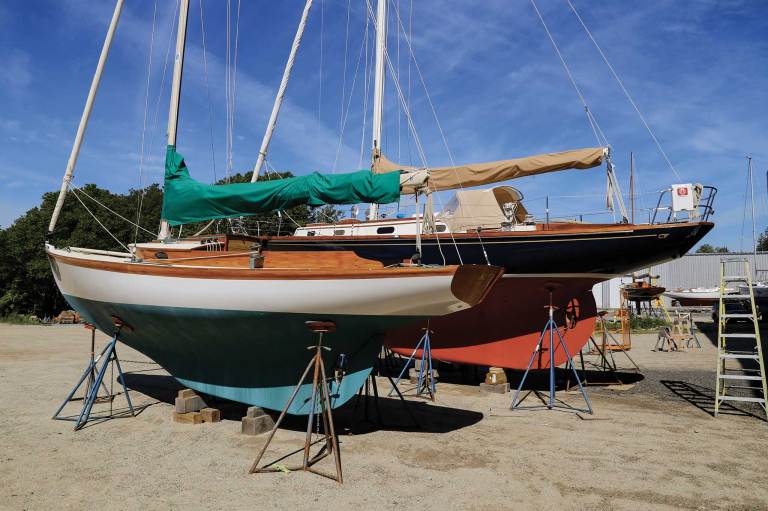
Above: The anchor and windlass should be ready and capable of being deployed, for an evening on the hook or in an emergency. Pursuit Boats
Anchors and windlasses aren’t given much consideration outside the harbor, but they may be the only thing that keeps your boat off a rocky lee shore. Some of the most experienced captains on the water point to the anchor and windlass as key equipment that absolutely needs to be ready and able, even if not much else aboard is.
“When we offload brand-new boats, one of the first things we do is run the chain up and hook up the anchor,” says Jeff Lothringer, a commissioning captain for Nordhavn for nearly two decades who sees the boats when they first arrive from overseas.
All the systems that still need to be tested dictate that caution. “We’re expecting these boats move forward and backward, and go straight and turn, but if we have an emergency, that anchor could come in handy,” Lothriinger says.
Those emergencies, on any boat, could include losing propulsion or steering. “You might need to anchor in a hurry,” he says. “Make sure you have that clutch bar close by so you can loosen the clutch and let the anchor drop quickly, versus pushing a button and having it come out slowly.”
How It Works
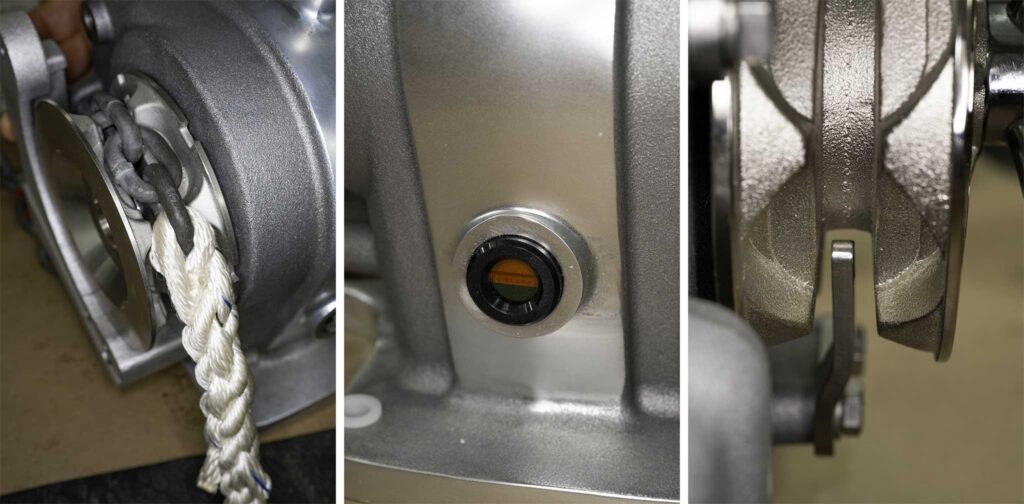
A windlass clutch is a simple friction lock. The gypsy is free to spin independent from the windlass’s powered shaft. To lock it in place and retrieve the anchor, smooth machined surfaces within the chain wheel mate with an inner clutch cone that turns only with the shaft, and an outer clutch cone that distributes pressure. Tightening a clutch nut, usually with a specific bar or handle, presses those mating surfaces together until the chain wheel won’t spin.
Loosening the clutch nut completely lets the anchor free fall, while tightening the nut back a bit increases friction to control the anchor’s descent. That works even without windlass power, but keep in mind that many anchors must come in a few inches to disengage chain stoppers or release safety cable shackles before being let out. The same bar that engages the clutch also typically doubles as a means of retrieval without windlass power.
On windlasses with a capstan, securing the anchor or chain and then loosening the clutch nut allows the capstan to turn under power without turning the chain wheel for, say, kedging off a sandbar.
Mechanical Maintenance
That clutch also allows the chain wheel to slip on its rotating shaft if the anchor snags a rock or coral head. “If the motor comes to a halting stop, that shock load can damage the system,” says Jim Thomas, who oversees repairs for Imtra, including the company’s Lofrans and Muir windlasses.
To ensure the clutch operates smoothly, Thomas says, remove the chain wheel annually to clean and lubricate those mating surfaces. While anchored, transfer the load off windlasses by engaging the chain stopper, or by tying the rode to a cleat, or by using a snubber and chain hook.
“Beyond cleaning and lubricating the gypsy and clutch cones, there’s not much annual maintenance,” he says. Inspect for leaky oil seals, check that the oil is clean (not milky), and be sure the level falls in the middle of the sight glass. Also be sure the anchor can be cranked in manually.
“On vertical windlasses, spray down the entire drive unit, below the deck, with a good corrosion inhibitor to slow down rust and corrosion on painted steel parts,” he says.
Thomas suggests not digging much deeper unless there is a specific problem to address, since parts might not come apart or reassemble cleanly after a decade or two in a wet anchor locker.
Anchor and Rode
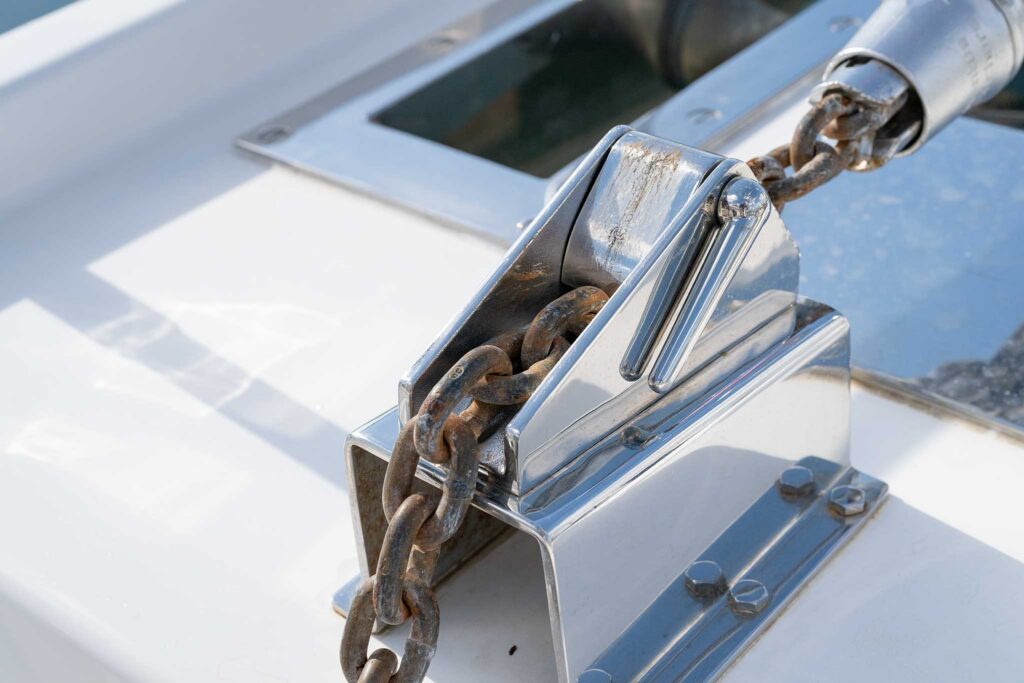
While you’re on the bow, take a look at your ground tackle. Straighten or replace bent anchors that may not bite. Ensure that chain stoppers or safety cables keep anchors snugly aboard yet allow for quick deployment. Check that shackles are wired and that swivel fasteners are secure so the hardware stays connected. Inspect splices for tail ends working loose, and check rope for frays and chain for corrosion. “If the chain is pitted, it’s compromised and should be replaced,” Thomas says.
Find a time to ensure the anchor rode pays out far without fouling or kinking, and retrieves smoothly. Nylon rodes can become problematic when they stiffen from accumulated salt. “Soaking it in a bucket of cool water with a few cups of fabric softener will loosen the fibers,” Thomas says. Don’t use hot water, though. It shrinks nylon.
Chain-to-rope splices hang up, too. “After several years, that splice shrinks tight around the first chain link, so when it enters the gypsy it’s like a knuckle that doesn’t go around the wheel smoothly,” Thomas says. “Lay the splice on the dock and tap it gently with a mallet, and then flex it and knead it with your hands.”
When either the rope or chain won’t stack cleanly in its locker, try letting it out past the problem point in deep water or a quiet anchorage, and restack it by hand. Twisted chain links may not fall smoothly into chain link pockets. Letting that anchor out in deep water relaxes those twists.
For repeated problems, consider installing an anchor swivel. Most swivels also eliminate shackle thumb screws or appendages that might catch or bind in bow rollers. On the other hand, if an anchor comes in upside down, a swivel can make it difficult to right.
Considering that anchors weigh upward of 100 pounds and chain exceeds a pound per foot, casting loose may be more practical than manual retrieval in most settings, so be sure the bitter end is safely retained but also easily cast free. “On Nordhavns, we run a length of rope down to a cleat in the bottom of the chain locker,” Lothringer says. “You want that rope to be long enough that the chain is hanging past the roller. Otherwise, if you have to cut the line, that chain is going to whip up as it pulls over the roller.”
Keep in mind, though, that most chain wheels won’t grip that line, so be sure your chain hook and snubber line will reach the capstan and haul the first few feet of chain back aboard. “We paint the last 15 feet of chain red so you know to stop,” Lothringer adds.
High amperage drawn through windlass wiring creates heat. “When they get hot, those connections expand and contract,” Lothringer says. “Go around and tighten all the lugs. Inspect the wires. Check fuses and keep grease on connections so they don’t corrode.”
Low battery voltage can damage windlass motors or solenoids. It can also cause a solenoid to stick, where the windlass continues to turn after the switch is released, so be prepared to turn off the battery switch or main breaker. To mitigate low-voltage risks, start engines and check that alternators are charging before hauling the anchor in. Periodically test that batteries maintain voltage under load.
Lithium batteries often operate at voltages higher than windlass specifications, a difference that can also create problems. Fuses, breakers, solenoids and foot switches are all easily replaced, as long as you have spares aboard.
Motor Maintenance
Windlass motors often last for decades, but voltage issues, corrosion and water or oil intrusion shorten their lifespan. Red flags include a burnt odor in the anchor locker, or a windlass running slowly or laboring under load. This might be corrected by installing new brushes in the motor, or even blowing accumulated carbon dust away with compressed air.
“If everything looks pretty on deck, consider replacing the entire drive unit so you have a new motor and new gearbox at the same time,” Thomas says.
Intermittent operation, where a motor starts sometimes and not others, might come from broken internal connections where power cables connect to windlass motors. “Always use two wrenches when tightening those connections, and check that none of the terminal studs wiggle like a loose tooth,” Thomas says.
Hydraulic power
Windlasses are often incorporated into hydraulic systems powering much larger loads, such as thrusters and stabilizers. Multiple belt- or gear-driven pumps might run off diesel engines or generators, or from 240-volt AC power. Those systems vary in complexity, which dictates maintenance.
In short, change the oil and filter on schedule or any time it looks dirty or smells foul. Head off hydraulic fluid leaks right away, and clean rusting fittings. Stay on top of cooling system maintenance, including pumps and zincs, and consider redundancy.
On Nordhavns, Lothringer says, “We often plumb an extra pump right into the system, so you’re just changing valves to switch over to the backup.”
As you ease into a harbor and lower the hook, consider how things might play out with a fresh breeze and no steering. If that scenario is worrisome, it might be time to give the ground tackle some attention.
This article was originally published in the April 2026 issue.