Adobe Stock
There’s an old saying that the sea and inland waterways find out everything you did wrong—eventually. Maybe not on day one, when the sun is shining and your deck shoes are still clean. But give it time.
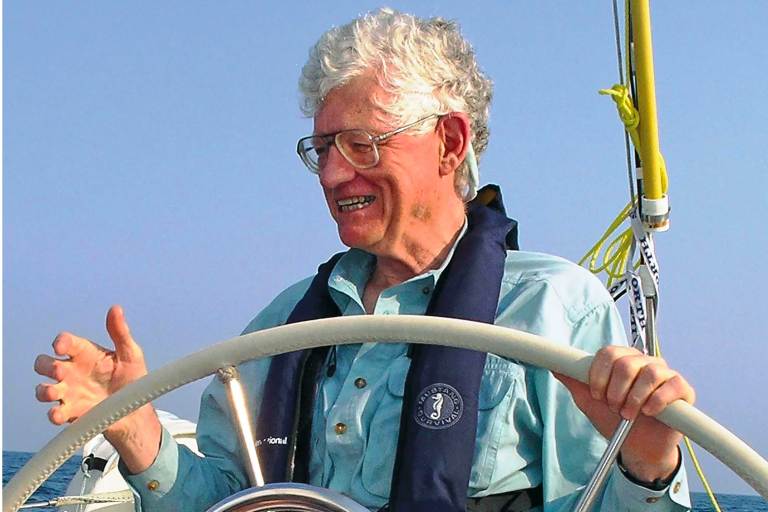
The best boaters are not the boldest. They’re the ones who always make it home safely, according to Chuck Hawley. In his former role as chairman of US Sailing’s Safety at Sea Committee, Hawley—recently inducted into the National Sailing Hall of Fame after some 40,000 miles at sea—investigated many boating accidents. He’s also been an expert witness in court, and has lectured widely on all manner of mishaps.
One such investigation happened in the summer of 2025, when Hawley was 5 miles from Lake Tahoe, at his family’s cabin. A freak storm blew in, and the swells capsized a boat. “A San Francisco DoorDash executive and his parents were among the eight that died that day,” he reported. “The engine stopped as the vessel battled 10-foot waves. This caused the vessel to turn beam-to the seas and begin to take on water due to rolling. One crewmember who survived the incident began handing life jackets to the others. Only she donned her life jacket, and her mother was able to hold on to hers. They ended up being the only survivors.”
That’s a headline-grabbing incident, but the truth, he says, is that most accidents at sea follow a chain of small, preventable errors. For that reason, Hawley urges boaters to avoid the most common mistakes he’s seen throughout his career.

Neglecting Weather Reports
Hawley calls this a syndrome that goes by the name, “It looked fine when we left.” Skipping the weather forecast is the nautical equivalent of ignoring the smoke alarm because you can’t see flames yet. Hawley says boaters should check the weather regularly, because it can change faster than a GPS can recalculate.
He advises boaters to check multiple forecasts, such as the National Oceanic and Atmospheric Administration, Windy and AccuWeather. Know the wind direction, wave height and any small-craft advisories before leaving the dock. Keep abreast of any changes underway.
Marine weather advisories are broadcast on VHF radio channels, particularly 16 for initial storm warnings and 22A for detailed forecasts, with NOAA Weather Radio also providing continuous weather information on dedicated frequencies. The Coast Guard announces urgent information on channel 16 before broadcasting the detailed forecast on channel 22A. If two out of three sources say “stay home,” he advises, boaters should listen.
Reliance on Electronics
Too many boaters let technology lull them into a false sense of omnipotence. Electronics fail. Batteries die. Salt water laughs in the face of circuitry. Skippers should not count on an iPad loaded with the latest nav apps. Seamanship means knowing how to navigate without a glowing screen. If the GPS goes dark, educated skippers can unfold a paper chart and carry on. Similarly, Hawley says, a compass is not a decorative relic. It’s an analog best friend, especially when redundancy of systems is key.
Overconfidence
There’s something about boats that makes people overestimate their skills. Maybe it’s the wind in the hair, or the intoxicating sense of command at the helm. Learn the rules of the road for passing or overtaking another vessel. Every skipper who’s ever said, “Don’t worry, I’ve done this a thousand times,” has eventually been humbled by a dock piling, a misjudged tide or a particularly malicious lobster pot. And skip the beer if you’re the captain. Alcohol is the leading cause of death along the waterways and at sea. Stay humble. The ocean has a Ph.D. in humiliation.
Ignoring Maintenance
Skipping maintenance doesn’t save time. It just defers suffering to a later date. Boats require constant attention. The breakdown will arrive at the worst possible moment. Inspect systems early, and inspect them often. Before each outing, perform a quick check of fuel lines, belts, hoses and electrical connections. Make sure the bilge pump works and the battery is charged.
Poor Communication
What begins as a mild disagreement about which way to tack or dock a boat can escalate into full marital warfare. Crew coordination isn’t just about avoiding arguments. It’s also about safety. Misunderstood commands or unspoken assumptions have sunk more boats than storms. Before casting off, make sure everyone knows their roles. Use clear, calm commands. And when cruising, consider using wireless earpieces with microphones. That way, nobody has to shout.
Too Little Fuel
There should be one third of a tank of fuel for the ride out, one third for the ride back, and one third for emergencies. The “just one more hour” mentality leads directly to the “mayday” reality. Engines are needy beasts. Always cruise with a fuel reserve. You’ll never regret having too much fuel, only too little.
Disrespect for Safety Gear
“The number one way to reduce fatalities is to wear a life jacket,” Hawley says. Coast Guard statistics show that 85 percent of drowning victims wore no life jacket. Too many boaters stash life jackets under seats or in lockers where they’re impossible to reach in an emergency. Before setting off from the dock, show every passenger where the PFDs are located. Life jackets aren’t just fashion accessories. Neither are flares, EPIRBs or VHF radios. Yet every season, some boaters treat safety gear like optional extras. In reality, Hawley says, safety equipment is like insurance: You resent it until it saves your life. If a life jacket still has tags on it, you’re doing it wrong.
Improper Anchoring
Dropping the hook seems simple enough, but anchoring improperly can cause all kinds of problems, including dragging anchor, having a tangled rode or drifting into other boats. The key mistakes are too little scope (the ratio of line to depth), anchoring on poor holding ground and failing to set the anchor properly.
Lack of focus
Steer proactively, especially in congested waters. Don’t assume other boaters know the rules of the road. They should but often don’t. If you’re in charge, pay attention, Hawley says. Even if your boat is on autopilot, remain vigilant. When cruising unfamiliar waters, slow down and maintain a proper lookout. “When the captain is partying or turning to chat with a person behind them, they’re not focused on where they’re going,” Hawley says. “This is especially true entering a harbor at night, where you get distracted by street lights and think you’re looking at navigation lights.”
Overloading the Boat
Distribute weight evenly. Exceeding a boat’s weight or passenger limit curtails stability and handling, especially in rough waters. Overloading includes gear, water, fuel and provisions. Keep heavy items loaded low and centered.
Hawley encourages boaters to treat every voyage, even the short ones, seriously. That way, being at sea is not only safer, but also far more satisfying. The best captains never stop learning, checking and anticipating. And in return, the sea offers its greatest gift: the freedom to roam with confidence and peace of mind.
This article was originally published in the March 2026 issue