JC Merrill
If you want a more adventurous boating life, shove off from your comfort zone. We all do that in our own way. Some gingerly, some full throttle.
On the cautious end sits yours truly. Offshore fishing trips have never been easy for me, as I get sick even at the thought of a boat wallowing in the trough at trolling speed. Still, I recently pushed past the discomfort to cast lines with an expert angling crew in the Keys. The effort was worth it, and I was reminded that stepping outside the familiar can pay dividends.
The opposite extreme is Mario Vittone, who spent last summer aboard an FPB 64 as it transited the Northwest Passage. He was aboard for 75 days as the boat traveled from Portland, Maine, to Anacortes, Washington, crossing some of the planet’s roughest waters, including the Bering Sea and the notorious Gulf of Alaska. As a former Coast Guard rescue swimmer and safety expert, Mario is wired for this kind of thing, but even he had to think several steps ahead when traveling in areas where there was no hope of towing assistance.
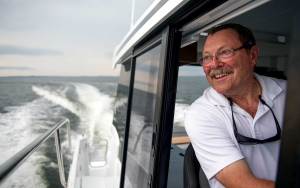
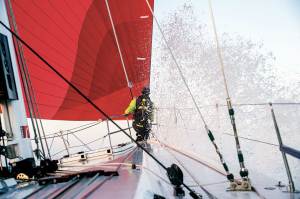
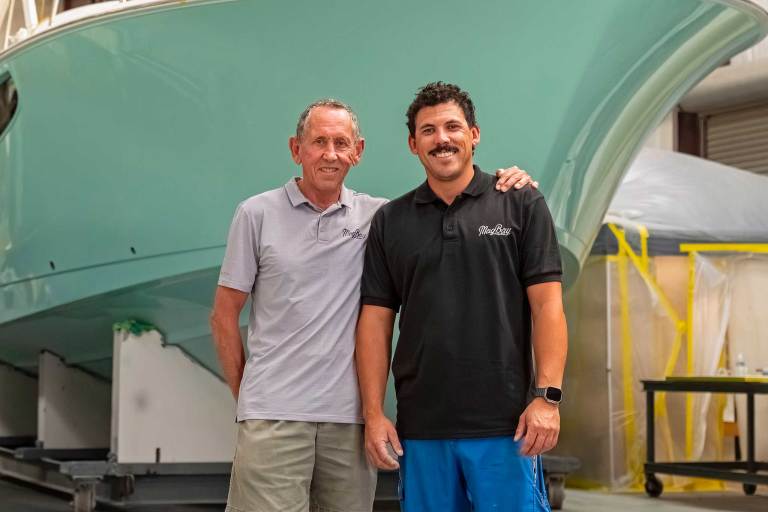
Somewhere in the middle is Pim Van Hemmen (pictured above), who did his first Caribbean Rally with the Salty Dawg Sailing Association in November.
You’ll recall Pim as the deputy editor at Soundings. He left us last July to pivot into semi-retirement, with a goal to spend less time slaving over a hot computer and more days doing things he loves. When a friend asked him to crew in the Rally aboard a 46-foot Outbound, Pim’s first response was “maybe.” The run from Hampton, Virginia, to Antigua is no casual delivery, even for someone with Pim’s experience. But after talking with his wife and son—both of whom told him the moment was right—Pim committed.
The Rally is considered a 1,600-mile rite of passage, a test of skill for sailors as they contend with high winds, big seas, maddening calms and gear failures. Pim saw all of that.
Five days into the crossing, the boat’s engine overheated when the alternator pulley failed and the drive belt came off. There was no spare alternator aboard, so they sailed without an engine for about five days, until someone on Facebook suggested a marlinspike repair. Pim crafted a belt from spare 3/16-inch line using a daisy chain, and it held long enough to allow the crew to motor into English Harbour. The equipment failure cost them time and miles, though, as it occurred when the wind blew from the wrong direction, which forced the crew to tack toward Iceland to get east to the trade winds.
The day after the boat arrived in Antigua, Pim added a post to his excellent Facebook feed about the trip.
“After getting off Critical Path, I felt a sense of euphoria and accomplishment that I have not felt after previous boat trips. There was the uncertainty of sailing across a dark ocean, of not knowing if an errant container or a surfacing whale would sink the ship, of sailing through a squall and not knowing if the winds would go past 40 knots. These things made it even more of an adventure.”
Pim’s is an honest summation of what happens when you push past that comfort zone. You prepare, adapt and learn what you’re capable of. And in the process, the ocean sometimes gives something special back to you.
Jeanne Craig
jeanne.craig@firecrown.com
This article was originally published in the February 2026 issue