In 1967, when Steve Tull graduated from Penn State with a degree in mechanical engineering and economics, a friend told him they should go to Wall Street and make a lot of money.
That’s what Tull did. The money was good, but he hated it.
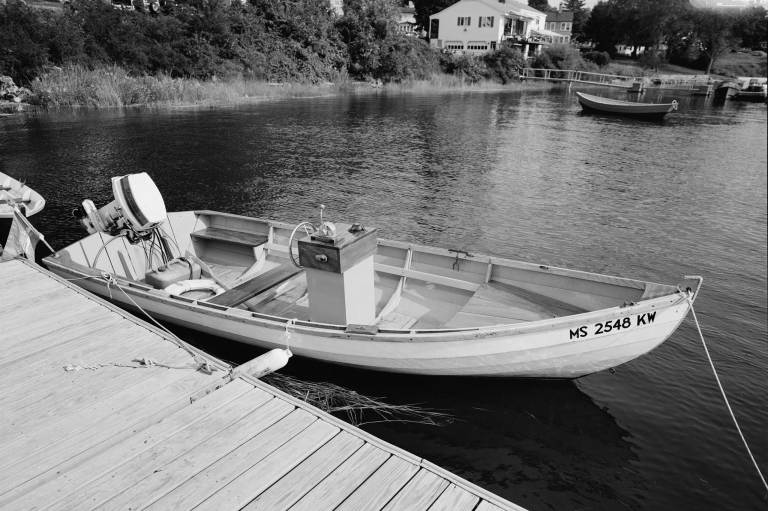
As a kid, Tull had messed around in boats at his grandfather’s place in Oxford, Maryland. “I was born with salt in my blood,” he says. So, in 1975, he became a charter captain, running a 30-foot Charles Hankins-built, box-chined wooden sea skiff out of Beach Haven, New Jersey. Tull liked the boat. Hankins had an excellent reputation for building surf boats that were used by all the lifeguards on the Jersey Shore, but the installation of the marinized Chevy V8, which had been done by the original owner was, according to Tull, “dubious.”
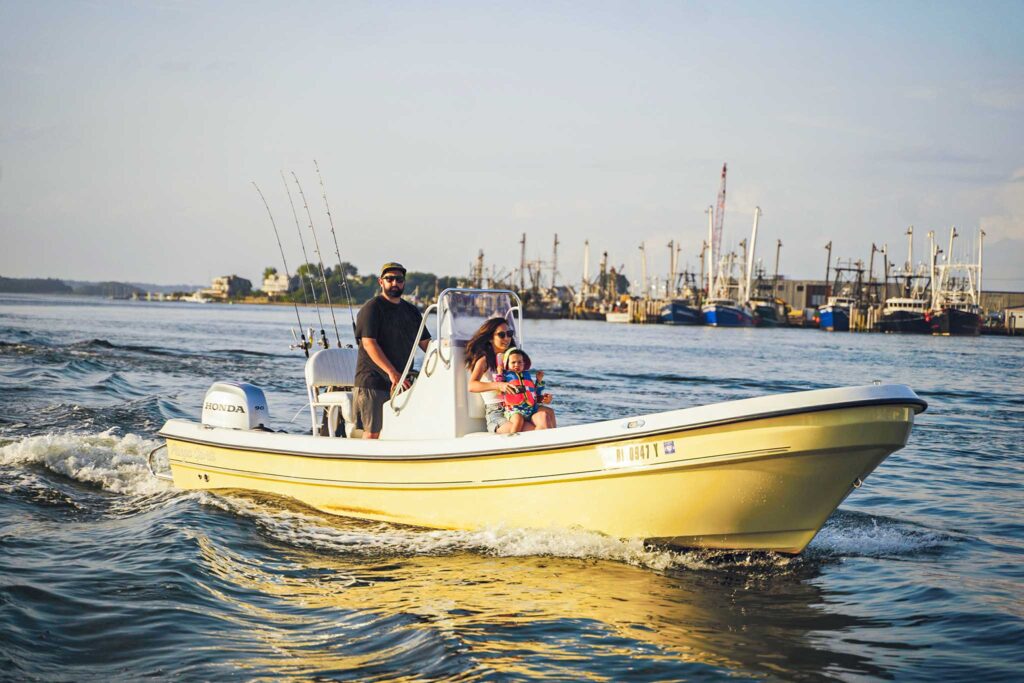
“There was always a problem with the fuel system,” he says. “More than once, my mate kept the party busy in the cockpit while I disassembled and cleaned the carburetor.”
Tull and his wife lived aboard the boat, but after about five years, she told him she was tired of living in a foc’sile. To get her on land, he took a job working for Colt Somers at Cape Island Marina and Yacht Sales, one of the early Hatteras dealers, in Cape May, New Jersey. Tull liked Somers. They became friends, and Tull was happy working as the VP of operations. But in the mid 1980s, when Somers retired and sold his three dealerships, Tull knew it was time to move on.
He set out for Long Island and started his own business, Atlantic Towers, building custom hard tops. Tuna towers had become a hot commodity. His company built towers for the Hatteras 52 and soon he also got contracts to build the towers for Boston Whaler, Black Watch and Rampage.
Things were good, until they weren’t. In 1991, the luxury tax killed the boatbuilding business. That’s when Tull learned that having just a handful of big clients, who suddenly didn’t need his services, wasn’t a good thing.
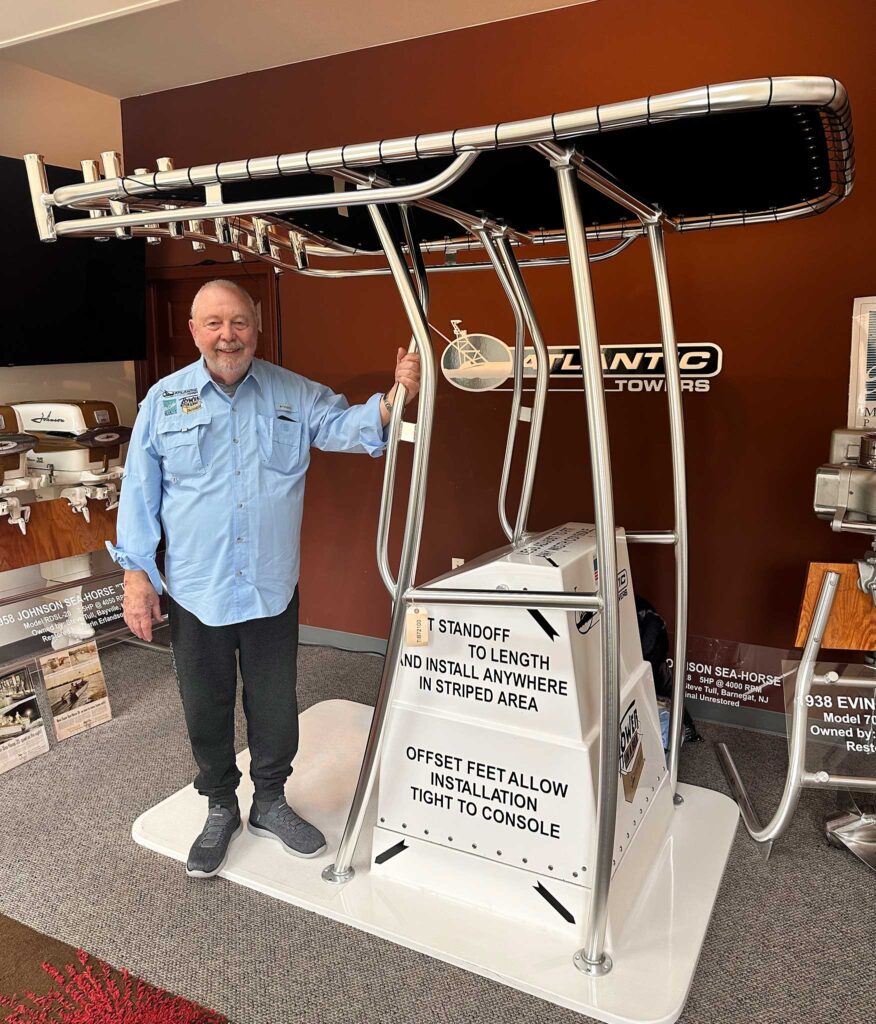
To get through the luxury tax recession, Tull pivoted. He started doing architectural metal work using the welding skills his crew had relied on to build towers. The money was flowing in again, but he still missed boats.
It occurred to him that instead of relying on about a half dozen OEM customers who could suddenly stop paying their bills, a better business model would be to sell directly to hundreds of customers who paid up front with a credit card.
That’s when he cooked up the Tower in a Box—an aluminum T-top that fit in a shipping box small enough for UPS to deliver directly to boat dealers and DIY-ers who could install it themselves using simple tools and epoxy welding.
Around 2000, he and business co-owner Shelley Golden brought Tower in a Box to the Norwalk Boat Show in Connecticut. “It was an uphill sell,” Tull says. Boaters thought it sounded hinky. They were used to towers and T-tops that had been fully welded, but they soon figured out that the product was top-notch and that it cost about half of what the welder down the street was charging—a big selling point.
Within a year, Tull and Golden sold several hundred units. Soon after, they moved the business to Bayville, New Jersey, where they were surrounded by machinists and manufacturers who could make most of the parts they needed.
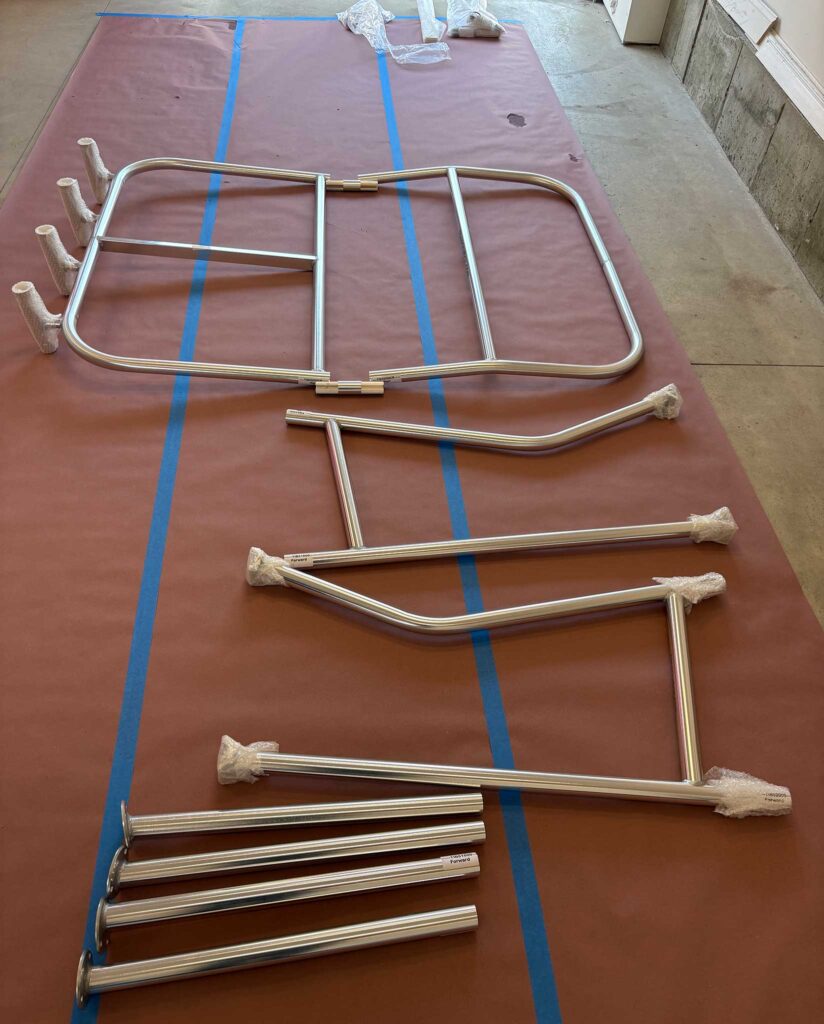
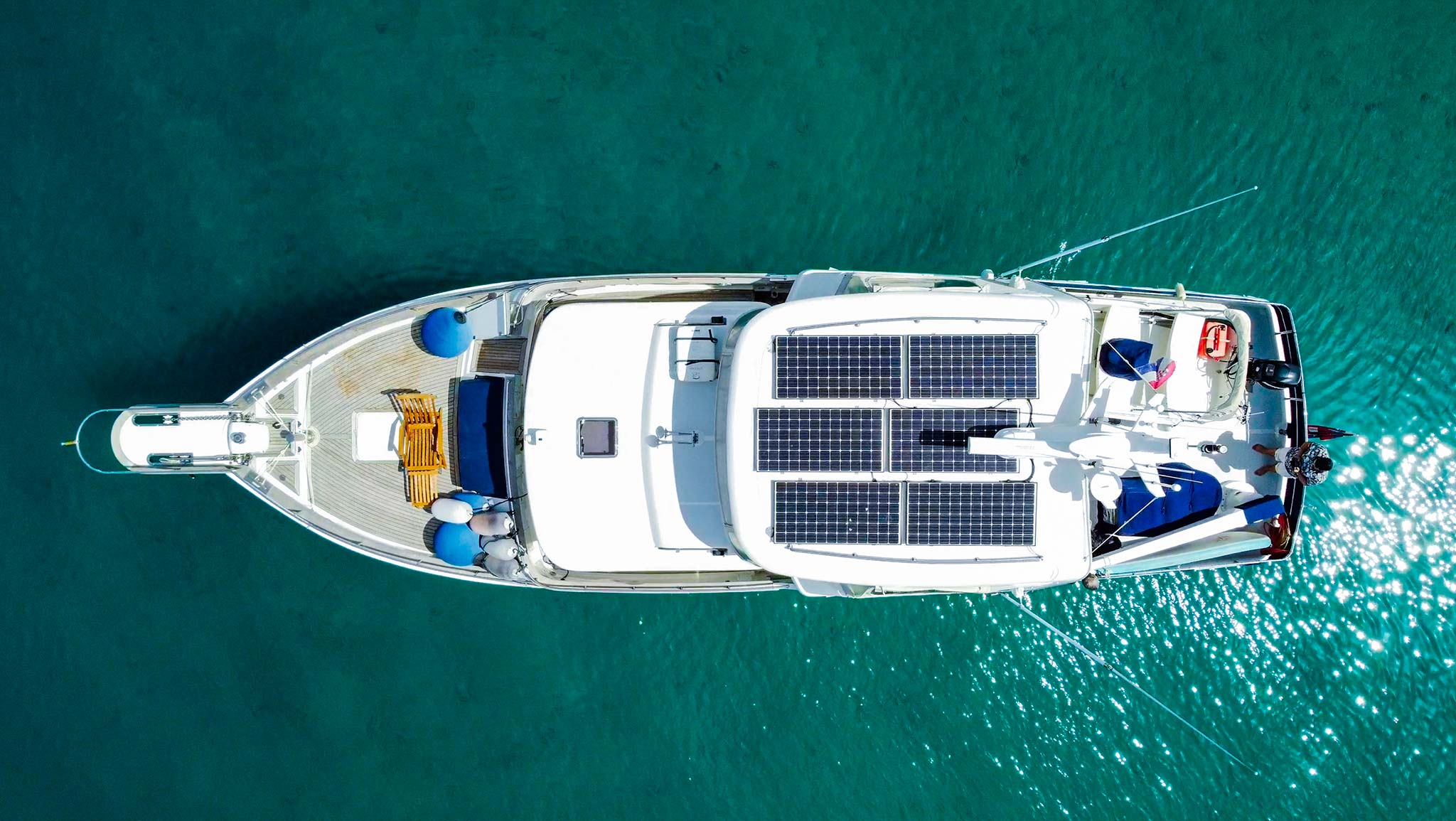
Fast forward a quarter century, and Tull and Golden, who is known as the “Tower Lady,” now sell about 1,500 units per year. Half the business comes from powerboaters who want T-Tops for shade, rocket launchers, radars and lights. The other half comes from cruising sailors who buy his arches. Tull owned a sailboat, and after he invented the Tower in a Box, he built a couple of arches for some sailors to hang their dinghies, mount their outboards and rig up solar panels. Word spread through internet forums that Tull built high-quality arches at a very attractive price. “If you have a first-class product, people will find you,” Tull says. The arches are too large to fit in a UPS box. They’re shipped on a pallet via freight and are particularly popular in Europe, where Tull has active shippers in Italy and Germany.
So how good are Tull’s epoxy-welded products? To find out, I visited him and Golden at their New Jersey facility. I spent almost five hours with Tull, but it only took minutes to see that he has an engineer’s detail-oriented, problem-solving mind. The feet on the towers are offset so you can snug the tower’s legs right up to the console, the pipe sections have stickers with lines on them so it’s stupid easy to align them during assembly, and a temporary screw prevents the plug that joins the pipe sections from going too far into a pipe. The design is smart, and the assembly process is made as idiotproof as possible.
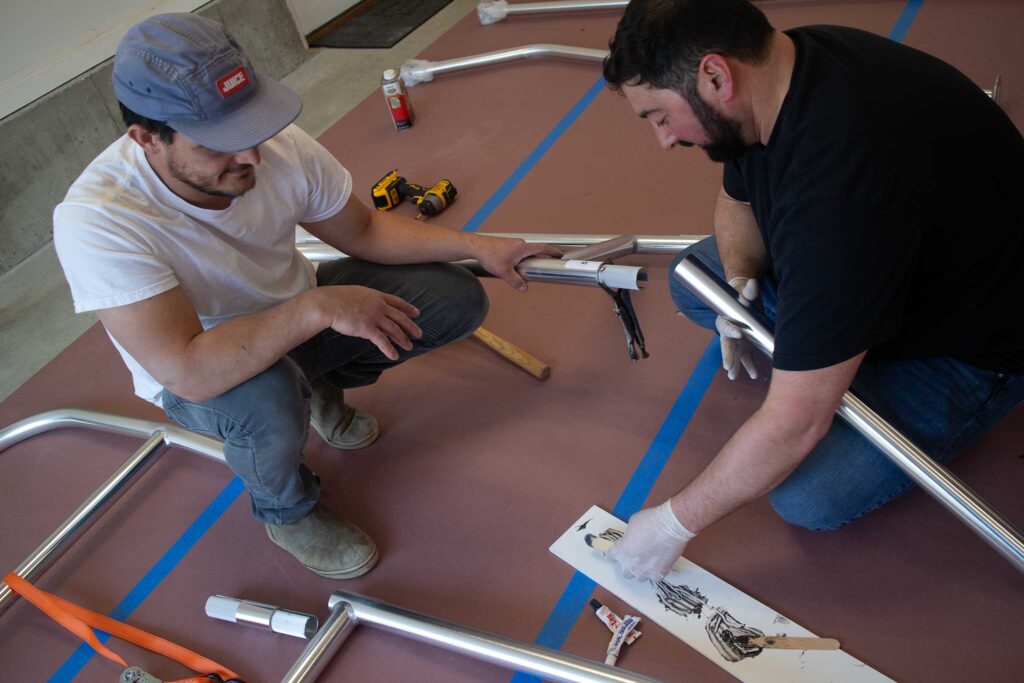
Epoxy welding has been around for decades. Most people don’t know that commercial airplanes are made with epoxy-welded joints. Tull got interested in epoxy welding 45 years ago when he was working for Somers. “As far as I know, what we epoxy welded together then is still running around,” he says. He’s never had a customer come back to him with a failed epoxy joint and even when the customer makes a mistake during installation, he says he can usually help them correct it. “It’s almost impossible to make a fatal error [during installation], because we usually have the cure,” he says. Although there was one time when a customer called him to say the installed T-Top didn’t look right. Tull told the customer to send pictures. The client had installed the T-Top backwards. Tull just shakes his head when he tells that story. “Read the directions,” he says.
Tull says that after the Tower in a Box debuted it was quickly copied by the Chinese. But rather than being mad, he finds it almost amusing because they haven’t been able to match the quality of his product. He gets his aluminum from Western Extrusions in Texas, which he says makes the best pre-finished marine-grade standard aluminum pipe in the world. Tull says towers need to be made of aluminum because it’s more rigid and lighter than stainless steel—to keep weight high up on a boat to a minimum. Corrosion wise, he says, “neither stainless nor aluminum is totally corrosion proof,” especially in a marine environment. He orders the aluminum with a lightly brushed finish, so when owners inadvertently scratch or ding the pipes, it hides the nicks.
The Chinese might be knocking off his concept, but he knows his product is superior. He says the 6463-T6 aluminum he orders is the best you can get. “The Chinese one comes in 12 parts with tons of bolts,” he says. “Our products are made in the USA with U.S.-sourced materials, made on U.S. machines.”
Tull designs every part of his towers, and the components are made right down the street from his operation at a subcontractor, Olympic Tool Company, a modern, well-equipped machine shop, which we also toured. The welding is also done at the Jersey Shore, although Tull tries to minimize welds in his designs. “They’re expensive and time-consuming,” he says.
Asked whether epoxy welding is strong enough to bond aluminum, Tull shows me the custom aluminum plugs he’s designed to join the pipes. They’re serrated so when they’re put inside the pipes, they don’t squeeze all the epoxy out and create more surface area for the epoxy to bond with. They’re also C-shaped and slightly larger than the inside diameter of the pipes. When the plugs are inserted, Tull recommends you compress them with a pair of vice grips. When the vice grips are released, the plugs jam themselves inside the pipe and the epoxy secures them in place. He says the T-Tops are highly adjustable. “You can slice it and dice it to modify it on the job,” he says.
Tull supplies tubes of Rapid-Set Marine-Tex for the pipe joints and West System G-Flex for the screws that secure the tower’s feet in the deck. He tests epoxy-welded joints for strength. Test sections of pipe are epoxy welded together and attached to a large steel plate. A forklift is driven onto the steel plate to hold it down, and the fork is raised to try and pull the pieces apart. “The epoxy joints have amazing sheer strength,” Tull says. All the joints survive 1,200 pounds of force and generally surpass it. “Some will fail at 2,000 pounds,” he says, “which is a ton, and some won’t fail at all.”
So how hard is it to install one of Tull’s towers? To learn that, I asked him if he would ship one of his T-Tops to Rhode Island so a DIY-er could assemble it and tell me about the installation process. A week after speccing out the right size T-Top, the color of the trampoline, and the custom features that would be added to the T-top, the Tower in a Box showed up at the house of Panga Sports 22 owner John Salafia.
Salafia is handy and not afraid to tackle a DIY project, but he’d never assembled a T-Top before. He placed the pipe sections on a neighbor’s garage floor that he’d covered with rosin paper to prevent them from getting scratched by the concrete. He found it easy to epoxy weld the pipe sections with the Marine-Tex epoxy, although the neighbor, Aquila Ayala, made the job more manageable by providing an extra set of hands. Once the pipes were glued up, Salafia connected the two side sections to the two-part trampoline top using the proprietary clamps and bolts Tull had supplied. The clamps allowed the legs to be moved in and out to match the width of the console. Tull sells the T-Top in two sizes (prices start at $1,599, including shipping in the lower 48 states). For the 22-footer, he’d shipped Salafia the smaller one. Whenever there is a way to make his products even better, Tull will add tweaks and modify as needed. The inside of the clamps that hold the trampoline top to the legs are now slightly oval rather than round to create a snugger fit when they’re bolted onto the trampoline pipes.
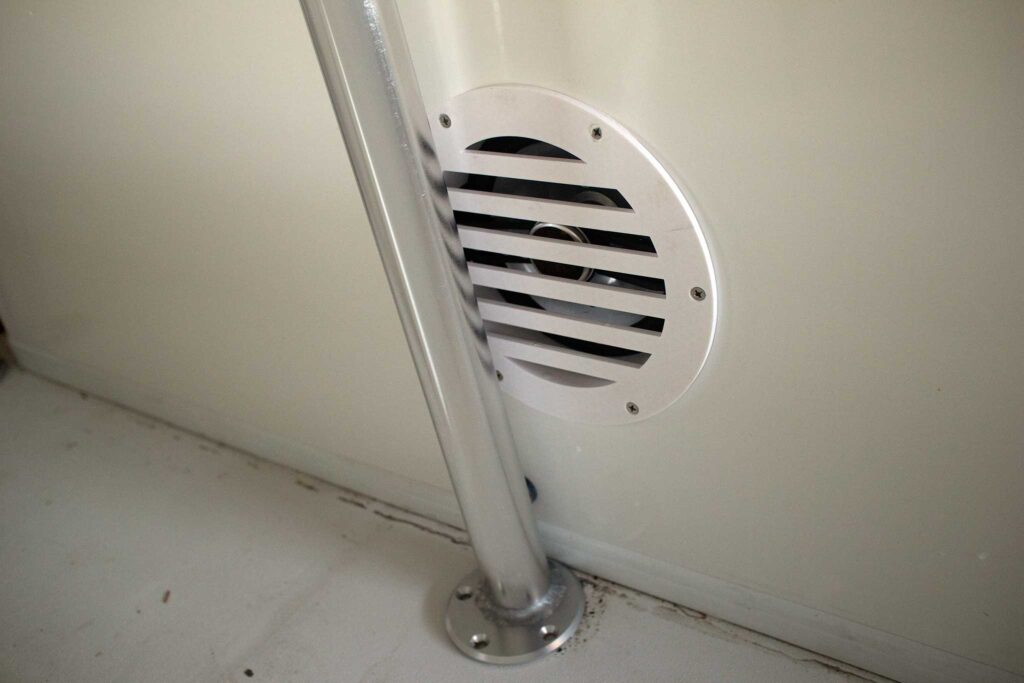
Gluing up the parts took just a couple of hours. Salafia then dry-fitted the T-Top on his boat. He spent a lot of time moving it around to locate the optimal spot. One challenge was the speakers he’d previously installed inside the console. When the T-Top was in the ideal position, the front legs of the T-Top lined up with the speakers, forcing the legs away from the console and making it impossible to replace the speakers if they ever failed. Initially Salafia was just going to live with it, but then his neighbor, Mike Garretson, who owns Sea and Land Yacht Services, said he could 3D print flush-mount adapters that would allow the speakers to be mounted from the inside of the console and allow the legs to snug up to the console. “Mike 3D printed up some new speaker cowlings for the inside of the console, which was a pretty clever design,” Salafia says.
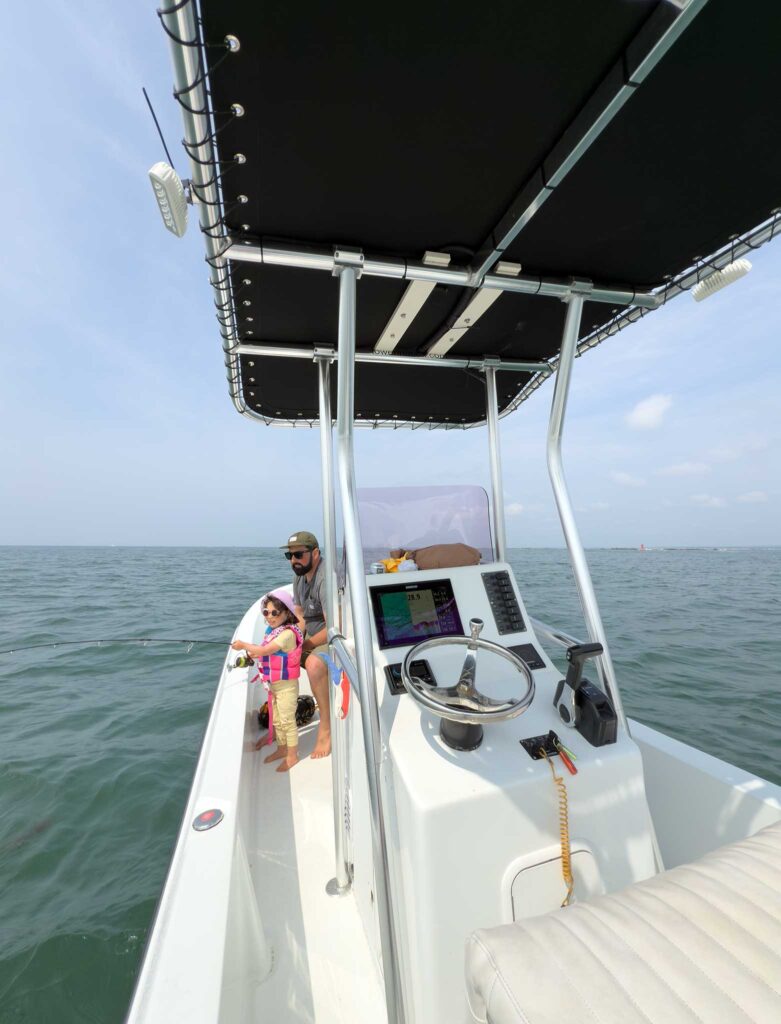
Attaching the feet to the deck turned out to be a little nerve racking, but after aligning the T-Top four or five times, Salafia drilled the holes in the deck, put the epoxy in and tightened the feet down with the screws. “I measured multiple, multiple times and then went for it.” Salafia says. “In the end it wasn’t bad at all.”
Besides supplying shade, the T-Top provided an opportunity for Salafia to add a radar unit and anchor light to his boat. Tull supplied LED lights, but rather than install them fore and aft, Salafia put them on the sides so he can see the fish when he brings them aboard at night. “The rigging of the wires was probably the hardest part,” Salafia says, but he’s stoked about the radar unit. “Steve supplied two pieces of King StarBoard to mount the radar,” he says. “It worked out beautifully.”
Salafia says he thinks the install went so smoothly because of the preparation. “I think it came out really clean,” he says. “The directions were very straightforward. It’s well constructed, and I think it looks really nice. The rocket launchers have been a great space-saving feature. Having the rods out of the way opens up a lot of room for casting and keeps the hooks out of reach of the kids.”
Tull is happy too. When I’d left his place in New Jersey, I’d asked him about the span of his career. “It’s been an interesting life,” he’d said to me. “The business has taken us all over the world, and we’ve made a lot of great friends. There have been moments of terror, like the luxury tax and the 2008 recession, but it’s been an amazing trip.”
Though he isn’t getting any younger, Tull says he will continue to sell the Tower in a Box. He’s bought a place in Oxford, Maryland, where his love of boating was spawned at his grandfather’s place seven decades ago. “I’m having fun,” Tull says, “watching my grandson sail an Opti.”
August 2025