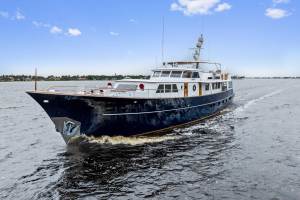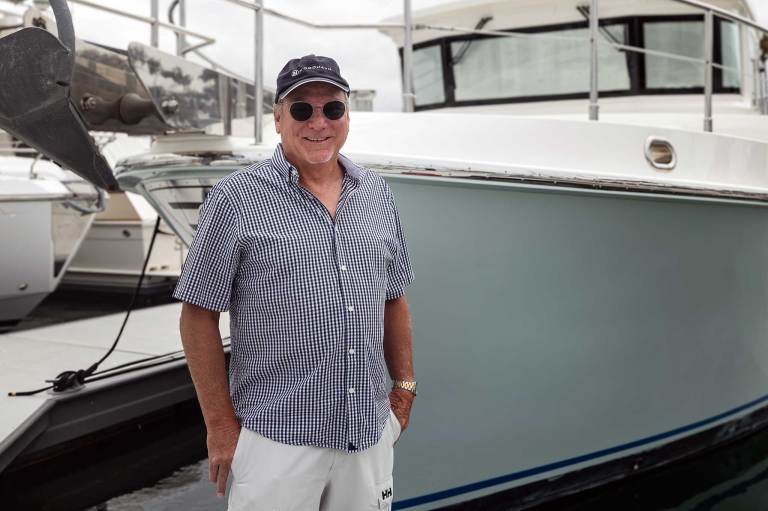
The process of creating an exact expression of an idea is well-known to Dave and Amanda Abrams. When this entrepreneurial pair of world adventurers had the opportunity to purchase a former Norwegian rescue ship, they saw nothing but opportunity.
Abrams, a former U.S. Navy Surface Warfare Officer, had experience creating masterpieces from broken parts. After completing his service, Abrams found a professional rhythm of acquiring, enhancing and selling businesses. His passagemaking rhythms matched the beat as he advanced from his first boat, a Pacific Seacraft 20, to a Californian 34, then a Fisher 38 and a Cape Horn 58, which the couple cruised extensively between the Sea of Cortez and British Colombia. Paul Johansen would simply be the next step in their seagoing adventures.
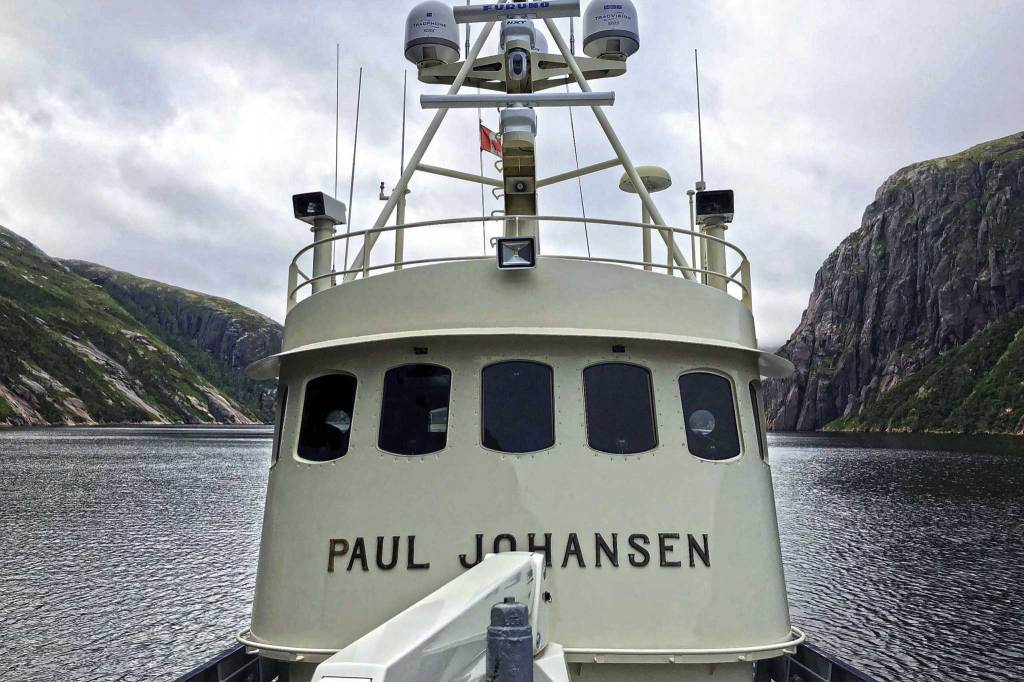
Built in 1970 by Smedvik Mekaniske Verksted in Tjørvåg, Norway, she was commissioned by the Norwegian Society for Sea Rescue, and was one of 13 of her class to be pressed into service. She measures just under 75 feet, with a 19-foot, 6-inch beam and a draft of 12 feet, and displaces 135 tons. She cruises most comfortably at 8 knots but can push to 12 knots if needed. She has a conservative range estimate of 4,000 nautical miles.
The Abramses are the third private owner of Paul Johansen. After her first career of lifesaving service, she was shipped to Washington state, where her initial and most substantial conversion took place through the 1990s. Between two owners, she was used as a private vessel and as a charter platform in the Pacific Northwest.
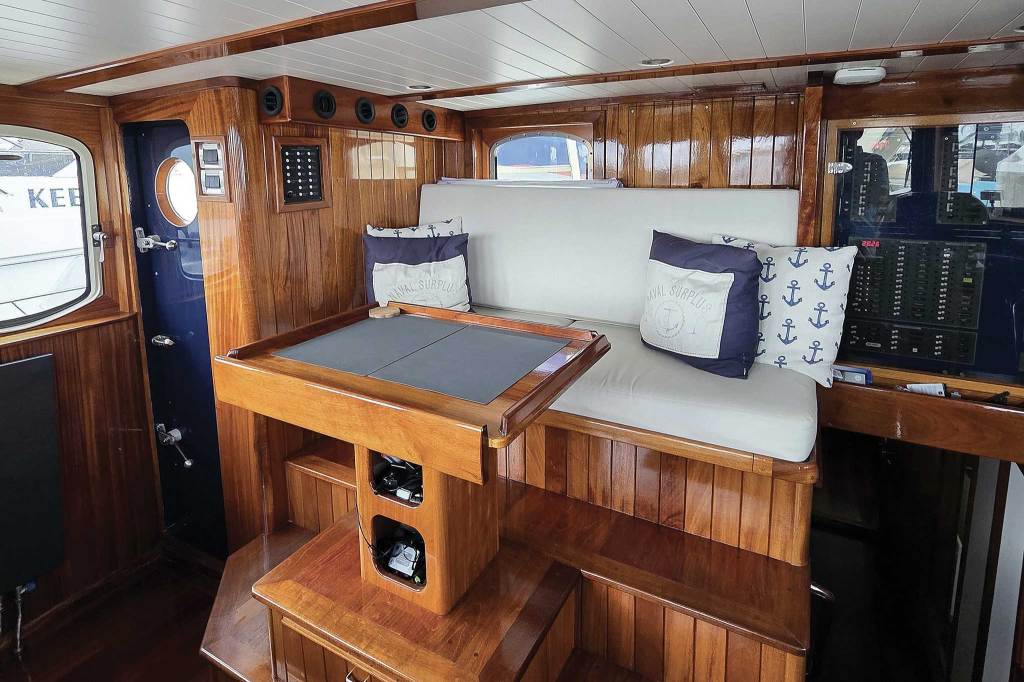
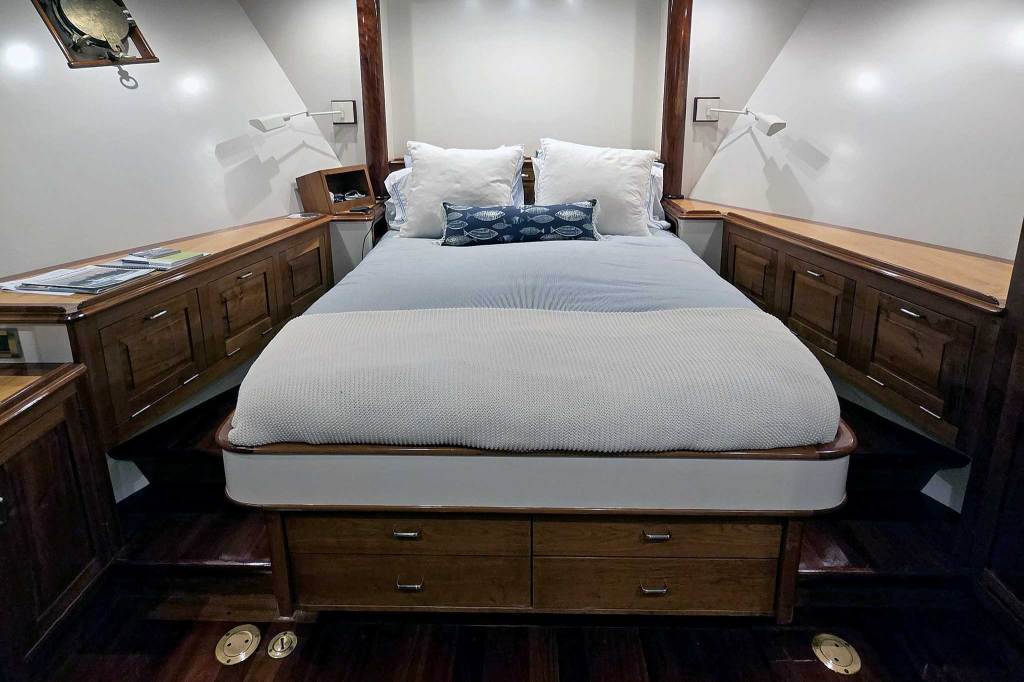
So the heavy lifting of a conversion had mostly been completed. Most notably, the salon was extended, and an enclosed cockpit was added, increasing her interior living spaces. All of her formerly commercial spaces became staterooms. There was beautiful carpentry throughout the boat.
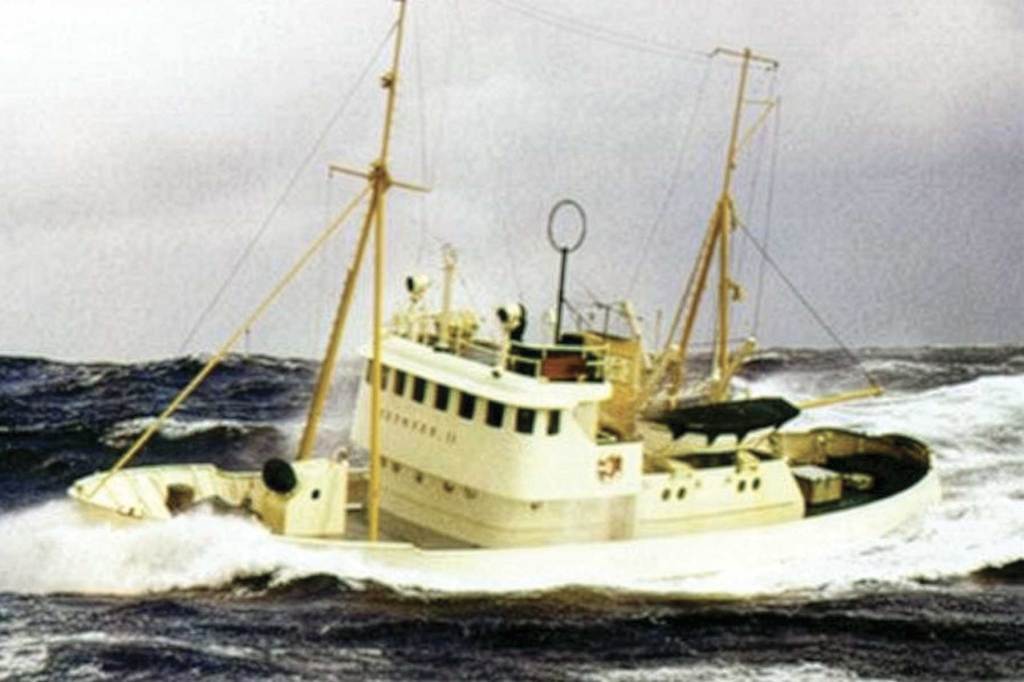
Still, throughout her conversion and subsequent refit, no creature comfort compromised her offshore ability. She is built of 10-mm steel and carries a Class C icebreaker rating. That means up to 20 inches of ice would have no effect on her structural integrity. She also retains her original Detroit Diesel 8V71s. Most of her systems were modernized in the early aughts and afterward.
Her aging navigation and on-board systems have also been replaced with integrated modern systems, redundancies and appliances fit for a modern home. Her navigation systems can be monitored from several remote stations. Galley equipment is now electric, easily powered by any of three generators that can be combined for up to 32 kW of power to charge all major electrical equipment at once.
Dave and Amanda spent three years learning and upgrading as they cruised Paul Johansen along the Eastern Seaboard before beginning their grand journey back to the Pacific Coast. On their route from Fort Lauderdale, Florida, to Colon, Panama, concerns of piracy swirled around Nicaragua. They embraced the tactics of the greatest world cruiser, Joshua Slocum. The crew had oil and tacks ready to scatter across the decks as their first line of defense. They also knew they could use the boat as a locked steel box, with the crew and all valuables safe inside.
One night, Dave tracked a contact on an intercept course for several hours, fearing they had been targeted. The crew never saw the incoming boat in the early morning darkness, but watched the radar return draw as close as 3.5 nautical miles, stop and then retreat into the darkness. They suspected that their silhouette proved too formidable, like a floating fortress. Their suspicions of pirate activity were later confirmed, with reports in the same location.
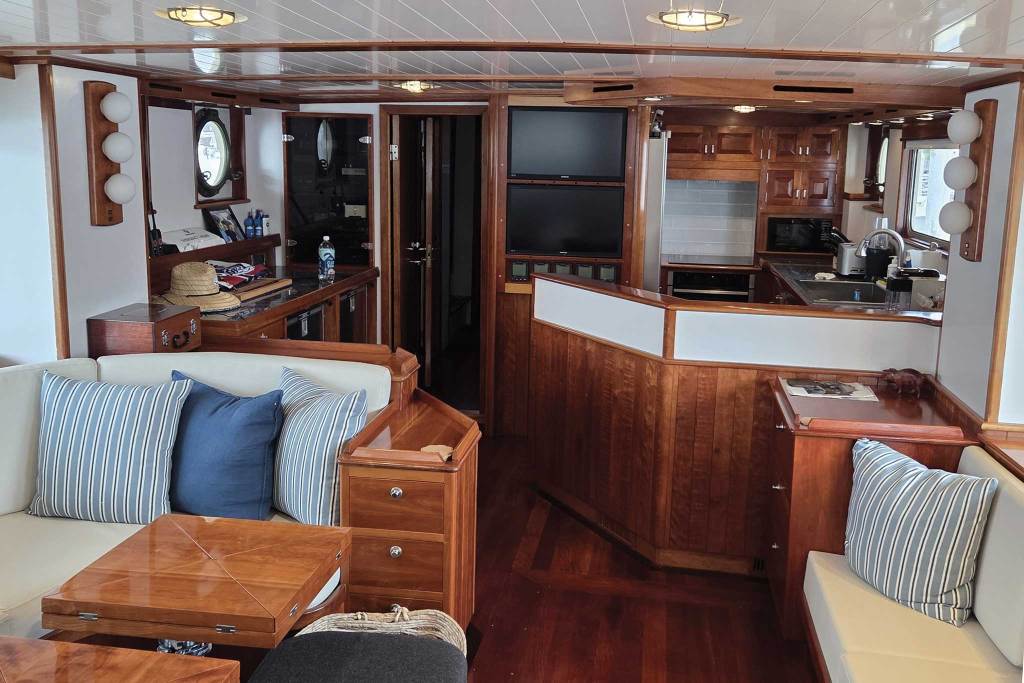
The salon was refit to provide a natural traffic flow to the galley. Tempered glass windows provide plenty of light, although portholes remind guests of her former life as a commercial vessel. Joe Lovejoy
As an ice-rated hull, Paul Johansen can take significant punishment. Dave recalls a time anchored off Staniel Cay in the Bahamas when a microburst landed nearly atop the ship. Within three minutes, the local conditions turned from placid to a squall. Anything not made of Norwegian steel was in trouble, including most of the surrounding fiberglass cruising boats.
Abrams and crew started both engines, expecting to use them to maintain position, but found that they were the only thing that was not being blown around. The boat did not budge from her position, thanks to her 540-pound anchor paired with 450 feet of 19-mm chain rode.
The Abramses have spent the past year in San Diego, preparing for their next adventure northward on the Pacific Coast. They plan to seek out coves and anchorages that they can share with more local wildlife than fellow cruisers.
The vessel (and crew) prefer seas that are forward of the beam, or dead astern for the most comfortable ride. And though the ship is built with the range and ability to cross an ocean, the Abramses are more than happy to follow good forecasts, knowing the boat’s stout design and active-fin stabilization can widen most weather windows.
This article was originally published in the August 2026 issue.