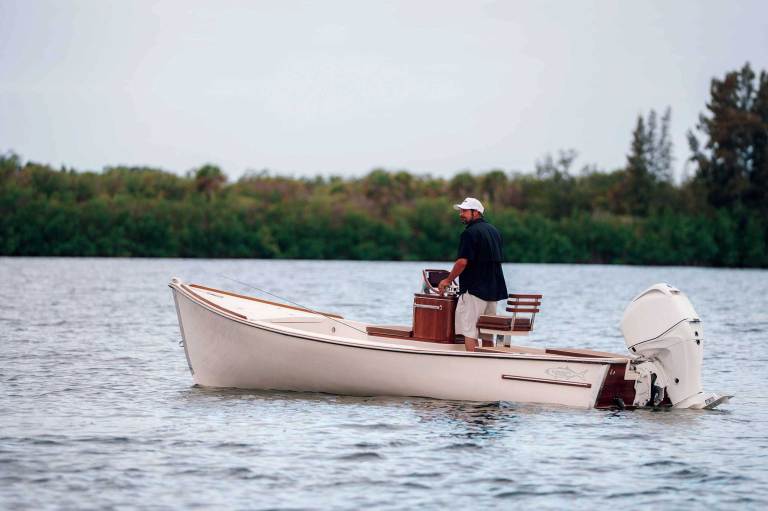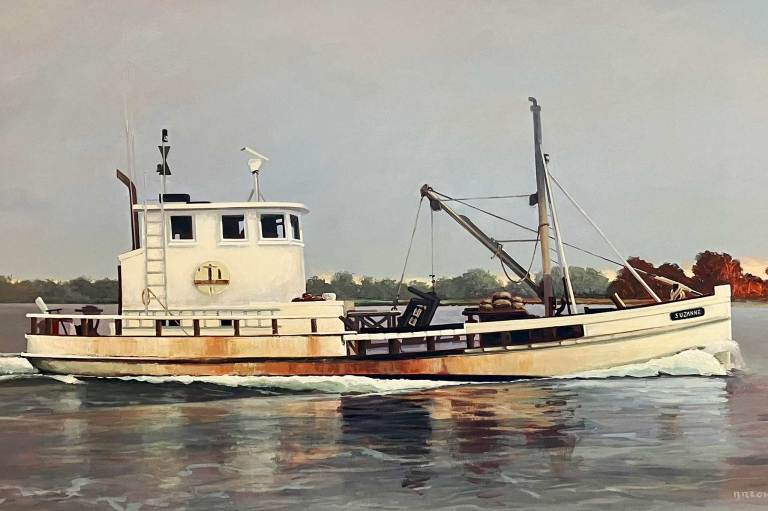
It came out of a Maine boatyard known for superb sailboats and instantly rocked the powerboat world.
“It” was the original Picnic Boat, which Hinckley Yachts introduced in 1994. The 36-footer was reminiscent of a Downeast workboat but softened with curved lines and peppered with pedigree. The unconventional waterjet propulsion allowed for an extremely shallow draft that made it possible to explore skinny water in quiet corners of the coastline. Accommodations were modest but elevated with superb joinery, and the layout was simple yet social. She was salty, easy to drive, high-tech and a head-turner. And plenty of people wanted this delightful dayboat, including Martha Stewart, the decade’s doyenne of good taste, for whom the $249,000 base price was no deterrent.
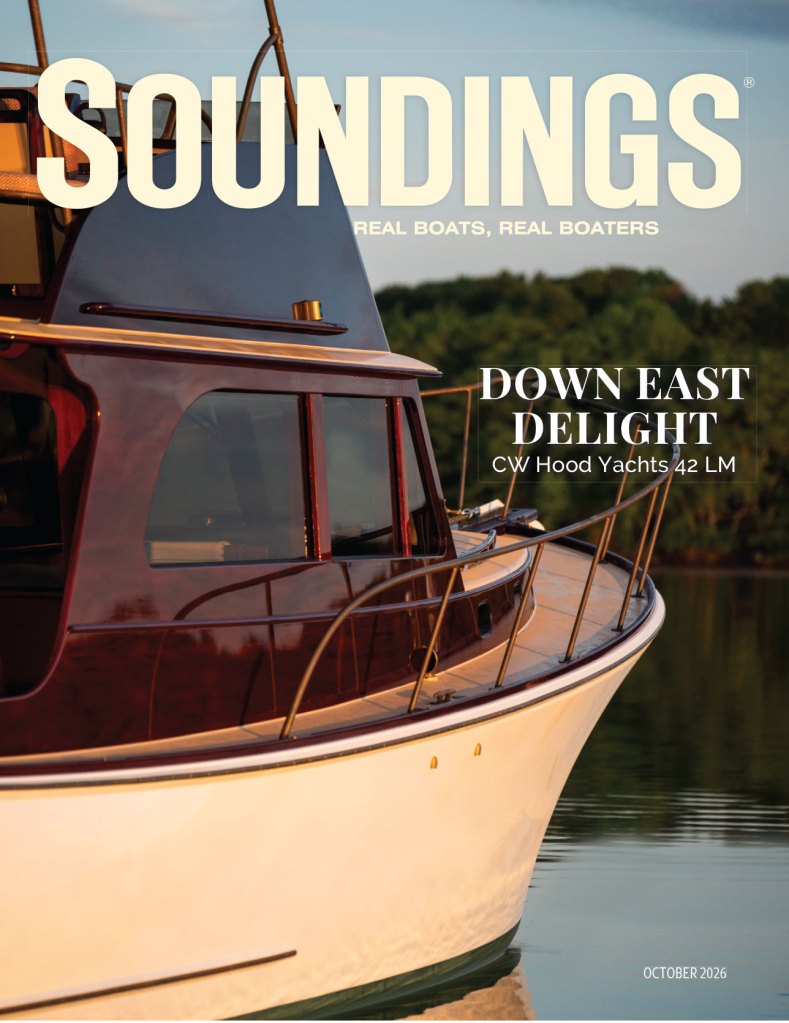
More than 30 years later, the Picnic Boat continues to enchant boaters (Stewart still owns hers), as do the Hinckley models that evolved from that design. They include the 37, the 40 and now the 39—the fourth generation of the series.
“We asked ourselves what made the original Picnic Boat so special. Everyone who has been around one knows that feeling. The lines just capture your heart,” says Scott Bryant, vice president of sales and marketing at Hinckley. “We used that as our guide to create something modern.”
The company also tapped owners for feedback when developing the 39. “Our customers told us what they loved and what they wanted more of. That was storage, comfort and simplicity above all,” Bryan says. “They don’t want a boat full of whiz-bang gadgets they won’t use. They want something elegant and easy to run.”
Easy, Breezy Handling
The 39 is built to make operation almost effortless. The deep-V hull by yacht designer and naval architect Doug Zurn (in his first collaboration with Hinckley) is powered by two 480-hp Volvo Penta D6 diesel inboards. They’re connected to Hamilton HJX27 waterjets that can operate in as little as 26 inches of water. That’s because jets, unlike shaft-driven propulsion, have no props or shafts protruding into the water.
The waterjets are controlled by JetStick 4, the latest version of the builder’s joystick system. “It’s intuitive,” says Bryant, who was at the helm of the 39 as we prepared to leave our slip at Bay Bridge Marina in Stevensville, Maryland, which Hinckley acquired in 2025 to expand its service network on the Chesapeake Bay.
JetStick 4 has some new features too. Dockhold, for instance, locks the boat’s position in place so the skipper can step away from the helm to untie lines and stow fenders. “It’s like having crew,” Bryant says. It’s also a nice advantage for those who operate boats solo. Heading Hold maintains the boat’s course in most any sea condition. Then there’s Smart Mode, which automatically switches from joystick steering to helm steering. Bryant demonstrated this feature in open water, where he simply touched the teak wheel to access steering control while keeping his eyes fully on the boat’s surroundings.
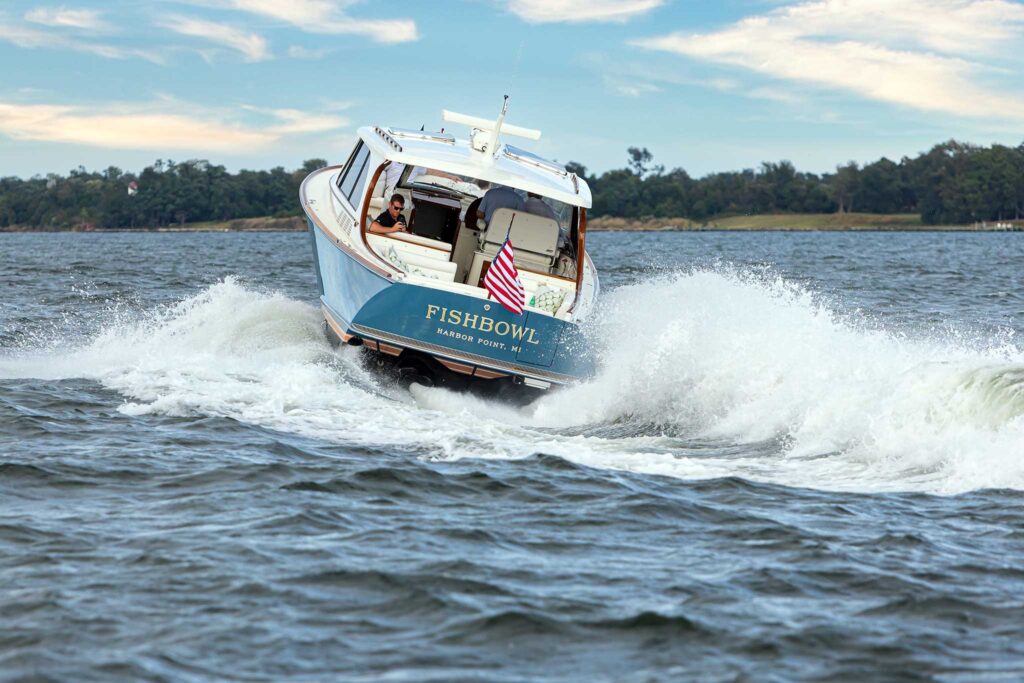
Out on Chesapeake Bay, the 39 accelerated swiftly onto plane and then found its groove at about 28 knots and 3000 rpm. “Once you reach 3000, you really see the efficiency gains of waterjets over shaft propulsion,” Bryant says. “With no exposed running gear, there’s less drag below the hull.”
When the first Picnic Boat hit the water, jets were infrequently used on midrange models, and some marine insiders predicted that Hinckley would change that. As it turns out, jets are still not mainstream in this segment, but boaters who use them today really value their advantages. Those include the ability to explore the shallow edge of a coastline, and given the crowded state of today’s anchorages, gunkholing in a shoal-draft boat could be a surefire way to find privacy. Then there are the safety aspects of waterjets. No props, for starters. And there’s nothing beneath the waterline to foul lobster pot lines or wipe out in a grounding.
Waterjet boats have been known to pound in a head sea. On the Hinckley, though, we experienced only a gentle thumping as Bryant ran the boat at top end (36 knots) through a stiff, wind-driven chop. Zurn’s running bottom with 22 degrees of transom deadrise provided enough hull angle to keep our crew comfortable in moderate seas. The 39’s hull is built with a carbon and E-glass composite to ensure strength and light weight.
The ride was fun too. When Bryant threw the wheel hard over, the 39 executed a moonshiner turn in her own length. You can also put the 39 into reverse for a breathtaking stop. Remember, there are no gears here. With jets, you just reverse the direction of the water flow.
The Picnic in Picnic Boat
The original Picnic boat had a single diesel covered by a big engine box in the center of the cockpit. An early advertisement showed the box covered with a tablecloth, so it could double as a dining table. Home-style features on this series of boats have come a long way since then. The 39 is arranged for socializing and prioritizes passenger comfort.
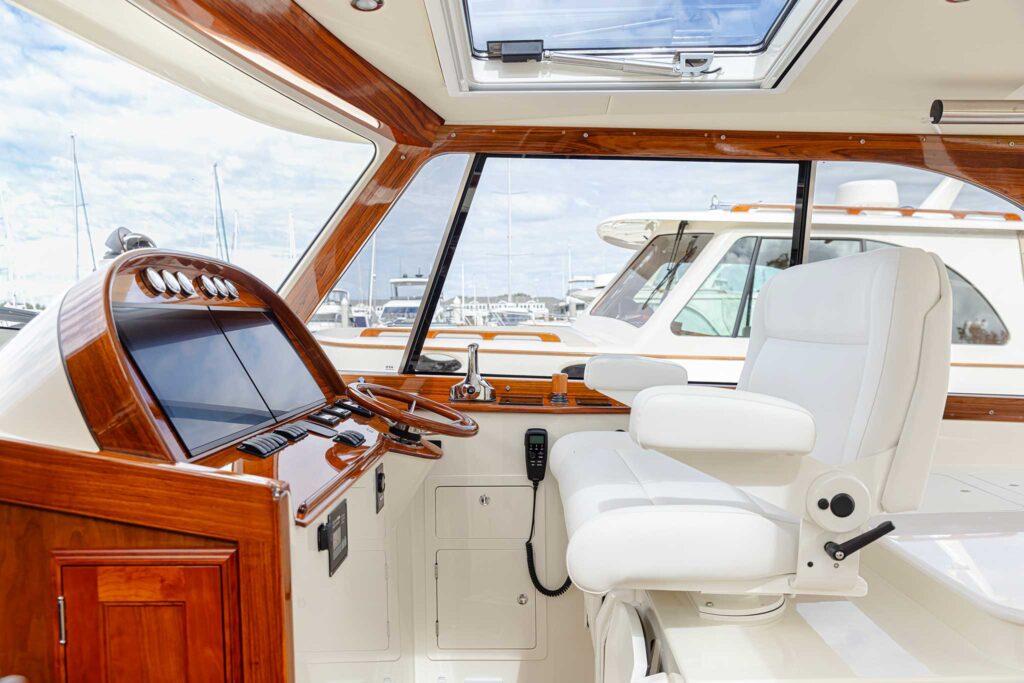
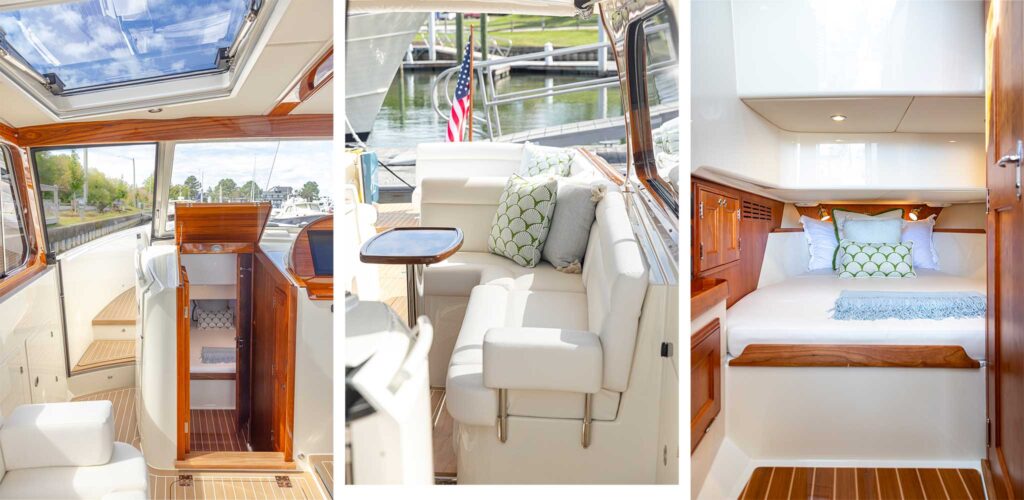
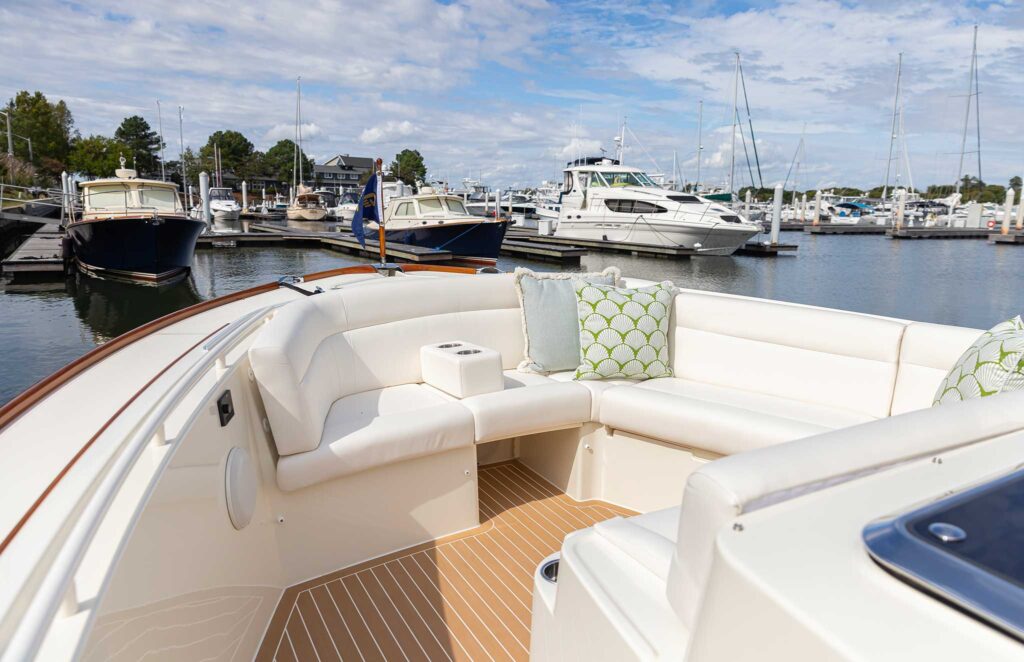
“We wanted to make sure there’s no bad seat in the house,” Bryant says. In all three social zones—cockpit, pilothouse and open bow—lounges are curved into the coaming to create cozy nooks for curling up with a child, a pet or a book. And the lounges are made with foams of varying densities for durability and support. The skipper also has an agreeable seat at the helm. It’s slightly elevated for good sightlines through the curved windshield and opening windows to port and starboard. That seat swivels for joining conversations with guests.
A U-shaped galley is abaft the helm. “It’s in the middle of everything, which is something we do on most boats, although with the 39 it’s more pronounced,” Bryant says. “The galley is spacious enough for someone to stand and be braced when the boat is moving.” It also has stowage, an icebox, a refrigerator, a sink with a cutting board, and trash and recycle bins.
The open bow wasn’t on earlier Picnic Boats and compared with other dayboats of similar length produced today, the seating here is generous. The bow is also a relatively dry space when the boat is underway. “Even in a small head sea, this area can get wet, so we added extra flare and spray rails to the hull, to shed water,” Bryant says.
A removable cushion at the forepeak makes it easy to access the anchor locker, and a sliding window mechanism serves as a door between the bow and pilothouse. That window mechanism is a sophisticated piece of engineering that represents how far bowriders have come from the days of flimsy folding panels with sharp edges.
Built to Last
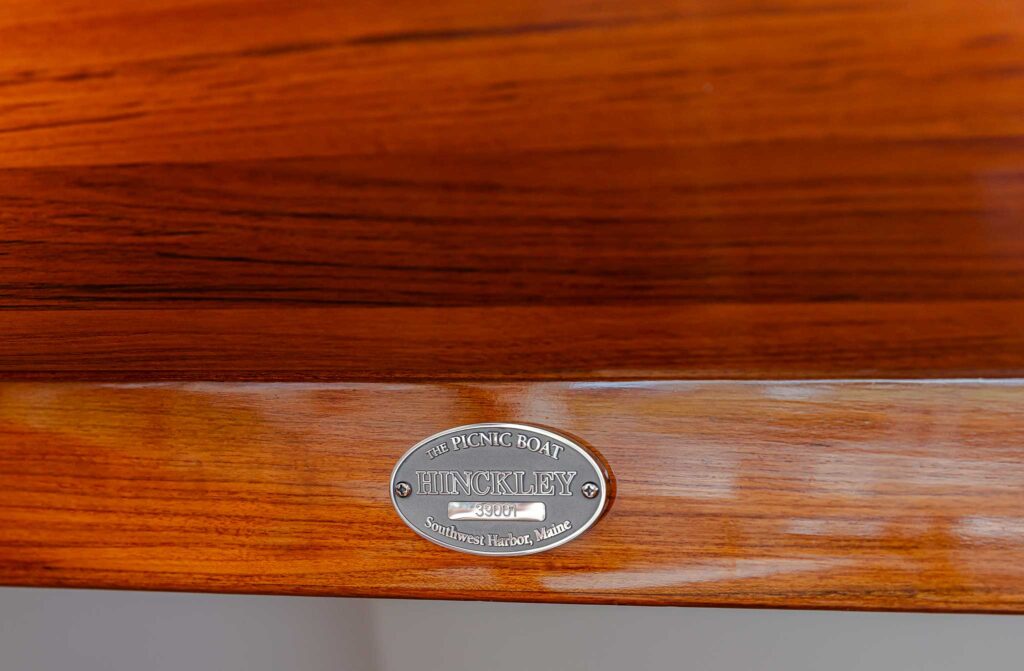
To get the proportions right on the 39, Hinckley built a full-scale mock-up of the boat before going into production. Engineers and craftsmen combed it for months, testing systems access and tweaking the dimensions of every seat, shelf and cabinet door.
As we headed back to the marina, Bryant engaged the JetStick 4 with a light touch, and the boat eased over to the dock. Dockhold kept her pinned gently while lines were made fast. The whole maneuver took a few effortless minutes.
“That’s the essence of the 39. Quiet competence,” Bryant says. “And it’s what our owners wanted, to feel confident, connected and in command.”
LOA: 42’7”
Beam: 12’11”
Displ. (approx.): 21,000 lbs.
Fuel: 300 gals.
Water: 40 gals.
Power: (2) 480-hp Volvo Penta D6 diesels
w/Hamilton HJX27 waterjets
Top Speed: 36 knots
Best Cruise: 30 to 34 knots
Range (at cruise): 250 nautical miles
This article was originally published in the January 2026 issue