Summertime, and the fishing is easy. Or is it? Well, that’s what local anglers say about the action off New Jersey in July and August. Granted, the fish might not be jumpin’ and the cotton is non-existent, but coastal waters off the Garden State offer superb bottom fishing and accessing it is definitely no sweat. Here are some tips for finding the most action.
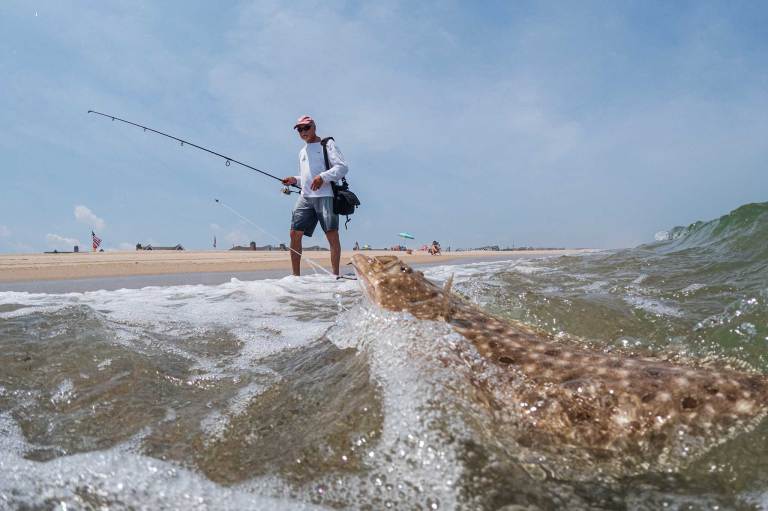
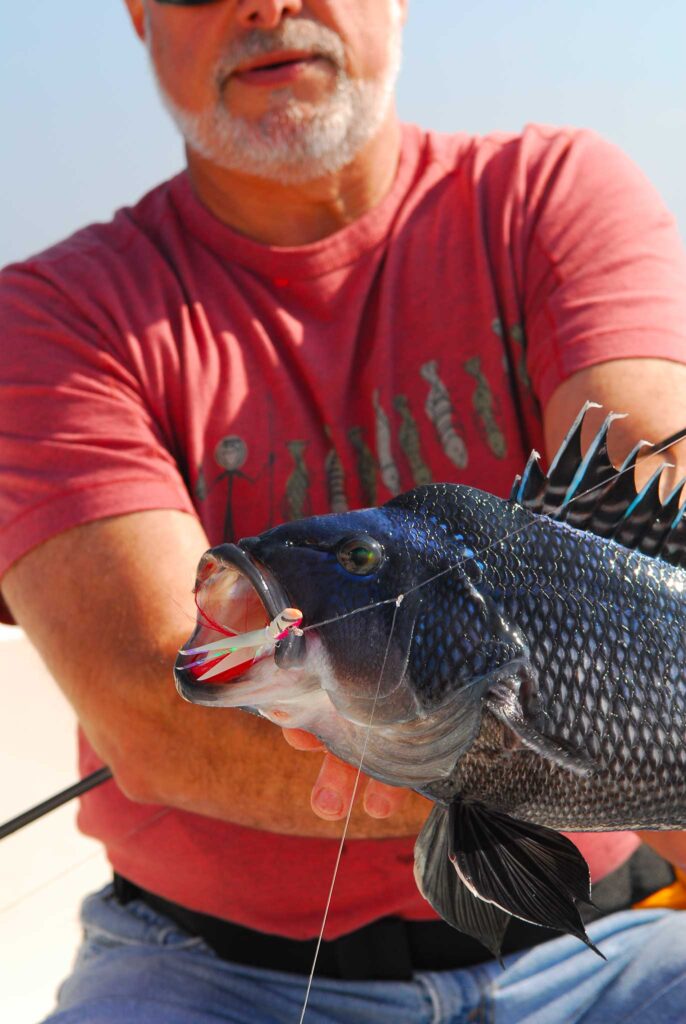
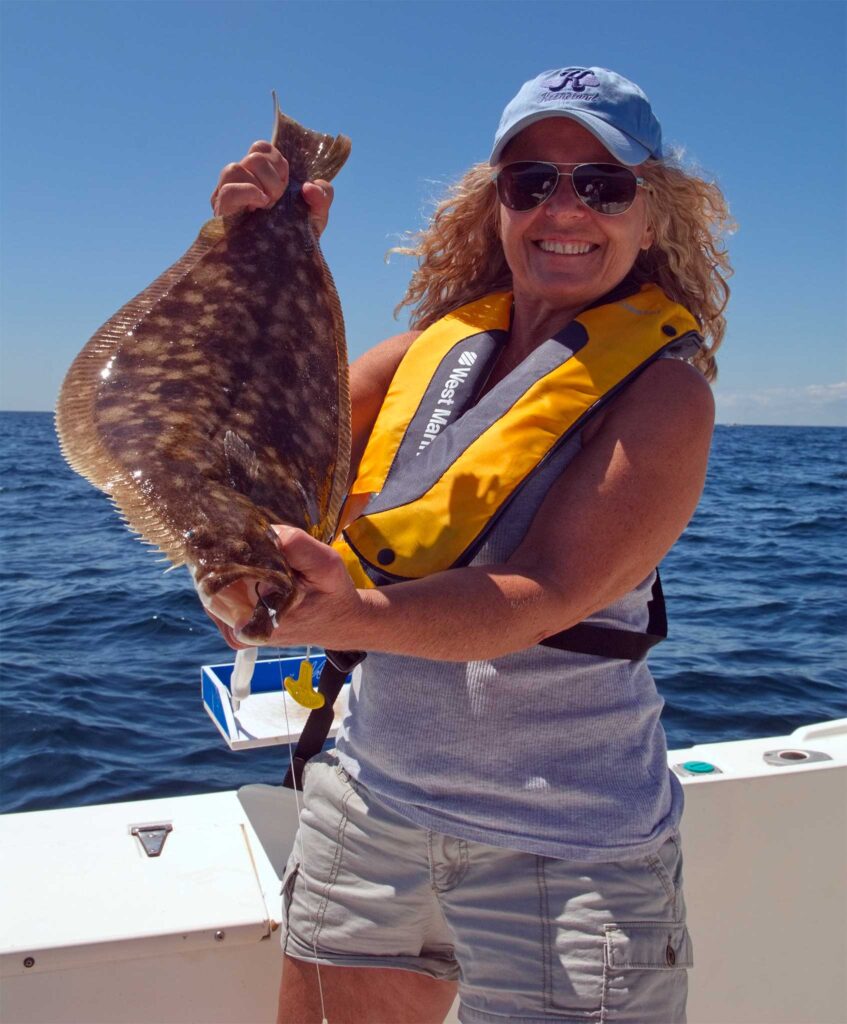
The two species most sought after at this time of year are black sea bass and summer flounder, more commonly called fluke in these parts. Both are aggressive predators that will readily attack artificial lures like bucktails with plastic twister tails or simple baited hooks, and both have very tasty fillets that make for great summertime table fare. Both species are most fun when caught on light spinning or baitcasting outfits, the sort of gear most fishermen, even those who only fish casually, have in their possession. We’ll get into how to catch them in a minute but let’s explore where to fish first.
Where To Find the Fish
Since 1984, the New Jersey Marine Resources Administration has maintained an intensive program of artificial reef construction. The result is a network of artificial reefs in ocean waters along the state’s coast that provide hard substrate for fish, shellfish and crustaceans, fishing grounds for anglers, and underwater structures for scuba divers to explore. Most of the reefing materials are donated and funded by outside organizations with oversight and coordination provided by the New Jersey Artificial Reef Program, a public/private partnership created in 1984 by the New Jersey Department of Environmental Protection’s Fish and Wildlife division.
There are currently 16 reef sites, with most found close to shore. The materials deposited on the reefs vary from location to location but can include concrete reef balls, dredge rock, concrete debris, decommissioned military vehicles, railroad and subway cars and vessels including large ships; Coast Guard cutters, ferry boats, tugboats, commercial fishing boats and barges. The reefs provide excellent structure for recreational fishermen to concentrate their efforts and catch more fish. One recent statistical survey indicates that upwards of 70 percent of all the fish caught by recreational fishermen are caught inside one of the reef zones.
Here’s the easy part. You can access detailed information about all the reef sites by going to the NJDEP’s website and clicking on the Artificial Reef Deployment interactive map. Pick a reef, then zoom in to view detailed locations for the various materials on that reef. Click on any symbol and a pop-up window provides information about what it is, when it was placed on the reef, who sponsored it and the exact GPS coordinates to land you there. If that isn’t easy enough, you can download and print individual reef charts and can take them with you. Didn’t I say the fishing is easy? Well, there you go.
North Jersey Reefs
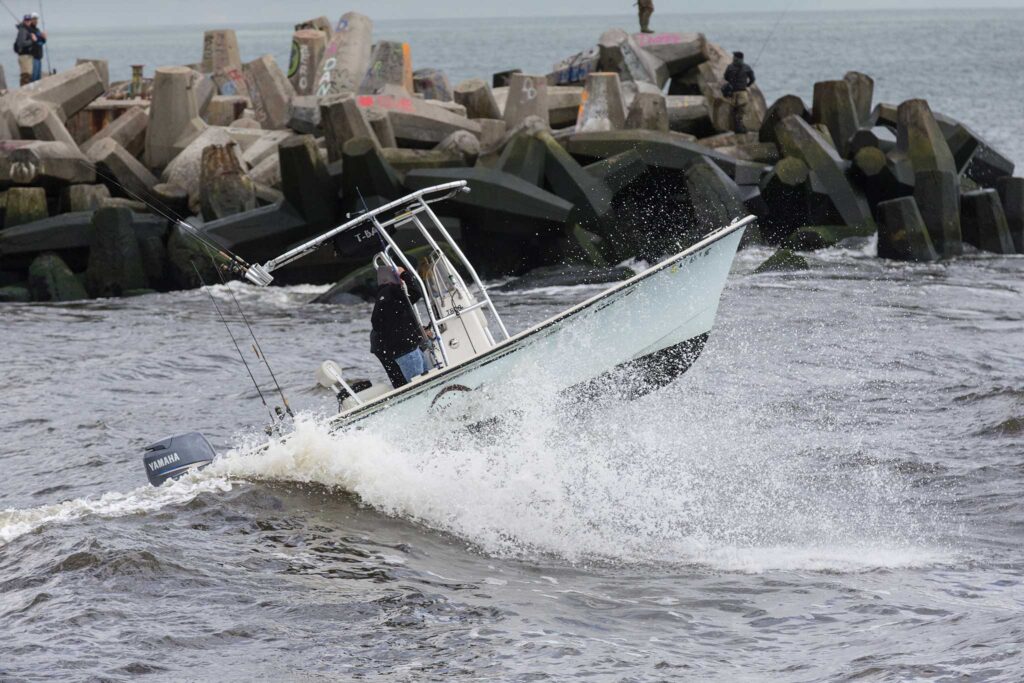
I fished out of Manasquan Inlet for three decades. It’s a popular destination with fun beach towns like Point Pleasant and Belmar nearby. There are numerous marinas, restaurants and venues, and a canal leading to upper Barnegat Bay and the Intracoastal Waterway. During the summer months I spent a great deal of time fishing on the two closest artificial reefs. The Sea Girt Reef is about 5 miles northeast of the inlet and the Axel Carlson Reef is 3 miles to the southeast. Both are expansive, with a total of 46 wrecks and barges, dozens of military vehicles and miles of rock and concrete bridge rubble. The low-lying structures, rubble and rock fields were designed for drift fishing, the most productive way to catch fluke, and you will catch sea bass at the same time. Fluke lay in ambush on the open bottom near structure while the sea bass tend to hold closer to or on the structure.
With a chart of the reef in hand, drift fishing becomes simple. Once you confirm the direction of the drift, you pick an appropriate starting point and let the wind and current carry you and your bait over bottom. If you want to key in on black sea bass, try anchoring or using an electric trolling motor to hold position over one of the many wrecks. Your depth finder will show the fish hovering over and around the structure so you can drop a high-low rig baited with clam or squid to get bites.
Both reefs, in addition to the newly created and smaller Manasquan Reef, offer more structure to fish than you can explore in an entire fishing season, but you don’t have to know them intimately to get in on some of the best bottom fishing in the Garden State.
Central Coast Reef
Barnegat Inlet is more centrally located along the coast, where Long Beach Island is a popular summer destination. The historic section of Barnegat Light Village is an attraction with great seafood and miles of beautiful beaches.
The nearby Barnegat Light Reef is only 3 miles outside the inlet and features wrecks, dozens of decommissioned armored vehicles, bundled tires, concrete casings and conduits, and rubble spots that provide fish habitat. Its close proximity to shore makes it a favorite bottom fishing spot for fluke and sea bass, and the prevalence of low-lying structure encourages drift fishing success.
While bucktails are popular. many of the local private and charter boats use more traditional bottom rigs that employ a sinker, which drags along the bottom with one or two droppers with plastic tails. Other rigs are baited with squid or strips of fish. This location is a bit of a run from the other reefs located to the north and south so your choice of places to go is limited unless you don’t mind taking a ride on a calm summer ocean.
Southern Coast Reefs
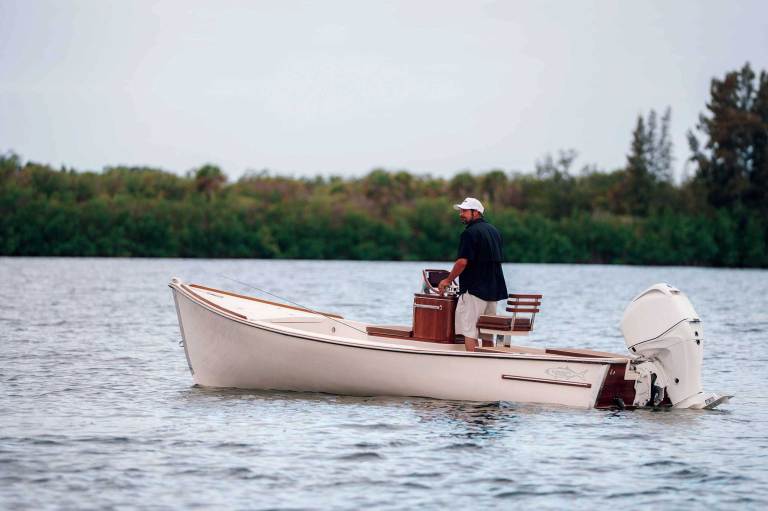
If your vacation plans take you to the more southern coastal areas of the state, my long-time friend Capt. Adam Nowalsky offers guidance. He ran a charter boat from the Atlantic City area for many years. More recently he’s run Valiant II, a 29-foot Osmond Beal-designed Maine Downeaster, which he fishes out of Longport near Sea Isle City and Cape May. Nowalsky is a bottom fishing specialist attuned to the ways of fluke and sea bass.
“From Atlantic City there are three artificial reefs that are an easy run: Great Egg, Atlantic City and Ocean City,” he says. “From my slip in Longport, I fish the Ocean City and Townsend Inlet Reefs. Fluke will be the prime target species in South Jersey in summer and the near shore reefs provide better fishing.”
Nowalsky reminds fishermen that the sea bass harvest is tightly controlled with many in-season bag limit changes, so check the local regulations online. For him, that means taking the time to anchor up on a wreck is a ritual of the past.
“You can catch your limit of sea bass while drift fishing for fluke, unless you just want to have some fun catching and releasing them,” he says. “We drift fish for fluke using bucktails with Gulp-scented soft plastic tails, often with a second hook and trailer bait above it. If you want to get a lot of bites, fish smaller bucktails and trailers. If you want to target big fluke, go with larger, heavier bucktails and larger plastic tails of six inches or better. You will get fewer bites, but your chance of catching a trophy increases dramatically. You can make your efforts as technical or as laid back as you like, it all depends on how you like to fish.”
There’s plenty of information out there on drift fishing for thse species. Regardless of where you are on the Jersey coast you can almost always catch a fish dinner of sea bass and fluke on one of the nearby artificial reefs. It’s just that easy.
August 2025