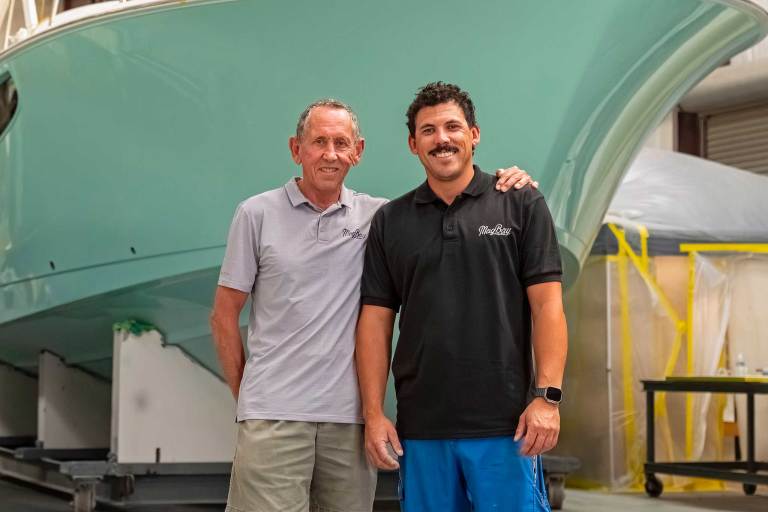

“We have had three customers in the past two weeks complaining about bad fresh water, or their freshwater pumps not working,” said Bob Petzold, president of Petzold’s Marine Center in Portland, Connecticut. It was the end of June, and already the hot New England summer was taking its toll on boats’ freshwater systems. When the temperature rises, water that was once clean and sweet can become a bacteria-laden soup that clogs filters and water pumps.
Many folks blame algae for turning their fresh water sour, but algae requires light to breed. Bacteria, however, don’t need light, and will thrive in water that’s left standing in a dark tank. The bacteria produce a sticky slime called biofilm that adheres to the walls of the water tank and to the insides of plumbing hoses and fittings. Biofilm protects the bacteria from disinfectants and eventually will clog filters and pumps, too. “Once a tank is contaminated, it is difficult to clean,” Petzold said.
It’s easy to keep a freshwater system fresh. The most important thing is to use the water in the tank, rather than let it stand and stagnate. Most municipal water systems add a small amount of chlorine to the water—maybe 3 or 4 parts-per-million (ppm). This kills bacteria and keeps the water coming out of your faucet, shower or dockside spigot clean and sweet. But if you just store the water in a tank, the chlorine is gradually consumed. At best, in cool conditions with a clean tank, it might last for weeks. In warm summer weather, in a boat’s tank that already has some contamination, it may last only a few days. You can check your fresh water’s chlorine level with test strips. They will also come in handy when you sanitize the system.
Don’t fill the freshwater tank until you need the water. Maybe add a few gallons for use while day-boating and pump it out through the faucets when you’re leaving the boat for more than a day or so. Wait until you’re cruising, when you’ll be using lots of water, to top-up.
“If you use the boat’s water system frequently, that ensures you always have fresh water in the tanks,” Petzold said. He recommends not using your dockside water connection, since it bypasses the water in the tank. Use the water in the tank first.
Even the “cleanest” potable water has naturally occurring microorganisms, and more can be added between the water source and your boat. One of the most overlooked sources of bacteria is your dockside hose, Petzold said. You use your hose, then hang it up, sometimes for a week or more, with water still in it. All kinds of critters can flourish in that environment, and when you fill your tanks, they come aboard with the fresh water and take up residence. Invest in a new hose, one that’s certified as drinking-water safe, and use it just to fill your tanks. Drain it when you’re finished and stow it below, so you can use it when you’re cruising, too. Use your old hose for washdowns.
Hit ’Em With Clorox
When your water starts tasting bad—the first sign of bacterial contamination—you need to sanitize your tank and plumbing. Sanitizing won’t remove all the existing biofilm, but it will kill the active microorganisms. The easiest way to do this is by draining the freshwater system completely, then flushing it with a chlorine/water mix or a commercial water-sanitizing additive. Bleach is a lot cheaper. The recommended concentration is at least 100 ppm of chlorine. That requires very little bleach: Four ounces of Clorox in 25 gallons of water will give you about 100 ppm. Clorox is 7.5 percent sodium hypochlorite; if you use weaker or stronger bleach, adjust the mix accordingly. Also, 100 ppm is a way higher concentration than is safe to drink.
This ain’t rocket science, so you don’t have to be spot on, but don’t get sloppy. More bleach isn’t necessarily better. Once the bacteria are dead, they won’t get any deader if you use more bleach, and bleach can be corrosive. Open all the faucets until water flows out to fill the system with the cleaning solution. Don’t forget the icemaker.
You should leave the chlorine solution in the system for anywhere from one to 24 hours. The ABYC recommends one hour; Petzold says 24 hours; other sources say four to 12 hours. Since he does this kind of thing all the time, I’d go with Petzold’s advice. (Note: More than 24 hours of a 100-ppm solution can damage some system components.)
“It is helpful to agitate the treated water in the tanks, so take the boat for a ride,” Petzold said. Then pump the sanitizing solution out, and fill and flush the system thoroughly with fresh water. “Clean the inlet screens to your water pumps and the faucet screens, as they may become plugged by the freed contaminants.” Clean the tank vent, too, and make sure the screen is in place to keep bugs and dirt out. If sanitizing doesn’t remove the bad taste, you might need new water hoses. They can accumulate biofilm just like the tank.
Refill the tank as needed. Some skippers keep the water clean by adding bleach to maintain a low level of residual chlorine. How much? Shoot for a chlorine solution of about 0.5 ppm. That’s a tiny amount—about 1/8 teaspoon of Clorox per 25 gallons. Mix it into a jug of water, then dump the water into the tank so the bleach doesn’t end up clinging to the wall of the fill pipe. Wait an hour or so, or take the boat for a ride, then check the chlorine level with a test strip. If the level is too high, don’t worry; concentrations up to 4 ppm are safe to drink, although they’ll smell “bleach-y.” The chlorine level will decrease fairly soon in warm weather.
Bacteria are everywhere. We can’t escape them. Fill your newly sanitized water tank, and new colonies will begin to form. But if you use your fresh water regularly, check your chlorine level and sanitize your system as necessary, you will wash them away before they do any harm. There’s no reason to worry about funky fresh water even during a hot New England summer.